
A Government Whose Costs All Fall Outward Is Bluffing
Before a single reform had paid off, Deng purged the Maoist old guard from his own party. The cost worth reading is the one a government makes its own side pay, not the one it aims at its enemies.

Governments announce reform constantly, and are believed by no one.
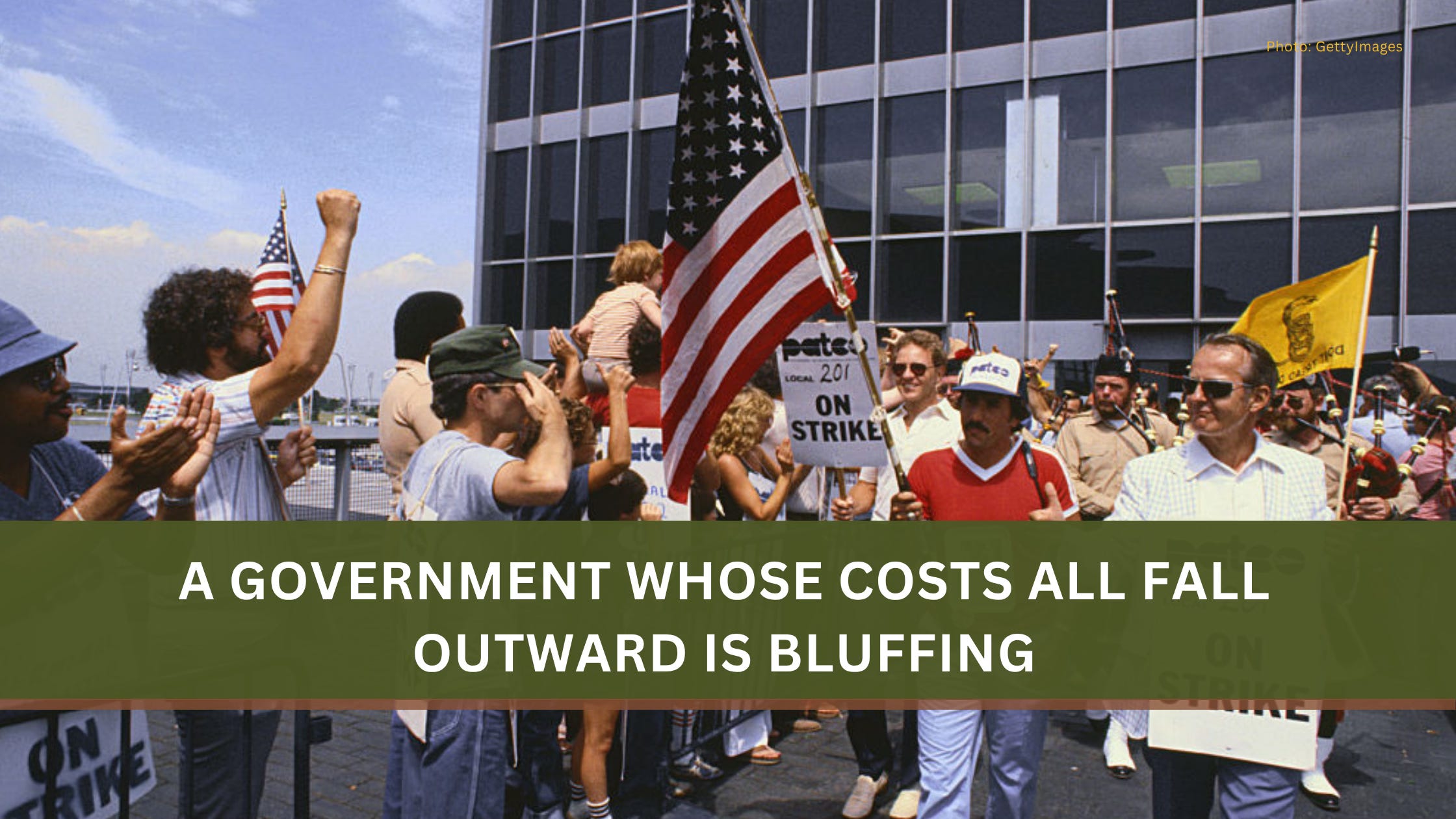
Reagan fired eleven thousand air traffic controllers in a day, and was believed at once. A borne cost cannot be faked.
What proves intent, and what tells reform from mere resolve, is who is made to bear the cost.
Spending against enemies is free; spending against your own side — the people the old settlement was built to protect, and hardest of all the people who keep you there — shows which way you mean to go.
The ledger says more than the speeches, and what the ledger rules out is plain before any reform arrives.
This is the third of the “How a Rule Changes” posts. The first asks whether a wall a reformer treats as fixed is real; the second asks where the moment to lean on it comes from. This one reads the ledger. Every government announces reform; almost none pay the cost that would make anyone believe it. What proves intent — and what tells reform from mere resolve — is who is made to bear the price.
In the summer of 1981, the United States found out that its new president meant what he had said, and it found out in a single afternoon.
Ronald Reagan had told the air traffic controllers, a union that had endorsed him only the year before, that if they walked out, he would dismiss them. They walked out. He dismissed more than eleven thousand of them at a stroke, and barred them from federal employment for life. After that, when the administration said it would not be held to ransom, the people who might have tested the claim did not test it. They believed it, and they behaved as though it were true.
Plenty of governments say as much, and no one believes them. They declare that the old settlement is finished, that the rules have changed, that this time it is serious, and the firms, officials, and union bosses who would have to act on the declaration nod along and carry on exactly as before. Words are the same. The result is not.
The difference between Reagan and those governments that no one believes is that he paid the price. Talk is cheap, and action is not. The people who would have to act on a new commitment have watched a hundred announcements come to nothing, and have learned to treat each fresh one as worth close to nothing.
What moves them is not the announcement but the cost that comes after it: the price the leader himself paid, and the people he made bear it.
Reagan fired the controllers, and they did not come back. That was not a regrettable side effect of his commitment. That was the commitment. A cost already borne is the one thing a government cannot fake, because a government that did not mean the thing would never have paid for it.
The firing proves he was serious. It does not tell you what he was serious about. That might have been no more than a president breaking a union that had defied him. The aim is the harder thing to read, and it turns on a different question: not whether he paid, but who he made pay.
The cost has to fall on the powerful
Cost tells you whether a government means reform, and which way it is trying to go.
Not every cost carries the message. A cost aimed at an enemy carries none. Crushing an opponent is what governments are expected to do, and it tells the people watching only that the regime still dislikes the people it already disliked, which they knew anyway.
The cost that carries the message is one that falls on a power the old order was built to protect — and hardest of all, on the government’s own side. A leader who means only to keep power gains nothing from breaking the interests that the current arrangement was built to reward.
That difference is where the cost lands. And the cost does more than prove the leader means the change. It shows the kind of change he means: the settlement, the arrangement of who gets protected and who profits, is going to shift, and his own side will have to live under the new one too. A cost can land on either of two kinds of targets. One is power entrenched but external to the leader’s coalition. That is the union that brought down the previous government, or the foreign investors that a new ruler inherits.
The other, and the stronger, is the cost a leader makes his own side carry, because only a leader who means the change would spend against the people who keep him in power.
Reagan’s case is the sharpest version of the rule, because the union was his own backers, not merely his opponents. The union that had endorsed him a year earlier ran a system the country could not do without, which is what gave their strike its leverage. Breaking them, at the moment their strike could ground the country, imposed a cost on the people whom the old settlement was built to keep on side.
Peter the Great paid the same kind of price in a harsher coin. When he came home to Moscow in 1698, set on hauling Russia into the European age, the thing in his way was his own elite.
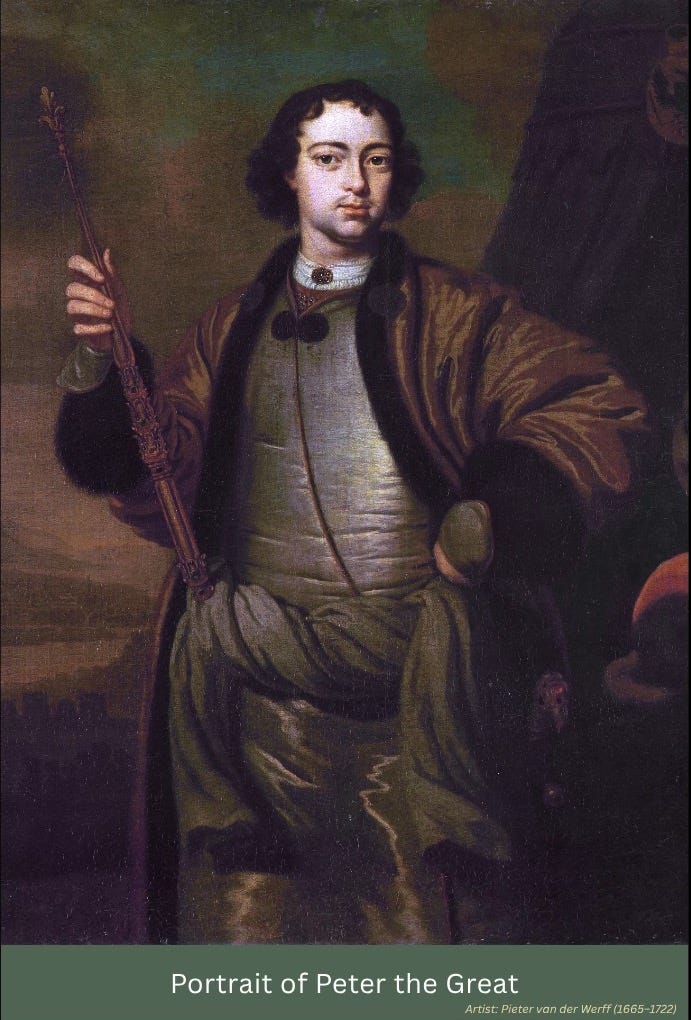
Those boyars, whose standing rested entirely on the world he meant to abolish, stood against him; so did the streltsy, the hereditary musketeers of his household guard, who had just risen against him.
He shaved the boyars’ beards with his own hands at the reception that welcomed him home, and later taxed any man who kept his. He had the mutinous streltsy executed during the winter and left the bodies in plain sight across Moscow.[1]
Peter’s cruelty was real, and it is not the thing being praised here. What counts is where the cost fell. It fell on the men a ruler is supposed to keep on side, which is what made it impossible to mistake.
Who the cost is aimed at
You prove you mean a thing by paying a price a faker would not pay.
Economists have a name for it: costly signalling. Michael Spence found the pattern in the job market, where a degree signals less what it taught than the cost a weaker candidate could not have borne; Dani Rodrik brought it to development, where a reformer proves credibility by going further than a faker would, by accepting conditions too costly to bluff.
Rodrik’s signal is aimed at the outside audience: the creditors and investors whose confidence the reformer needs to win. To them, a costly move reads as resolve, proof he will hold his commitments.
The inward cost points the other way, at the leader’s own side, the people who keep him in power. They are the audience he cannot escape. An outside interest can be bought off or faced down; his own side cannot. So a cost turned on them is one he can neither dodge nor fake.
To them, it reads as more than resolve: a direction that will cost them. The outside audience reads resolve; the inside audience reads direction. Only the second can tell you which way the government means to go.
That same inner circle has long been studied in the work on coups and how rulers fall. There, elite insiders who can retaliate read a costly move as a signal about the leadership, and that gives them reason to act. But that work asks one question of the move: will the ruler keep his power? This post asks the other one, the one a bluffer would never want raised: where does he mean to take the country?
Among inward costs, size matters too. The higher and more visible the cost, the louder it speaks: a year-long strike says more than a single sacking.
And it matters how freely the cost was chosen, a question that sharpens as the cases pile up. A leader forced into a move tells you less than one who paid when he could have done nothing.
What a government is really trying to do
Reagan’s controllers and Peter’s boyars sit centuries apart, yet the cost says the same of both: a government that makes its own side bleed means what it says. But meaning what it says is not the same as reforming. A government that breaks a union holding the economy to ransom shows it will not be ruled by an organised interest. It does not yet show whether it intends to build a different kind of economy.
What tells reform from resolve is which interest the cost falls on. The reforming cases are the ones where it falls on the very interests a country would have to break to build something new.
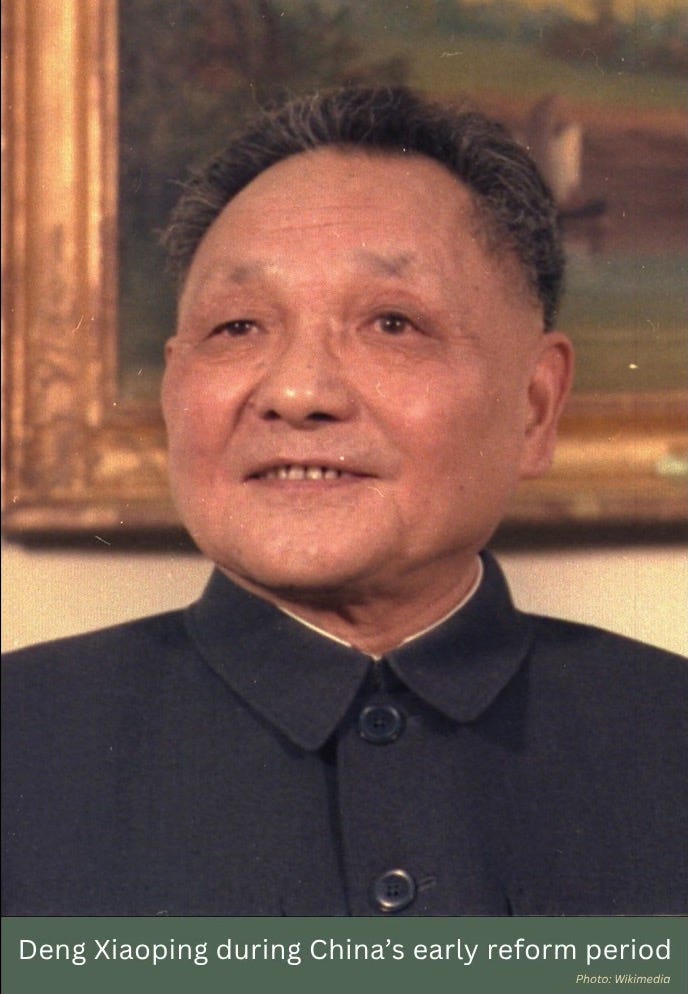
The clearest case runs through China, and it predates the reforms China is remembered for. In February 1980, Deng Xiaoping and the reformers stripped Mao’s old guard, the security chief Wang Dongxing among them, from the inner ranks of the Politburo. There was not yet a single market reform to point to, no special economic zones, no farmland handed back to families.
These were not external enemies. They were senior men of the reformers’ own party, the faction whose whole standing rested on the policy the reform meant to overturn.
The move is not China’s alone, and the interest it strikes can be larger than that of a faction of the party. When Park Chung-hee seized power in South Korea in 1961, he had the country’s leading businessmen arrested, the men whose fortunes made them the one private power a directed economy could not leave standing, and held over them the threat of losing everything they owned.
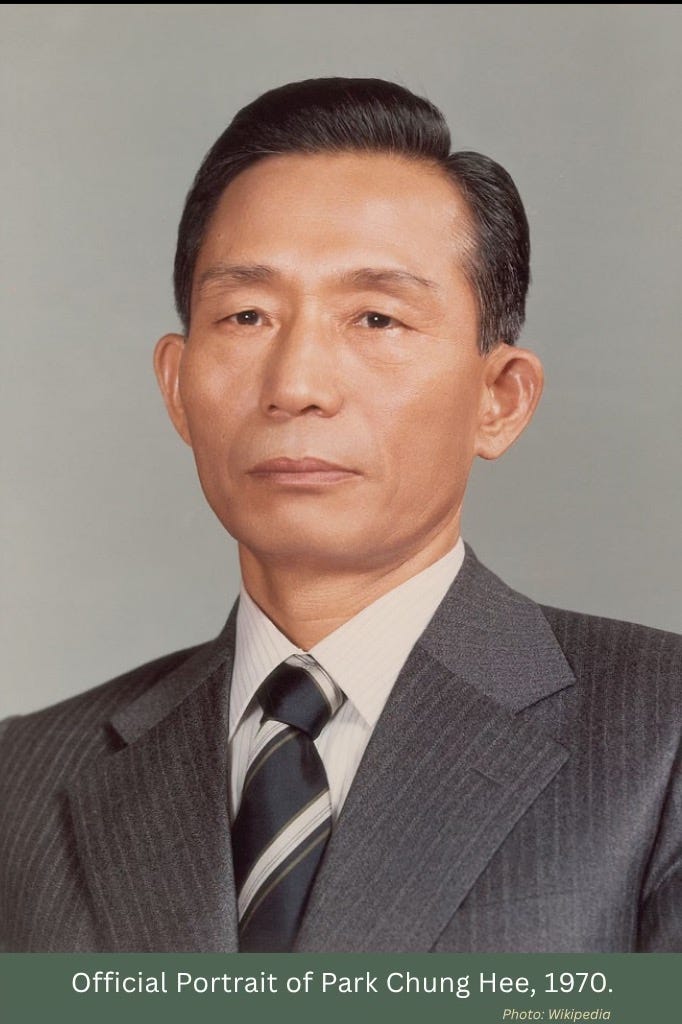
Then he let them go, on one condition. They were to build the industries the state told them to build. That cost fell on exactly the people the old order had rewarded most, and it bought their place in a new one.
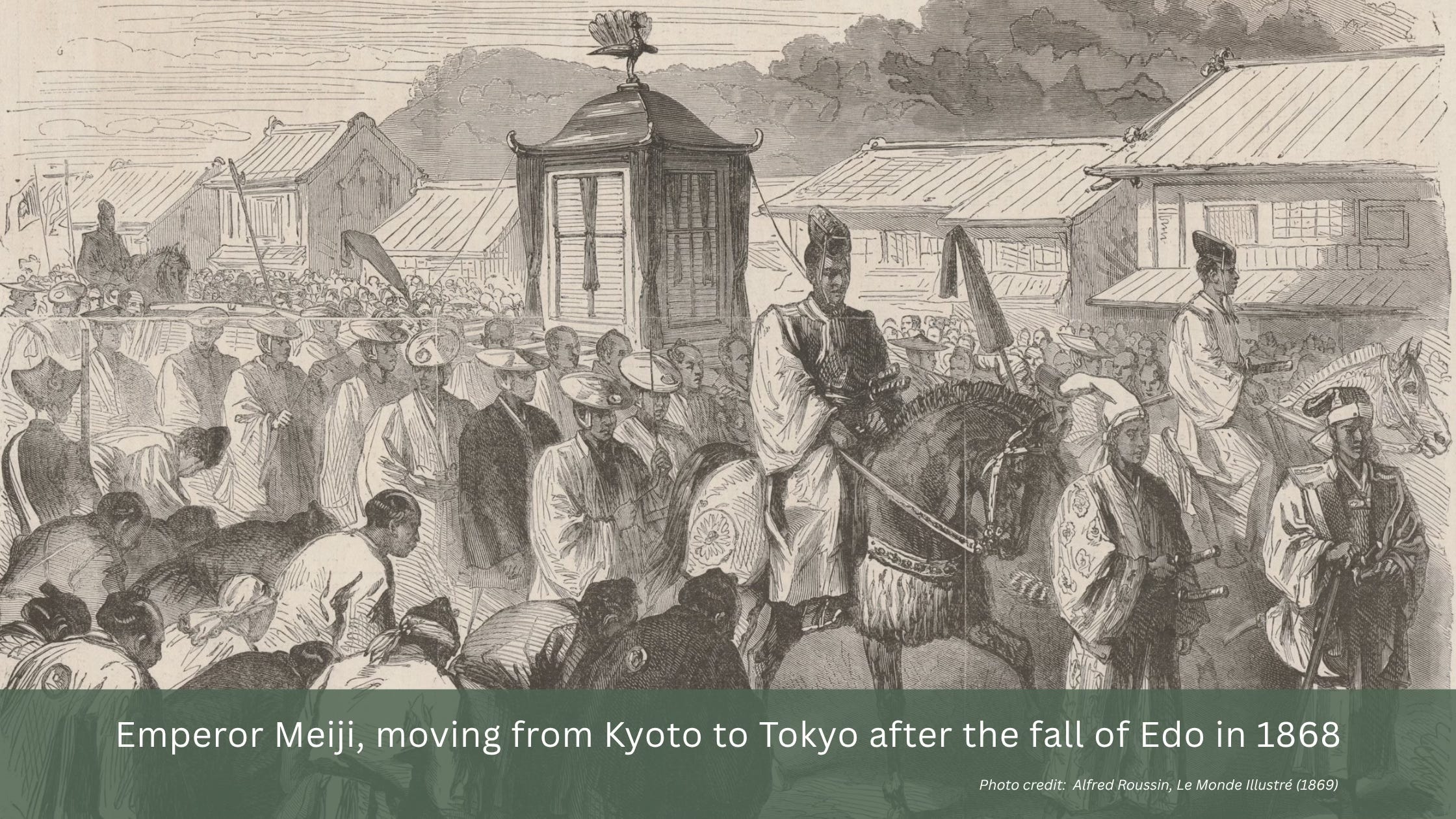
A century earlier, the reformers of Meiji Japan had struck a larger interest still, and one that was their own. They were samurai, and to build a modern state, they abolished the samurai, stripping their own class of its stipends and swords, and crushing the rebellion that the abolition provoked.
Reform turns inward
A reformer has to spend against his own side in the end. The interests that block a new economy, the blockers, are his own: they sit among the very people the old settlement was built to reward. A government that never turns a cost inward, whose costs fall only on enemies and outsiders, has left the blockers exactly where it found them. It is reshaping nothing.
Reform here means a direction of travel. A reforming government is remaking the settlement to build a different kind of economy, not merely re-dividing the same output among different people.
Whether it reaches that economy by state direction or by the market is not the test. Every case so far has been a government taking the economy firmly in hand, but a reformer can break with the old settlement by the opposite route. Estonia did, throwing its borders open to trade after 1991. The blow fell inward, on the state industries it had inherited from the Soviet order, the very interests a market economy had to sweep aside. Exposed to competition, they folded, and what survived Estonia rebuilt on a single flat tax. Its free-market road and Deng’s state direction run to the same place, on the same side of this line.
Most leaders are unwilling to spend against their own side, which is one of the main reasons transformation so rarely comes.
Ruling reform out
Those who never pay it give themselves away. The ledger does one thing better than anything else: it catches a false reformer. When a government’s costs all fall outward, never once on its own side, you do not need to wait for the programme to fail. Reform is already ruled out.
For twenty years, Egypt under Nasser and Sadat imposed one high cost after another on the landlords, on foreign capital, on the dispossessed old regime. The costs consistently bypassed the coalition’s core beneficiaries: the officers and the subsidised cities. When Sadat’s 1977 bread-subsidy cut finally turned the cost inward, the coalition refused within forty-eight hours, and the government folded.
Egypt was forced inward and refused. Venezuela was never forced at all, and reshaped just as little.
Hugo Chávez built his Bolivarian Revolution on costs aimed outward: he expropriated foreign firms and the old business elite, and faced down the opposition. The one interest never made to pay was his own, the military and the loyalists who lived off the country’s oil rents. Because the cost never turned inward, nothing was rebuilt. When the oil price fell, the economy collapsed, but the order only changed hands: the rents passed to whoever held the guns.
Which way is it trying to go
Ruling out the all-outward fakes was the easy half. The difficult half is interpreting the cost that does turn inward
Such a cost can only tell you so much. It proves a leader is serious; it cannot always tell you what he is serious about. The danger is that every inward cost could be mistaken for consolidation, a ruler clearing rivals under the cover of reform. The test that tells them apart is whether the target posed a survival threat.
A leader out to remake the order goes after blockers, the insiders whose position rests on the old way, whether or not they threaten him personally. A leader out only to keep power goes after rivals, the men who could unseat him, and leaves alone any insider who is no threat to him at all.
The power-keeping leader is the common one. Milan Svolik shows that when authoritarian rulers fall, it is almost always insiders who remove them, which is why managing the inner circle, not managing the public, is the game most rulers are playing.[2] Mushtaq Khan finds that most of the bargains holding a ruling elite together are built to keep power, not to build an economy. That is exactly why the cost can read both ways: the men a ruler most wants gone are often the same men whose standing a real reform would end.
So when the target is a man who is both a blocker and a rival at once, the two kinds of leaders act alike, because each has his own reason to strike. Here, the cost alone cannot determine which leader you are watching.
Even so, three signs help you lean one way before the results are in:
The first is timing: did the cost fall early, before any reform had paid out a reward?
The second is the target’s position: was it built to guard the old order, or only to threaten the leader?
The third is the pattern: a single purge followed by the leader’s allies growing rich looks like a man securing himself, while a steady run of blows against the interests that block the economy looks like reform.
Deng’s 1980 purge is the case where the signs resolve. Wang Dongxing was both a keeper of the old order and a rival worth fearing, a man either kind of leader had reason to remove. But the cost fell before any reform reward existed, against men whose whole position depended on a reversal of course. That early, against insiders with that much to lose, it points toward reform.
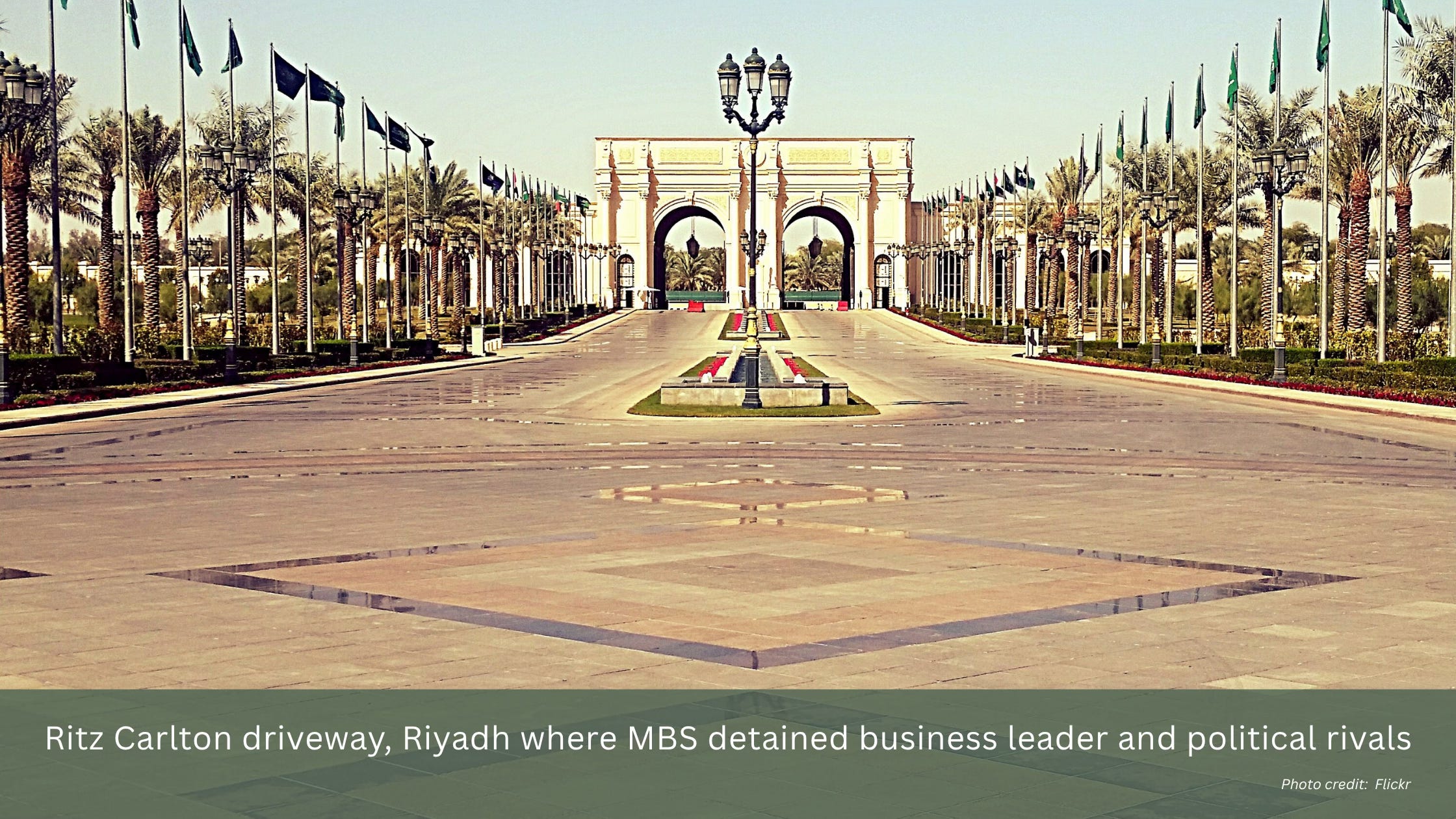
In Mohammed bin Salman’s case, they cannot. When he locked Saudi Arabia’s princes and financiers in a Riyadh hotel in 2017 and stripped them of a fortune, the cost was real: no bluffer would have paid it. But the targets pointed both ways at once. Some had grown rich under the old order, the kind a reformer must break; others were simply his rivals; and the National Guard he seized from a cousin was a seat of power, not the old money a reform would have to go after.
You can read that much from the cost alone, without waiting to find out what Vision 2030 delivers. The plan will be judged when it arrives, based on what it does. The cost has already said all it can. It proves he meant it. It cannot, on its own, show which way he is going.
Making a cost stick
Everything so far has rested on one thing: the cost being one the government cannot take back. A cost the government could quietly reverse would prove nothing, whether you are trying to rule out a fake or spot a real reformer.
There are two ways to make a cost stick. One is to sink a cost: to break, in plain view, an interest you were never meant to touch, at a price that can never be recovered. The other is to tie your hands: to bind yourself to an outside rule, and let the market or a treaty hold you to what your own word could not.
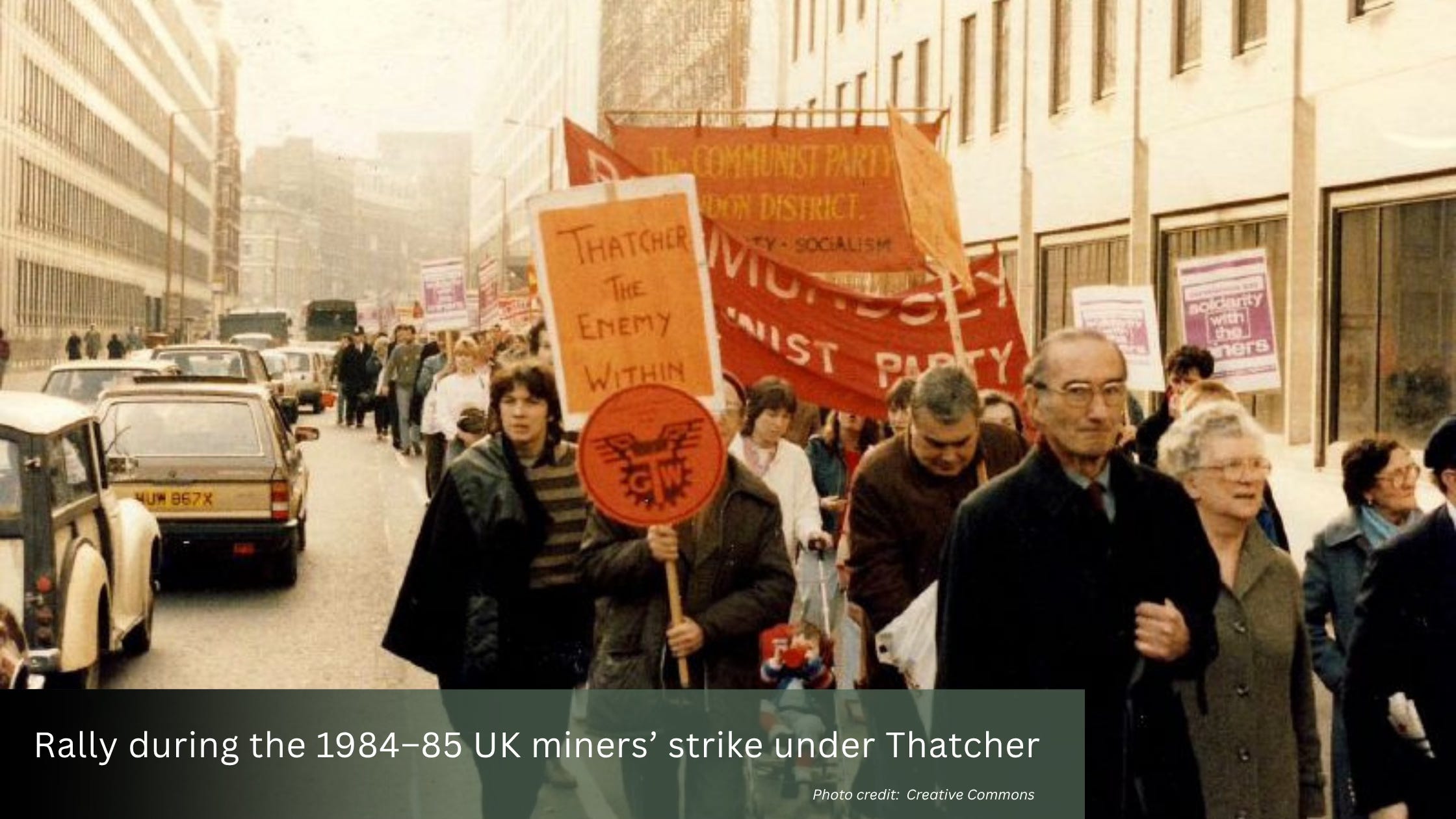
Margaret Thatcher sank one against the miners. Their union was powerful enough to black out the country; a decade earlier, it had brought down Edward Heath’s government. Thatcher did not leave the rematch to chance. Acting on a detailed contingency plan she had commissioned years earlier, she had coal stockpiled at the power stations, non-union haulage lined up, and mobile police ready. When the confrontation came in 1984, the state could withstand a long strike rather than be starved into a quick settlement.
She then fought the strike out over a long and bitter year. That year was for something more than winning. It was to show she would not fold.
Israel tied its hands instead, and broke one of the worst hyperinflations in history. The cure was well understood; what every earlier plan had lacked was a way to make it stick. So in a single all-night cabinet sitting in 1985, with prices losing their value by the week, Israel froze prices, wages and the exchange rate together, then legislated away its own power to print money to cover the deficit. That closed the one escape route the others had left open.
Promises can be broken by morning. A law that a government writes against itself cannot.
Which way it points
Both moves leave a commitment the leader cannot quietly take back, which is why they are so easily confused. But they differ in who the commitment is aimed at, and that difference is what matters.
Tying your hands points outward. The commitment is a promise to the markets or to a treaty partner, an audience whose confidence the government is trying to win. Schelling charted this move half a century ago.[3]
Sinking a cost can do the rarer thing. It can fall inward, on the government’s own side, on the people who could punish it for the blow, the way Reagan’s firing fell on the union that had backed him. Only that inward blow shows which way a government means to go.
Zhu Rongji’s case shows the line between them. By the late 1990s, China's more addressable reforms were long done, and the difficult ones were blocked by the ministries and state firms that stood to lose from them. Zhu Rongji tied China to the World Trade Organisation on terms no successor could quietly undo. The promise pointed outward, to the markets and the WTO. The cost fell inward, on the protected state firms.
But Zhu did not choose those firms; the terms did. That is the limit of tying your hands: it can send a cost inward, but it cannot choose where that cost lands. Only sinking a cost lets a leader pick the target and land the blow himself.
What the cost always settles
Tying your hands is the one move that gives away that choice. Everywhere else, even when a crisis forces a leader’s hand, the target stays his. A crisis can dictate the scale of the adjustment, but it never determines who bears it, nor does the lender who arrives with it. The IMF can set the size of the cut; it cannot set the address.
The same crisis and the same creditor reached Seoul and Jakarta in 1997. Korea forced the conglomerates that ran its economy to fail or merge; Suharto shielded his own family’s firms and let the cost fall on the fuel subsidies the poor depended on, until the streets brought him down.[4]
Why some commitments last
An inward cost proves a leader is serious. It does not prove his reform will outlast him. That is a separate question, and a more interesting one. Some commitments hold once their author is gone; others fade with him, and the difference lies in what the cost reached. The clearest case is one in which the cost was unmistakably real, yet the reform faded anyway.
Bolivia is that case. The man who took back the presidency in 1985 to break the hyperinflation, Víctor Paz Estenssoro, was the same man who, a generation earlier, had built the order that bred it. Because he had built that order himself, his blow could reach only as far as what he had made: he could strike the union he had empowered, but not the rentier state underneath it. He had founded the 1952 revolution that nationalised the mines and made the miners' union the strongest force in the country.
He shut most of the state mines, put more than twenty thousand of his own miners out of work, and faced the union down under a state of siege.[5]
Paz did sink a cost, and the miners were publicly and irreversibly broken. But the blow fell on the union, not on the order that had made the union strong. That order was a state whose business was to live off the country’s resource wealth and parcel it out to whoever held power, and he left it in place. Cutting the weed is not the same as sinking a cost into the root. As an earlier post in the series showed, the inward cost bought stabilisation and little else; a generation later, when gas rents replaced Bolivia’s tin revenues, the same order rebuilt itself around new claimants.
Deng’s commitment compounded where Paz’s faded, and not because Deng was more serious than Paz. Where Paz cut the weed, Deng struck the root. Deng's 1980 purge eliminated the faction that would have returned the country to the Maoist line. The blows that came after did the same. Farm decollectivisation, the special economic zones, Zhu Rongji's WTO terms: every one fell on a group that had profited from the old order, an order that the previous cost had already weakened.
A commitment lasts where the cost reaches the state’s structure, the mechanism that rewards the old coalition, and fades where it strikes the coalition members but leaves that structure intact. Even then, breaking the structure only clears the way; building a new economy on the ground it held is a further test, and no act of will guarantees it.
The claim is a conjecture, not a law, and two cases cannot make it one. Its strength is that it can be proved wrong: it fails the first time a cost reaches the root, and the old order rebuilds itself anyway.
Comparing the two cases cannot separate the depth of the cost from the system that absorbed it. A single-party state can keep the interests it breaks from regrouping; a democracy with organised opposition cannot. So part of why Deng’s reform held and Paz’s faded may lie as much in the political system as in the cost, which is the sharper question to take into the next case.
An inward cost proves a government means its reform. It does not prove the reform will outlast the people who profit from the old way.
What the ledger shows
Reagan was believed in a single afternoon. He paid inward, where no bluffer would. Where a government means to take a country is not in what it announces, but in who it makes pay. The inward cost, borne against the blockers, the powerful that the old order protects and, hardest of all, the government's own side, is the one that shows direction. Bearing it binds the leader to his course in a way no speech ever could.
The thing worth reading, then, is the cost a government is willing to turn on its own supporters. It is the one signal a bluffer could never fake, and it shows before a single programme arrives.
The ledger is surest when it catches a fake. When a government's costs all fall outward, on enemies and outsiders and never on its own side, it is reshaping nothing, and you can see that long before any programme arrives to be judged. Egypt and Venezuela are both proof, one folding the instant it was forced inward, the other never turning inward at all.
What the ledger confirms, it confirms only tentatively. An inward cost tilts the odds toward reform without settling them, and even one truly borne can leave the old order standing if it struck the coalition but not the structure that fed it. Where a state lives off oil or minerals, as Bolivia lived off tin, even that tilt blurs: the resource income flows, however the economy is run. So an inward cost only reshuffles which insiders collect it.
The credibility scorecards, the international indices and assessments that grade the seriousness of reforms miss all of this. They read the cheap signal, the words a bluffing government would gladly have said, and skip the one entry a bluffer could never have made.
And even a commitment proven beyond doubt settles only half the question. A proof by one leader is not yet a rule the country can count on, the kind that binds whoever comes next. How a single leader’s proof hardens into that rule, the seal that still holds once the man who paid for it is gone, is the harder problem, and the one the next post takes up.
For now, the cost is what to judge by. Every government announces that it means to change things; almost none will pay the price that makes the claim believable. The speeches are the part designed to fool you. The ledger is not.
Further reading
Joseph A. McCartin, Collision Course: Ronald Reagan, the Air Traffic Controllers, and the Strike that Changed America (2011) — the definitive account of the PATCO firing, the 1980 endorsement, and why the confrontation became the signal it did.
Ezra Vogel, Deng Xiaoping and the Transformation of China (2011) — the standard biography, covering the February 1980 Politburo purge and the sequencing of the reform programme.
Joe Studwell, How Asia Works (2013) — the accessible comparative case for state-disciplined capital in Korea and the region, including the 1961 arrests.
Michael Bruno, Crisis, Stabilization, and Economic Reform: Therapy by Consensus (1993) — the insider account of the 1985 Israeli stabilisation and the self-binding that made it hold.
Marius B. Jansen, The Making of Modern Japan (2000) — the one-volume history that carries the Meiji reformers’ dismantling of their own samurai class.
Milan W. Svolik, The Politics of Authoritarian Rule (2012) — the rival-cause reading the post has to beat: purges as the routine management of an authoritarian coalition.
The beard tax came later, in 1705, well after the personal shaving at the 1698 reception; the text keeps the two moments apart.↩︎
Svolik’s measure is of how rulers leave power: of the authoritarian leaders whose exit could be ascertained, well over two-thirds were removed by their own insiders rather than by an outside rising. The claim in the text is read from that exit data, not from a direct count of purges.↩︎
The terms 'tying hands' and 'sinking costs' are Fearon's; Schelling's earlier work covered the external-audience case the post opens with.↩︎
The same crisis reached two governments and produced opposite targets. Haggard’s comparative account covers both episodes: the Korean conglomerate restructuring and the Indonesian subsidy cuts and Suharto’s fall.↩︎
“Shut most of the state mines” is shorthand for the documented collapse of state mining employment, which fell from around thirty thousand workers in 1985 to roughly seven thousand by 1987. The mines were not all literally padlocked; the state simply stopped being the employer of a workforce it had built its political order around.↩︎
Following an email exchange with a reader, one thing I'd add: "the government's own side" isn't a single bloc; it's a shifting coalition. Imposing cost on part of it is a dynamic move. You can afford to alienate a faction only once you've secured enough of the rest to survive the loss. The real risk is misjudging who you can get away with cutting loose. Peter the Great couldn't touch the boyars' beards until the army was solidly behind him. So a passed ledger tells you something sharper than "this cost was real": it tells you the government already reshuffled its coalition to survive paying it.