
Development Intent Is Common. Orientation Is Rare
Why only 14 countries are set up for development

Many governments intend to develop their economies. Few build the orientation that carries that intent into structural change — doing so requires absorbing real political costs at the expense of exactly those whose support keeps them in power. This post identifies which countries currently meet the criterion and examines what the near-miss cases reveal about where it is hardest to hold.
Fewer than one in ten of the world’s governing coalitions currently hold a developmental governing orientation. Of roughly 170 governments, about fourteen meet the criterion: a genuine commitment to economic transformation, carried through the political machinery beneath them and into structural change.1 These remaining coalitions are not governments that lack intent. They are countries where intent has never been converted into orientation: it has never been embedded and tested under pressure.
Holding a developmental governing orientation (not merely aspiring to one) requires satisfying two conditions, and the second does not follow from the first.
At the apex (the level of the top leadership), the governing coalition must have absorbed a genuine political cost in the service of structural change rather than distribution. Not a token gesture: a real cost, taken from people with the power to resist it, for the sake of something that builds productive capacity rather than simply distributing rewards. The signal is a moment of choice: when survival and commitment pointed in different directions, the coalition chose the commitment.
That alone is not enough. Below the apex sits the governing circuit: the institutional machinery — appointments, budgets, and performance conditions — through which commitments either reach productive domains or disappear into the system that sustains the coalition. What determines which outcome follows is the question that the near-miss examples are provided to answer.
The Short List
Ten governing coalitions currently satisfy the developmental orientation criteria on a confirmed basis, with four more carrying provisional classifications. Eight have this orientation through consolidated authority with bi-directional performance accountability:
Singapore — no hinterland, no resources; productive transformation was the only exit
South Korea — land reform cleared the terrain; then export performance enforced with consequences
Taiwan — exile-state government facing an adversary of ten times its population
China — accumulated doctrinal failure opened the space for Deng’s 1978 pragmatist turn
UAE — palace-directed diversification through internationally-anchored enclaves before opposition could form
Rwanda — governing discipline forged in Ugandan exile; productive performance a condition of survival
Vietnam — doctrinal failure opened the internal argument for Đổi Mới in 1986
Morocco — palace modernisation channelling selective transformation through autonomous agencies
Two others exhibit a democratic developmental orientation:
Mauritius — founding electoral architecture made patronage structurally unrewarding before competitive politics could entrench it
India — institutional configuration sustaining transformative enclaves within a distributional national default
The organising criterion is the same in every case: an identifiable moment at which the governing coalition absorbed a concentrated political cost in service of structural change rather than distribution. The full evidential basis for each classification is in the accompanying Technical Notes.
Several of these (Singapore, South Korea, Taiwan, China, Vietnam) appear among the Growth Commission’s original thirteen transformation cases. Others have built the orientation since; others of the thirteen no longer hold it.
Rwanda’s choice to forfeit a US trade preference rather than reverse a used-clothing import ban shows this political cost directly: the governing coalition absorbed a documented trade cost, and the manufacturing sector responded, showing that the commitment had reached it.
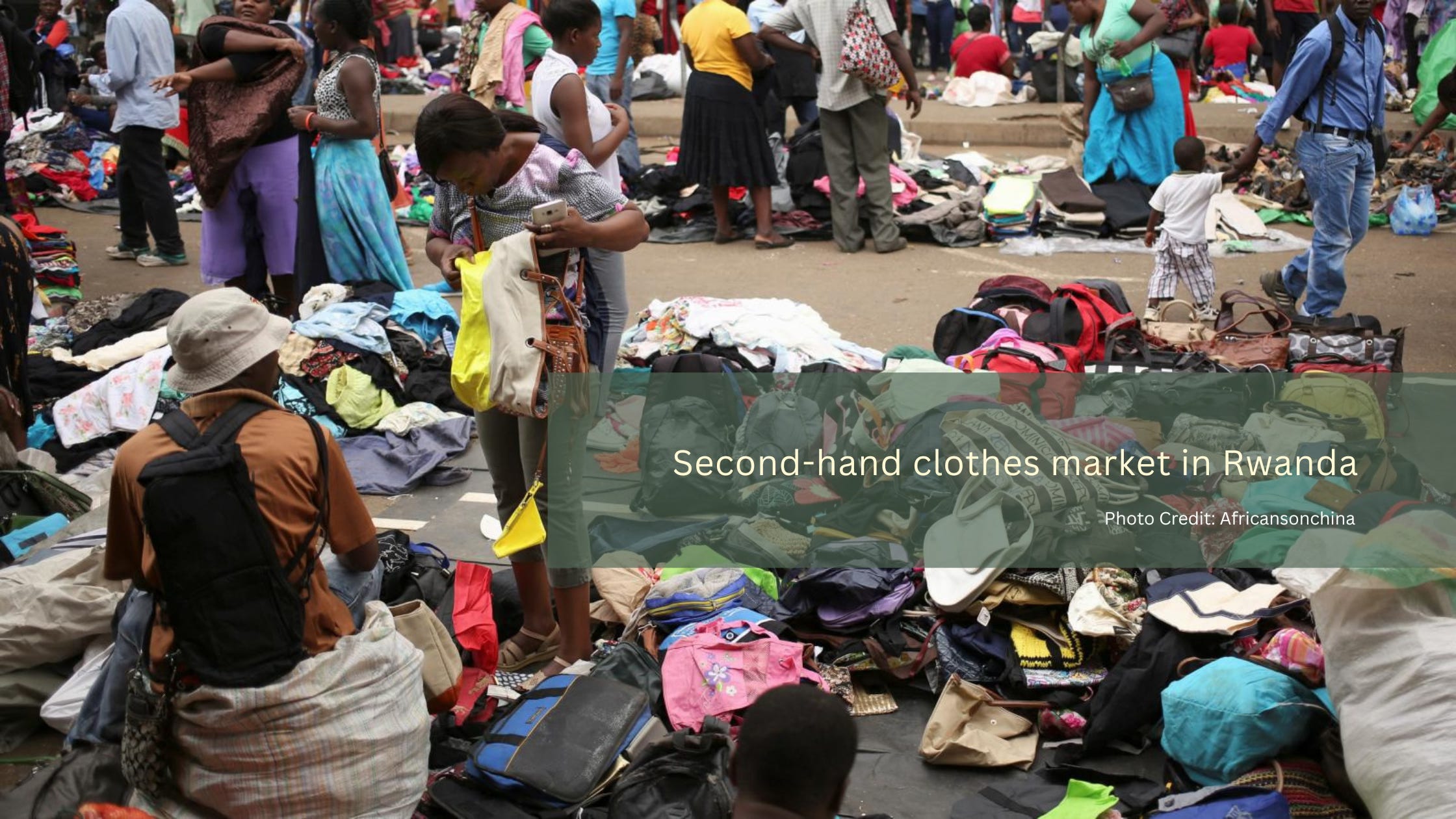
All four East African Community members had agreed to phase out imports of used clothing. But when the US initiated a trade review, Kenya, Tanzania, and Uganda each reversed to protect their AGOA access. Rwanda kept the ban.
In July 2018, the US suspended Rwanda’s AGOA apparel benefits ($1.5 million in duty-free access).2 Trade Minister Sebahizi’s framing was direct: “Industrial policy takes precedence over AGOA opportunities.”
Garment and textile exports grew eighty-three per cent in two years; fabric imports doubled as a share of the sector’s inputs, while used-clothing imports fell from thirty-two to seven per cent of total textile imports. The apex absorbed the cost; the governing circuit carried it into productive reorientation of the sector (partially).3
The Formation Varies; the Structure Doesn’t
Some of these 10 countries faced conditions where economic performance wasn’t optional — it was survival: Singapore expelled from Malaysia with no hinterland and no resources; Taiwan’s exile state facing an adversary ten times its size; Rwanda’s coalition forged in Ugandan exile before 1994.
Others made founding choices that settled the distributional terrain before organised resistance could form: South Korea’s land reform and Mauritius’s electoral architecture each made the developmental commitment self-reinforcing before competitive politics could fragment it.
China and Vietnam arrived by a different route: pressure points as a result of accumulated doctrinal failure. The existing framework broke down from within, opening the internal argument for pragmatist factions and creating the political space for reorientation that external competitive pressure had not produced.
An orientation every successor government inherits tends to be self-sustaining. One that depends on the leader who built it expires when they do.
That distinction separates the confirmed fourteen from the provisional four: not a weaker developmental signal, but a formation that has not yet produced the structural depth to carry it independently.
These four cases show identifiable developmental architecture but carry provisional classifications: not for want of a growth record, but because the institutional evidence is thinner, shorter, or not yet tested under the adverse conditions that reveal whether architecture is genuine or performed.
Côte d’Ivoire under Ouattara has produced identifiable costly choices; the orientation is genuine, but the governing circuit is fragile and untested across a leadership transition.
Argentina under Milei is a working hypothesis: the stated orientation is unusually clear, and some costly choices are real, but the record already shows some apex commitments that did not propagate — enough to hold the classification provisional until the architecture beneath the stated orientation has produced durable evidence of governing circuit carrying capacity.
Ukraine has had reform thrust upon it by existential necessity: whether that produces durable architecture or only a crisis-response that expires with the emergency is what the coming years will resolve.
Botswana is a reorientation case: the Boko government that took office in October 2024 entered with favourable structural conditions, and early signals point in the right direction, but neither yet constitutes the threshold costly choice the framework requires: real costs imposed on a constituency with the capacity to resist, for the sake of structural change rather than distribution. The next two to three years are the test.4
Why So Few Come Close
Most governing coalitions are built around distributional bargains: not by failure of ambition, but because that distributional stability is what holds them together. Shifting that architecture toward productive investment, at the expense of those bargains, is not a move the terrain rewards for most governing coalitions at most moments.
The distributional equilibrium is the equilibrium the system returns to: the expected outcome of the political logic that sustains governing coalitions, not a temporary condition that better incentives could dislodge. Most never generate the apex commitment to development that would put them in range of this criterion. They are not near-misses.
For countries whose governing orientation falls just short, the orientation tends to be present at the apex but absent or broken in the governing circuit beneath it. These are countries where the diagnostic signals looked right: strong developmental numbers, credible apex commitments, visible reform momentum — the hallmarks the standard assessment toolkit is designed to find. The apex commitment was real. The governing circuit was not structured to carry it in a variety of ways.
Committed until survival requires otherwise
Ethiopia is the clearest case. Ethiopia’s numbers look developmental: industry growing at thirteen percent, a securities exchange launched in November 2024, and an IMF-endorsed macroeconomic reform.5 If the framework classified countries by growth trajectories, Ethiopia would make the list. But the Tigray war reveals the actual hierarchy: when the choice between regime survival and a productive orientation became direct, survival took precedence without hesitation.
Ethiopia’s productive assets that had made the developmental signal credible paid part of the price: over sixty factories destroyed across the conflict zones, manufacturing’s share of GDP down, defence spending more than doubled as roads were displaced from the capital budget for the first time in years.
Ethiopia is not a failure of measurement; the investment was real. It is a demonstration of what the adversity test reveals: strong developmental signals, in the absence of that test, are equally consistent with genuine orientation, and with a coalition the environment has not yet compelled to reveal what it has actually become.
No instrument available before Tigray could have told them apart. The war could, and did. This is the uncomfortable property of the adversity test: it requires something to go wrong in order to resolve.
Pre-adversity, Ethiopia wasn’t a misclassification — it was, at the time, correctly classified as unresolved. This is the question the framework applies to the provisional cases: not whether costly choices accumulate in favourable conditions, but whether the orientation holds when the coalition’s survival requires otherwise.
Committed at the apex, captured below
Indonesia holds the world’s largest nickel reserves, but had been exporting raw ore for Chinese smelters to process. Indonesia’s downstreaming ban was designed to force value-added refining onshore, capturing higher-value stages of the supply chain within Indonesian borders. Mining interests bore those costs directly; the apex commitment was genuine.
What the downstreaming ban could not address was what the government had not accounted for: Indonesian firms controlled just ten percent of the country’s refined nickel capacity.6 Chinese joint ventures had built the smelters; Chinese firms held the refining technology and the capital to deploy it at scale. Processing moved onshore, but what the policy could not engineer was Indonesian ownership of it, because no domestic industrial base had been structured to receive it.
The apex commitment reached the sector: ore exports fell, smelters operated inside Indonesian borders, and export value rose. However, the governing circuit did not carry it into Indonesian productive domains. The distributional architecture had organised itself around extraction licences and their rents (a stable configuration the environment had not compelled it to abandon) rather than performance-conditioned investment in the value-added stages that the ban was now trying to claim.
Malaysia exhibits the same pattern across a longer arc: the Mahathir era produced genuine developmental outcomes through concentrated apex authority, but the Mahathir government built no durable governing circuit beneath it. When that authority ended, the bumiputera preference architecture, the distributional settlement the coalition actually depended on, returned the system to the configuration it had actually reached. Ghana also follows the same pattern: credible apex signals without compact architecture to carry them.
Political Cost Absorbed, Platform Unbuilt
Bolivia in 1985 was a case of no productive base following a costly move. Paz Estenssoro dismantled the state mining enterprise he had built in 1952, making 23,000 miners, his own coalition’s founding base, redundant, and arrested union leaders when they struck.
Hyperinflation at 24,000% had made investment impossible; stabilisation was the precondition. It succeeded. Yet no productive platform followed. Morales’s 2005 election on an explicit mandate to reverse the settlement is the outcome verdict: twenty years of genuine apex cost produced no compounding.[7

Nigeria under Tinubu illustrates the same mode in real time. On inauguration day, 29 May 2023, before a cabinet had been formed, Tinubu announced the end of Nigeria’s fuel subsidies. No gradual phase-out, no transitional cushion: the announcement came in the opening minutes of the new presidency, with the outgoing president still on the podium.
Fuel prices rose from N185 to N1,025 per litre within weeks. All major 2023 presidential candidates had pre-announced removal (the political cover that the 2012 failed attempt to remove subsidies lacked), but leading with it on day one, before a government existed, made the commitment irreversible in a way most apex choices are not. Inflation exceeded thirty percent within a year. The World Bank estimated 7.1 million additional Nigerians pushed below the poverty line.8
The fiscal space unlocked approximately ten billion dollars annually, enough to fund a serious industrial programme. But every mechanism available for allocating it has been structured to distribute rather than invest.
The Federal Character principle mandates geographic representation in appointments and contracting, routing resources across states rather than concentrating them in productive agencies.
The FAAC formula distributes federal revenue to thirty-six state governments and 774 local government areas, each with its own patronage demands. The competitive clientelism that organises Nigerian politics from federal to ward level runs on disbursement as the currency of political survival: not investment conditioned on performance, but distribution as evidence of loyalty rewarded. These are not malfunctions. They are the architecture — the mechanisms through which Nigeria’s political settlement is upheld.
The savings exist; whether the distributional architecture absorbs them rather than directs them toward productive investment is the observable prediction the framework makes — and the test the next two to three years of the Tinubu government will resolve.[9]
Two cases sit outside the failure mode taxonomy because the outcome is open. Sri Lanka under Dissanayake has absorbed a genuine cost, maintaining the IMF program after campaigning against it, and imposed real income compression on voters who expected debt relief.9 Zambia under Hichilema presents a similar situation: genuine political costs absorbed through debt restructuring, subsidy removal, and IMF discipline, but the copper-dependency that has organised Zambia’s distributional architecture for six decades has not yet been broken. Both are worth watching because the apex signal is credible; neither has yet produced the pattern the criterion requires.
Bangladesh and Kenya are informative in a different register: they show how far ordered deals, apex signals, and credible reform carry you without developmental orientation — and why that growth plateaus.10
In each near-miss, the distributional architecture was not structured to carry the orientation into productive domains: it absorbed the apex commitment, overrode it when survival required, or channelled the released fiscal space back into distribution rather than investment. The apex signal, however genuine, did not propagate.
That is the pattern these cases share — and what development assistance most often encounters, because programs engage coalitions that have produced a genuine apex commitment, not the majority that never do.
Among coalitions that reach the threshold of genuine apex commitment, most failures are governing circuit failures. The apex commitment is real, but the governing circuit absorbs it rather than carrying it forward. Not for lack of capacity. Absorption is what the distributional bargain requires. The fourteen with developmental orientation are the coalitions where both held: the apex has absorbed the political cost, and the governing circuit has carried that orientation into the productive domains where investment can compound.
Diagnosing Orientation
The standard assessment literature reads for apex signals: stated commitments, formal institutions, reform legislation — whether the intent is right, the design is sound, the technocratic capacity adequate.
The instruments designed to assess governing circuit function (political settlements diagnostics, capability assessments, rent management analysis) are available in the research literature. The binding constraint is not whether the apex commitment can be made. It is whether the distributional architecture below it is structured to carry or absorb whatever the apex commits.
Development assistance has not caught up. Standard program design deploys no toolkit for anything below that: not because none exists, but because the incentive structure of the assistance system rewards visible institutional construction over functional assessment: laws passed, agencies stood up.
Investment concentrated at the apex (in reform coalitions and apex-signal accountability) produces diminishing returns when the governing circuit beneath it is not assessed. Bilateral donors are not accountable for that question, which is probably why no instrument for answering it has made it into standard program design.
That toolkit is calibrated to the wrong level of the problem it is actually encountering. The first question a program designer should ask is not whether the intent is right or the design is sound: it is whether the distributional architecture beneath the apex is structured to carry the commitment, or to absorb it. Most program designers already half-suspect this. The surprise in the room is rarely the diagnosis itself, but how little follows from stating it.
Conclusion
The argument is in the number fourteen. Development assistance is calibrated for a world where developmental orientation is the norm. Fourteen suggests it is the exception.
The bar for developmental governing orientation is set at the level governments themselves aim for. It was present in all thirteen of the Growth Commission’s countries during the periods when transformation actually occurred; no Growth Commission case achieved sustained transformation without it. That consistency is not proof of a necessary condition (the contrapositive also has to hold), but it sets the prior strongly: any account of how sustained transformation occurs has to explain how it works without developmental governing orientation, or accept that the criterion is doing real explanatory work.
Further Reading
Stefan Dercon, Gambling on Development (Hurst, 2022) — the development bargain as the upstream condition for growth: why intent and capability are insufficient without a structural commitment between the governing elite and productive interests that changes behaviour.
Mushtaq Khan, “Political Settlements and the Governance of Growth-Enhancing Institutions” (SOAS Working Paper, 2010) — the rent management system framework and the political settlements distinction between developmental coalitions and competitive clientelism; the theoretical grounding for this post’s apex/governing circuit distinction.
Tim Kelsall, Business, Politics and the State in Africa (Zed Books, 2013) — centralised versus decentralised rent management as the key variable in whether neopatrimonial governance produces developmental or predatory outcomes; the most precise existing vocabulary for the failure mode Indonesia illustrates.
Lant Pritchett, Kunal Sen, and Eric Werker, eds., Deals and Development: The Political Dynamics of Growth Episodes (Oxford University Press, 2017) — the ordered/closed deals framework: why productive growth episodes sustained by narrow elite bargains plateau rather than compound into structural transformation.
Matt Andrews, Lant Pritchett, and Michael Woolcock, Building State Capability (Oxford University Press, 2017) — the isomorphic mimicry problem: why most countries produce the institutional forms of a developmental state without the functional content, and why the governing circuit generates form rather than carrying capacity.
Stephan Haggard, Developmental States (Cambridge University Press, 2018) — systematic comparative analysis of the political conditions that produced East Asian developmental state configurations, and why executive autonomy, cohesive pilot agencies, and performance-conditioned private sector relations are prerequisites rather than design choices.
Réka Juhász and Nathan Lane, “The Political Economy of Industrial Policy,” Journal of Economic Perspectives (2024) — the two-constraint framework distinguishing political selection forces from state capacity limitations; the closest recent mainstream economics treatment of the same apex/governing circuit axis this post identifies.
David Booth and Frederick Golooba-Mutebi, “Developmental Patrimonialism? The Case of Rwanda,” African Affairs (2012) — the argument that centralised rent management through RPF-affiliated business interests produces developmental rather than predatory outcomes when allocation is conditioned on performance; the direct evidential basis for Rwanda’s classification above.
Notes
Khan, M. H. (2010). “Political Settlements and the Governance of Growth-Enhancing Institutions.” SOAS Working Paper. Kelsall, T. (2013). Business, Politics and the State in Africa. Zed Books.
USTR Press Release, July 30, 2018, “President Donald J. Trump Upholds AGOA Trade Preference Eligibility Criteria with Rwanda.” USTR Fact Sheet, March 29, 2018.
Oberle (2025). “The Cost of Self-Sufficiency: Rwanda’s Second-Hand Clothing Ban.” Oysters & Fig Trees Substack.
Finance Ministry appointment of Ndaba Gaolathe; Botswana Energy Transformation Plan (BETP), June 2025.
Ethiopian News Agency / Government Communication Service, October 2025, citing National Planning Commission quarterly data. IMF Article IV consultation (2024).
Gray, H. and Nguyen, T. (2025). “Indonesian Industrialization: Downstreaming Up the Value Chain.” CSIS Charting Geoeconomics. NRGI (2024). “Indonesia’s Energy Transition Ambitions: Nickel Downstreaming and Beyond.”
Morales, J. A. and Sachs, J. D. (1990). “Bolivia’s Economic Crisis.” In Sachs, J. D. (ed.), Developing Country Debt and Economic Performance. University of Chicago Press.
Evans et al. (2023). “The Socio-economics of the 2023 Fuel Subsidy Removal in Nigeria.” MPRA WP 118360.
IMF Press Release No. 25/122, April 2025. Breuer, L. and Woldemichael, A. (2025). “Sri Lanka’s Recovery Is Taking Hold.” IMF Blog, March 2025.
Pritchett, L., Sen, K., and Werker, E. (eds.) (2017). Deals and Development: The Political Dynamics of Growth Episodes. Oxford University Press. Khan, M. H. (2010). “Political Settlements and the Governance of Growth-Enhancing Institutions.” SOAS Working Paper.
Truly development oriented governments understand that there are no free lunches and that especially at the early take-off stage they will need to make trade offs in order to achieve their ultimate goals. Willingness (or unwillingness) to “eat bitterness” in the short term is a telling sign about who is actually serious vs who is just aspiring.