
How a Government’s Real Priorities Get Revealed
A government's everyday rules for firms, and how it behaves when it would cost something real to protect a favourite, say more than any declaration.

The short version
Malaysia and China’s policies look alike but reveal opposite priorities. Malaysia shelters its champions, tests its zone; China shelters a few firms, tests the rest.
A government’s real priority is revealed at the exact moment it can’t protect everything. Whether that priority lasts for years is separate.
Three questions sharpen in turn: what a firm must deliver, whether growth can spread, and which protected interests it would threaten.
Real cost is the clearest sign: China let its own financial firm fail, Taiwan stripped import licences, Singapore cut workers’ savings.
But cost alone isn’t proof: Indonesia ousted its oil chief over hidden debts worth a third of the economy, yet established no test on firms’ productive activity.
The tell for real priority: does a government hold firms to a standard it can’t rig, and let winners grow or wall them off?
The previous post showed how eight economies were sorted by their governing orientation: whether a firm answered to a standard its government could not lower. This post asks what a single revealing moment can show about which priority a government actually protects. A later post asks whether that moment recurs into a governing orientation durable enough to survive successive leaders and crises, and how early such a reading can be trusted.

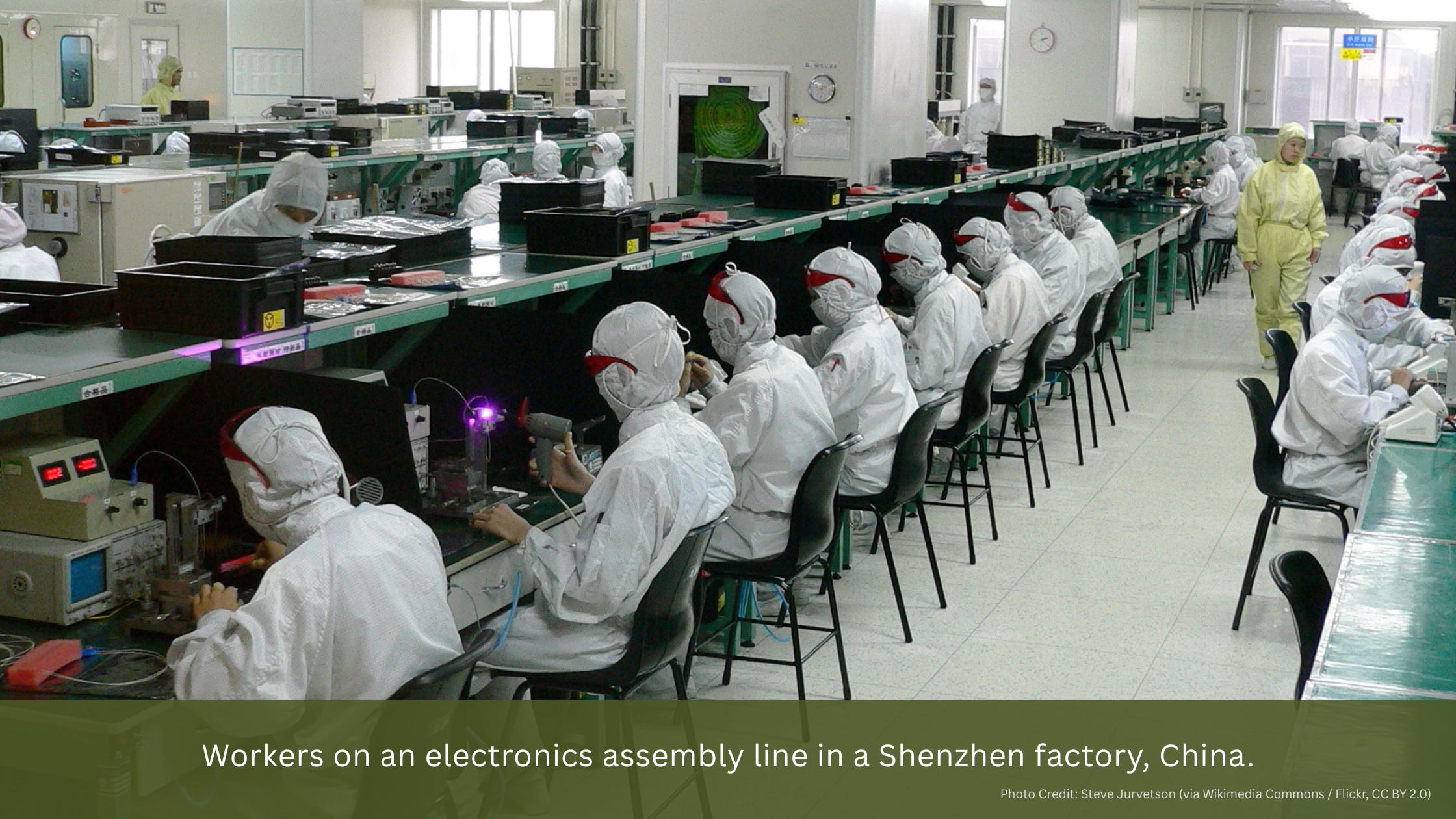
Malaysia and China both built economic zones.
From outside, the policy looked much the same, with fenced areas, foreign investment, exports and firms exposed to international customers.
Malaysia placed export firms inside its zones. Those firms faced a genuine test. They had to win foreign customers, and the government could not simply declare them successful.[1]
But the test stopped at the boundary. Beyond it stood protected domestic champions (firms the state had chosen to shelter), politically allocated ownership and markets the zone firms could not readily take from them. The export economy could grow without displacing the claims governing much of the economy outside it, such as an ownership right, a licence or a protected position a favoured actor could lose.
China also kept a protected core. State firms in oil, telecommunications, power and other commanding sectors remained sheltered.
But much of the new activity developed beyond such firms’ automatic claim. New firms could enter, expand and compete in a margin, a space at the edge of the economy, that the old core did not wholly control. State firms entering that space could lose. Hsieh and Song estimate that more than 83 per cent of the state-owned industrial firms operating in 1998 had closed or been privatised by 2007.[2] That scale of exit carried a real cost in jobs lost, not only a firm-level statistic.
Both governments sheltered champions. Both exposed other firms to demanding markets.
Malaysia enclosed the test. China enclosed the champions. The same instrument, and the opposite thing inside the wall.
Investors, donors and policymakers must judge a government’s direction long before any growth figures exist to help them. Two kinds of evidence let them judge it. The ordinary terms a government sets for its firms are one, and what it does the one time protecting a favourite would cost something real is the other. What follows builds the first kind of evidence, then tests it against the second, and asks at the end what the two together are actually worth.
I: What identical policies can hide
Two governments can use the same tools for opposite purposes. What separates them only becomes visible once each can no longer protect everything.
What the zones don’t settle
Malaysia enclosed the test, and China enclosed the champions, but that contrast alone is not a complete description of either economy. Malaysia’s zones generated genuine production, employment and learning, while China’s exposed margin remained extensively shaped by the state.
The narrower contrast concerns the relationship between protection and the emerging path, whether the firms subject to it can reach, expand along and ultimately reorder the terrain through which the economy is changing.
That zones comparison tells us something important, but not yet enough. Malaysia kept the demanding test apart from the protected domestic order. China allowed much of the new economy to develop beyond the old core’s automatic claim.
But arrangements can be bent, waived or reversed once powerful interests are affected. But arrangements can be bent, waived or reversed once powerful interests are affected. What those choices reveal is the priority a government preserves when it can no longer protect every purpose and claim at once.
What a revealed priority means
Development plays out across decades, crises and successive leaders, not one leader’s tenure or one test. But it starts somewhere, with a single government, at a single moment, when its terms are tested, and something has to give.
Call what that moment shows a government’s revealed priority, the purpose it protects, once, when it can no longer protect everything. It is not an assertion about the whole state. A government may protect transformation in one domain while sheltering privilege in another. The inference stays limited to the specific path, domain and period the evidence actually covers, never generalised beyond them.[3]
Declared ambition, administrative capability and a revealed priority answer different questions. Ambition identifies where a government says it wants to go. Capability identifies what the state can carry into action, however skilfully. A revealed priority identifies which purpose actually prevailed, this time, when the government could not preserve everything it valued.
China and Malaysia could both administer zones and attract export investment. Capability alone did not tell us what each arrangement was politically organised to protect. All eight governments in the previous post’s comparison declared development, and substantial administrative capability appeared on both sides of the eventual divide between the economies that went on to sustain transformation and those that did not.[4] Capable machinery can direct credit towards exporters, but it can also enforce ownership targets, protect favoured firms or extract resources for political maintenance.
Ambition identifies the destination. Capability supplies the machinery. A revealed priority identifies which purpose actually governed, this time.
This post is concerned with a transformative revealed priority, one in which productive transformation takes priority over a politically valuable claim capable of governing the consequential economic path. Reading it takes two kinds of evidence, before any growth figures exist. The ordinary governing terms firms face support an inference about intention; a conflict in which those terms turn politically costly reveals what actually gets prioritised.
Whether a revealed priority recurs into a governing orientation durable enough to survive successive leaders and crises is a separate, longer question. A later post takes it up. This one stays with the here and now.
Governing terms point to intention. Conflict reveals a priority. Whether it recurs into an orientation is for later.
II: What the terms make conditional
Long before the terms are tested, a government has decided who may enter, what support depends upon, what counts as success and who may alter the answer.
What a firm actually delivers
Plans identify the direction a government declares. Governing terms show how it has organised economic activity around that direction. They establish who may enter, what support is available, what firms must do to qualify, what counts as success or failure, and who is entitled to different treatment.
Those terms also include the fiscal arrangements surrounding a government’s plans, what the government taxes or exempts, which revenues it protects or earmarks, where it directs procurement (what the government buys, and from whom) and capital spending, and what purposes public investment is built to serve.
Tax concessions, infrastructure, guarantees and budget allocations may make a declared productive path materially possible. They may instead preserve incumbents, distribute rents (payments that flow from a protected position rather than from producing anything) or finance political maintenance (paying off the coalition that keeps the government in power).
None of these instruments discloses its purpose by itself. A development bank may finance firms expected to build productive capability, or preserve borrowers whose political position makes repayment optional. Public investment may open a path to new producers, or strengthen the actors who already control access to that path. The intention becomes clearer from who receives the advantage, what activity it enables and what its beneficiaries must deliver in return.
Two comparisons make the point concrete. One isolates what a supported firm must deliver in return; the other isolates whose access the government chooses to make dependable in the first place.
Korea and Malaysia both reached for the same tools, among them credit, protection, tax privileges and administrative preference. What a firm had to do to keep them differed completely. In Korea, access to state-directed credit was tied to export performance. Foreign customers supplied an answer the government could not wholly control. Either the firm could sell what it produced or it could not. Korea’s governing terms indicated that support was intended to build productive capability tested beyond the domestic political system.
Malaysia organised its advantages around two purposes. Export manufacturers received tax holidays (a set period with no tax owed), duty-free inputs and industrial-estate infrastructure in return for establishing internationally competitive production. In the domestic economy, licences, directed credit and procurement were attached principally to Bumiputera (ethnic-Malay and indigenous) ownership and participation. The beneficiary qualified because of who owned the firm and the distributive purpose it served. Malaysia’s fiscal architecture therefore supported export production while securing an ethnically defined share of ownership and economic control.[5]
The contrast was between what a firm had to deliver and whose economic position the government intended to advance.
Whose access counts as dependable
External markets are one way of supplying a meaningful standard, but not the only one. Competitive procurement, published licensing criteria, creditor rules or independent technical assessment may perform a similar role. What matters is that the condition is specified before the result is known and cannot easily be rewritten afterwards for one particular firm.
Singapore offered foreign manufacturers land, infrastructure, tax concessions, training and administrative support without requiring the resulting activity to be owned or controlled by an established domestic business group. The qualification was the productive activity the firm proposed to establish. Ownership by a politically favoured constituency was not itself one of the intended results (constituency here means any support base a government needs, not a body of voters).
Indonesia also used licences, credit, contracts and protection to promote investment and industrial activity. But politically connected conglomerates enjoyed forms of access that ordinary entrants could not assume. Their place within the governing coalition helped make licences, finance and protected opportunities dependable.
Singapore’s terms indicated that the government intended to secure productive activity regardless of who owned it. Indonesia’s terms indicated that development would proceed partly through a politically connected domestic business structure whose claims were themselves made valuable.
The two comparisons expose different dimensions of intention. Korea and Malaysia differed in what a supported firm had to deliver. Singapore and Indonesia differed in whose access the government chose to make dependable.
What actually decides who prospers
Formal rules do not necessarily settle either question. Rules may appear open to all while the most valuable guarantees, land, finance or procurement remain reserved for recognised insiders. An entrant may technically qualify for support but still have to negotiate every permission, while an established firm can plan on the assumption that access comes with its position.
Weak formal institutions don’t mean uncertain treatment for everyone. A government can make dependable commitments to a favoured few while leaving everyone else exposed to its discretion.[6] A governance or institutional-quality index can’t tell those apart, a blindness built into the measure itself. It scores how rule-governed a system looks, not who the rules are written to protect.
This same blindness affects real capital. A score built for this purpose cannot tell an investor or donor which government is open to genuine discipline and which merely looks orderly. Both can score identically well.
The relevant distinction is therefore not simply between rules and deals. It is whether the terms provide an identifiable basis for differential treatment, or make the political identity of the firm itself the basis on which access depends.
Consistency does not require uniformity. A government may deliberately offer different terms to exporters, infant industries (new sectors not yet able to compete internationally), domestic producers or firms entering strategically important sectors. Those differences may be central to its economic strategy. The question is whether they correspond to a stated purpose and an intelligible condition, or place particular firms outside the standard altogether.
That leads to the central question:
What must a firm do to prosper under this system?
Must it improve, export, innovate or win customers? Or must it control a licence, maintain a political connection or hold a protected position?
The distinction is not between supported and unsupported firms. A government seeking transformation may direct credit, protect infant industries, subsidise learning and rescue firms from temporary difficulty. What matters is what the firm must deliver in return, and whether continued support remains conditional on that delivery.
The firms supported, the form the support takes and the conditions attached to that support therefore support a provisional inference about intended priorities. They indicate what the government means to reward, whose access it intends to make dependable, and which claims it has placed beyond an independent standard.
These signals do not yet show what happens when adhering to those terms threatens an interest the government also values.
III: Where the terms stop applying
As the zones comparison already suggested, a test can be real and still be contained. Where a government lets it reach is itself part of what the terms reveal.
How far each test was allowed to go
Governing terms also reveal intention through the reach permitted to new productive activity.
Transformation occurs when the ability to invent and make hard things becomes widely embedded in an economy, reshaping the work people do, the capabilities suppliers acquire and the range of goods and services the country can produce. Growth may instead remain concentrated within a productive enclave, never asked by the wider economy to compete beyond it.
The economic distinction between an enclave and a more deeply connected growth sector is familiar. The additional question here is political. Are the enclave’s firms and competitive terms allowed to reach beyond it, drawing in workers and capital and altering domestic markets and arrangements as they grow, or does the protected order retain control over the finance, markets and access through which wider expansion would have to pass?
The answer points towards what the government intends to prioritise. A government willing to let new productive activity reshape firms, workers, suppliers and patterns of ownership is accepting that transformation may unsettle politically valuable claims. A government that confines the same activity within carefully maintained boundaries indicates that those claims remain part of what it intends to protect.
Malaysia illustrates the second configuration. Its zone, already tested against foreign customers and already walled off from the protected domestic order, generated exports, employment and learning without displacing national champions, altering the wider ownership settlement or carrying its competitive terms into the domestic economy.
The productive test was real. The transformation it might generate was contained.
China protected a commanding state-owned core, but allowed much of its emerging economy to develop beyond that core’s automatic claim. Coastal zones, township enterprises (collectively owned local firms operating outside the state plan) and later private firms could enter new activities, attract labour and capital, form supplier relationships and expand into markets not reserved for the old plan. Protected enterprises remained important, but they were not granted an entitlement to control or seize every new source of growth.
China’s own reach went further still. Much of the old core stayed enclosed, but new activity could draw growing parts of the economy and society into a different productive system.
Taiwan offers another version of this broader reach. Its emerging export economy was not confined to a sealed enclave or reserved for established licence-holders. The removal of import-licence rents reduced incumbents’ control over entry, while new domestic manufacturers and suppliers could participate in expanding export activity.
The terms allowed productive learning to spread through firms and supply networks, changing not only what particular exporters sold but what a widening part of the economy was capable of making.
Why the boundary counts as a choice
Three different boundaries, drawn in three different places. Were any of them actually a choice? The boundary is not simply where reform has not yet reached. Malaysia’s ethnic-equity exemption for its export zones is a named, structured carve-out, not an absence of policy. China’s accession to the WTO (World Trade Organization) extended new terms to the exposed margin while leaving the core’s protections outside that same negotiation.
A named exception had to be deliberately drafted by someone, so it counts as real evidence of intent. A general silence counts as no evidence either way. The topic may simply not have been reached yet. Both look like active design, not passive lag.
Malaysia’s own natural-resource wealth may have made that wall cheaper to hold. Palm oil, tin, and later oil and gas gave its protected domestic economy an alternative source of return, one that did not depend on ever competing past the wall.[7] A business class with a comfortable rent has less pressure to fight its way past that wall than one with no other income at all. This does not make the wall less deliberate. It may explain why holding it cost the government less than it would have cost elsewhere.
The growth path need not be fully visible when its terms are first established. A government may decide who may enter, which claims have priority and where institutional boundaries lie before knowing which sectors or firms will become decisive. Those choices are informative because they show whether emerging activity has room to spread, connect and displace, or whether its effects have been bounded in advance.
A design fixes its own reach in advance. It does not fix, in advance, which side of that reach the terrain ends up rewarding. That second fact needs the growth itself to already be visible.
The inference that transformation is prioritised strengthens as investment, entry and productive capability accumulate. By the time China entered the WTO in 2001, the exposed part of its economy was already large enough to show that it was not merely a peripheral enclave. The accession protocol extended and clarified the terms connecting that activity to the international economy.[8]
The question is not whether incumbents remain protected somewhere. It is whether their claims control the route through which productive capability might become widely embedded.
The same test now reads as a provisional inference rather than a question. Reshaping the wider economy supports transformation’s priority; containing it supports the opposite reading.
That is evidence of intended priority. The harder question is what happens when the expansion permitted by those terms begins to impose real costs on interests the government values.
What the threat actually targets
Once a growth path can spread, the next question is what its expansion would displace.
That expansion may weaken established claims over finance, licences, protected markets, ownership, guarantees or control of entry. The threatened object is not necessarily the incumbent firm itself. More often, it is the bargain (the implicit deal) securing its position, the expectation that competition will remain limited, credit will remain available, ownership will remain untouched, or that failure will not bring the usual consequences. That is a position the surrounding terrain has never required the incumbent to defend.
The character of that bargain provides further evidence of governmental intention. An incumbent may receive dependable treatment on terms unavailable to comparable entrants. Where the governing terms leave that exclusivity open to erosion by new firms and productive activity, they suggest that transformation is intended to take priority over the incumbent claim. Where the terms preserve the position regardless of what the emerging path produces, the incumbent bargain remains among the purposes the government intends to protect.
The relevant protection may not reside in a single rule. A tariff may fall while procurement continues to favour the same producer. A loan may be called in (the lender demanding immediate repayment) while refinancing arrives through another public institution. A licence may lapse while a related company receives its replacement. Ownership may change formally while effective control, protected access and the expectation of rescue remain intact.
The inquiry must therefore follow the substantive privilege across instruments.
What actually allows the incumbent to exclude entrants, command resources or retain its position after a poor result? Protected finance, control of a licence, preferential procurement, restricted ownership or an understood right to restructuring? And do the ordinary arrangements leave that claim exposed, or preserve several routes by which it can be restored?
A government can alter a peripheral concession while leaving the protected bargain untouched. Removing one subsidy may mean little if the firm retains exclusive access to finance and customers. Opening the market on which its position depends, ending its control over entry or making continued support conditional would place the underlying claim at risk.
The arrangements described earlier denied some inherited interests an automatic entitlement over new activity. Singapore’s established local business class did not receive a reserved right to own or control the foreign-led manufacturing sector. China’s planning institutions did not retain authority over every firm and market emerging beyond the state-owned core.
This evidence is not simply that new activity existed outside the old structure. It is that particular incumbent claims over ownership, allocation and entry were not built into the terms of the new activity.
Brazil, and the capture problem
Brazil provides a contrasting configuration. Its industrial policies could impose conditions concerning investment, domestic production and exports. Yet established manufacturers occupied central positions within networks of suppliers, dealers, workers and public agencies. Their privilege did not depend on one tariff or loan that could be cleanly withdrawn. It rested on a wider bargain in which maintaining domestic production, employment and the industrial coalition around the firm formed part of what state support was expected to secure.
Brazil’s automobile sector made this visible. A peripheral producer could face the stated condition directly, while an established manufacturer’s obligations could be adapted around its wider Brazilian operations and its importance to the domestic industrial structure.
The governing terms pointed towards an intention to expand industrial production, but also to preserve the position of the firms through which that production had been organised. Their established place within the system was no longer merely an instrument for achieving the policy purpose. It had become part of the purpose itself.[9]
This alone does not distinguish a government’s own protective priority from ordinary regulatory capture (where the industry being regulated ends up controlling the regulator). An organised incumbent, left to its own devices, would seek exactly this kind of accommodation regardless of what the government intended. Brazil’s auto sector, read on its own, cannot rule that out.
The same favour fits both stories equally well. But capture means the industry controls the regulator, so a captured government could never let a live test threaten the firm it answers to; one confirmed instance of support staying genuinely conditional is proof the government, not the firm, still held the pen.
For Brazil’s auto sector, the revealing question is narrower still, whether the established manufacturers’ claim on state support ever stayed conditional on productive delivery, or whether preserving their position had become an objective in its own right.
Identifying the claim at risk sharpens the same inference. Either way, this remains an inference, not yet a settled fact.
Three questions in escalating order, what a firm must deliver, whether that activity can reorder the economy, and which incumbent claims would have to give way. Each sharpens the last.
Prices and incentives explain what a government does under a given set of terms. They do not explain which terms it chooses to set, or uphold, when it has genuine room to do otherwise. The harder evidence comes when the government can no longer preserve both the threatened bargain and its own terms, and must decide whether that bargain will actually be protected.
IV: What the government protects under pressure
A government's priorities become clearest when a favoured claim seeks exemption, whether before its terms can operate or once they impose a real loss."
When governing terms become costly
Conflict begins when a government can no longer preserve both a politically valuable claim and the terms through which it intends the productive path to proceed.
It can arise at two moments. Sometimes an inherited privilege already controls the finance, licences, markets or authority the new path requires, and the government must curtail that claim before different terms can operate. Sometimes the terms are already in place, produce an adverse verdict and threaten a valued actor with a material consequence.
The first reveals priority through the terms the government is willing to establish. The second reveals it through the terms the government is willing to enforce.
Korea’s corporate reorganisations in 1986 and Indonesia’s Timor car project illustrate the second moment (Timor was a national-car scheme built around the president’s son). Korea placed fifty-six troubled firms into state-supervised reorganisation. Their factories and productive capabilities could be preserved, but their owners and managers could no longer assume that support would leave their positions untouched.[10] When the requirements attached to national-car status threatened Timor, by contrast, the surrounding terms were adapted so that the favoured project kept its privileges.[11]

The material consequence may concern equity (ownership shares), ownership, management, finance, licensing, protected access or an assumed guarantee. The organisation itself need not disappear. A government may preserve factories, jobs and productive capability while diluting owners (cutting their ownership share), replacing managers or withdrawing protection. A rescue may preserve productive value while removing privilege, or preserve both together.
As before, what matters is which purpose the intervention protects.
The same asymmetry recurs elsewhere. Similar accommodations protected Malaysia’s national carmaker Proton, Brazil’s informatics firms and Thailand’s connected banks when existing terms threatened politically valuable claims.[12]
The government’s response provides stronger evidence than the terms alone, since it shows which priority prevails once both cannot be preserved.
Both forms require further checks. Did the threatened claim matter to the government? Did the government possess a meaningful choice? And did establishing or enforcing the terms serve productive transformation rather than another purpose?
Did the claim matter to the government?
A conflict reveals prioritisation only when allowing the consequence to stand puts something the government values at risk. The severity of the loss to the target is not enough. What matters is the political cost to the government.
Brazil halted Simca’s production for six months after the carmaker failed to meet Brazil’s domestic-content conditions. The sanction was severe for the firm, but Simca was a recent entrant without a deeply rooted network of suppliers, workers or political patrons whose cooperation the government depended upon.[13] Enforcing the standard required little sacrifice from the government itself.

Taiwan had rationed foreign currency, limiting who could import, and the resulting scarcity gave those licences real value. Dismantling that system was more important to Taiwan’s subsequent development, but presents a related caution.
The reforms destroyed valuable rents and overcame a prolonged deadlock within the administration. Yet the industrialists benefiting from the old arrangements were not central to the exiled KMT’s (Kuomintang’s) political base, while American pressure helped break the deadlock.[14] The reform may have been highly consequential for transformation without imposing an especially costly loss on a constituency the government depended upon.
Singapore’s 1986 reduction in employer contributions to the Central Provident Fund reached a different kind of claim. It reduced the retirement provision accumulated for workers and imposed a cost on organised labour, whose cooperation was embedded in the PAP’s (People’s Action Party’s) governing settlement.[15] The decision therefore put at risk a relationship the government had strong reasons to preserve.
These examples differ not chiefly in the severity of the consequence, but in what the government itself put at risk. Brazil could sanction a relatively dispensable entrant without testing whether transformation outranked something it seriously valued. Taiwan removed important licence rents, but principally from interests outside the KMT’s governing coalition. Both decisions may have advanced development while revealing comparatively little about prioritisation.
Singapore’s CPF reduction was more revealing because the loss reached into the PAP’s own governing settlement (its broader political arrangement) with organised labour. It risked political support and the cooperation of a constituency on which its governing model (its overall approach) depended.
The value of the claim must therefore be established independently of its eventual fate. Did it carry coalition support, employment, financial resources, control over production, patronage (jobs and favours handed out to keep supporters loyal) or the cooperation of actors capable of obstruction? The more the government stood to lose by denying protection, the more clearly its response reveals which purpose it placed first.
Did the government own the choice?
Political cost reveals prioritisation only where the government also possessed a feasible alternative. Could it realistically have rescued the institution, guaranteed its debts, waived the standard, changed the ownership arrangement or placed the loss somewhere else?
During the Asian financial crisis of 1997, Thailand suspended fifty-eight finance companies and ultimately ordered fifty-six of them closed. Thailand’s closures imposed substantial losses on owners and patrons connected to the country’s political and financial order. But they occurred amid a collapsing currency, systemic financial distress and an IMF (International Monetary Fund)-supported programme that reinforced the restructuring.[16] Thai authorities retained some room to shape the process, yet the range of viable alternatives had narrowed sharply.
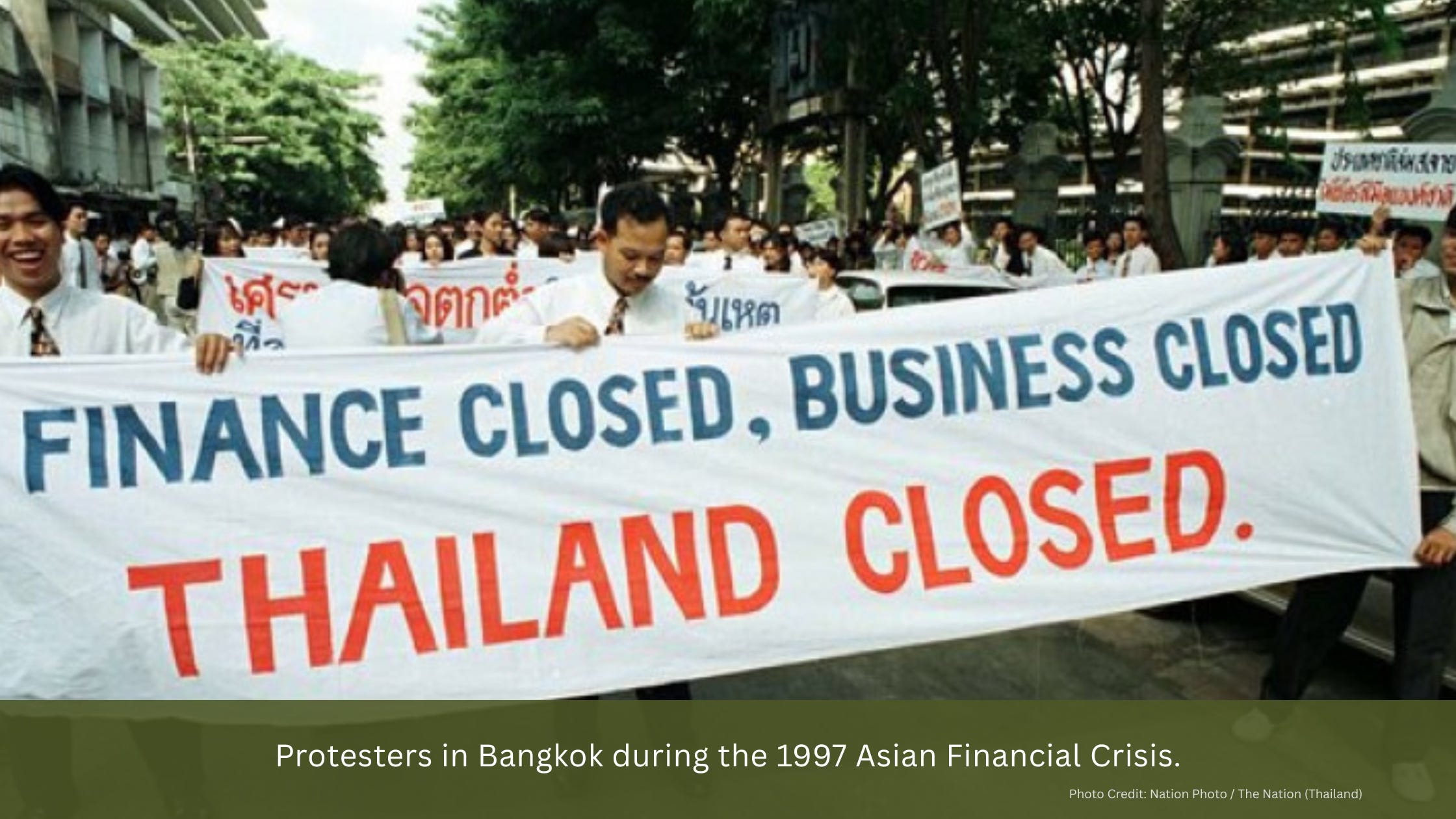
The closures may have helped create a more disciplined financial system. But because Thailand had little effective freedom to preserve the institutions on their previous terms, the decision itself provides weak evidence that the government was prioritising transformation over connected claims. It shows what happened under constraint more clearly than what Thai leaders would freely have chosen.
The government’s freedom to choose matters because it determines what the decision can tell us. Where the government retains meaningful control over the result, its choice may reveal which purpose it protected. Where crisis, creditors or external conditions effectively determine the outcome, the decision reveals the force of the constraint more clearly than the government’s own priority.
The bankruptcy of the Guangdong International Trust and Investment Corporation provides a freer decision. GITIC was one of the provincial “window companies” through which Guangdong, China’s richest province, raised money from foreign banks. Because it was an arm of the provincial state, lenders treated its debts as carrying an implicit guarantee from Beijing.
When GITIC became insolvent in 1998, the Guangdong authorities proposed a rescue. Beijing rejected it. China possessed the legal authority to intervene, and its foreign-exchange reserves dwarfed the liabilities at issue many times over.
The government could have paid.
Instead, Beijing placed GITIC into bankruptcy in 1999 and allowed foreign creditors to bear losses.[17] The guarantee investors had counted on did not survive the only test that mattered. It was not acting under an external programme, facing an empty treasury or accepting an outcome for which no plausible alternative existed. That refusal therefore provides unusually clear evidence of a priority expressed through governmental choice.
That does not yet tell us which purpose Beijing placed first. It tells us that the consequence was sufficiently its own decision for that purpose to be investigated.
A government can also author a decision before the conflict arrives. It may adopt a law, treaty or independent institution precisely to make politically convenient exceptions harder to grant later. The free choice that matters is the one that created the constraint, not the one taken at the moment the constraint bites. Although its discretion is restricted at the final moment, the consequence may still reveal prioritisation if the government freely created the constraint and continued to uphold it once doing so became costly.
A sceptic could press further: if a law authored the constraint, something authored the choice to pass that law, and so on without end: an infinite regress. Every causal explanation faces the same regress; bounding it at the observable record is how any such inquiry is ordinarily conducted, not a special exemption invented for this one. That regress has to stop somewhere: this account asks only whether the constraint relevant to this test was authored within the observable record, not to trace free choice back indefinitely.
This contrast is with terms principally defined and enforced by others. Compliance under an externally controlled constraint carries less information about national prioritisation because the government may have no effective opportunity to choose otherwise. Authorship of the terms that determined where the loss fell matters more than how much discretion remained at the final moment.
V: What the conflict was actually for
Cost and agency only show that a conflict was real. Whether it actually served transformation is what decides whether the inference holds, and that verdict reaches beyond this one conflict.
Was transformation the priority?
Political cost and governmental authorship show that a decision expressed a real priority. They do not yet tell us what that priority was. Whether the government was establishing new terms or enforcing existing ones, the final test is whether its choice enabled or preserved productive transformation.
The strongest evidence lies in the fit between the government’s stated productive objective, the privilege standing in its way and the change eventually made. The inference strengthens where curtailing that privilege allowed the transformative terms to operate, and where punishment, consolidation or fiscal necessity explain the decision less convincingly.
Taiwan’s reforms of 1958–60 show how that connection can be traced. The licence rents (the scarce-licence income already discussed) were not transferred to a more loyal group. They were curtailed so that the export strategy could operate.[18] The fit between the obstacle removed and the path enabled makes the episode evidence of transformative purpose.
The inference remains bounded, as before, to this path, within this domain, across this period, and protected interests survived elsewhere besides. Taiwan therefore gives strong evidence about the purpose of the reform, but weaker evidence of political sacrifice within the governing coalition.
American pressure explains why reform happened when it did. It does not explain the specific design Taiwan’s own technocrats chose (the appointed experts running the reform, not elected politicians), or the multi-year implementation they carried out once the decision was made. The government owned the how, even if it did not fully own the whether.
Singapore’s 1986 CPF cut, already established as a cost imposed on a valued constituency, brings the checks together more fully.[15-1] The claim curtailed was also the direct source of the competitiveness loss the reform addressed. Singapore accepted that political cost precisely to preserve the terms under which its productive economy could compete.
Indonesia’s treatment of Pertamina shows why the connection cannot be assumed. When the state oil company’s debt crisis erupted in 1975, Pertamina’s president, Ibnu Sutowo, controlled resources and patronage important to the military and Suharto’s regime. Removing him and curtailing Pertamina’s commercial empire confronted a valuable insider.[19] Concealed debt equal to roughly a third of Indonesia’s economy is itself a finding: no productive test, no creditor discipline, was operating on Pertamina at all before the crisis forced the reckoning.

But national solvency and political recentralisation explain the intervention more directly than transformation. The decision did not clearly expose producers to a new productive standard or open a path previously blocked by Pertamina’s privilege. A powerful actor lost his position, but the productive terms of the economy were not evidently changed.
The contrast clarifies the distinction. Removing a powerful actor is not enough. The evidence points towards transformation when the claim curtailed was obstructing an already identified productive path, and its removal allowed that path’s terms to operate. A ruler who removes a rival while preserving equivalent shelter for loyal beneficiaries has changed who holds privilege, not the basis on which it is held.
What the three checks add up to
Malaysia and China opened this post looking alike. What told them apart was where each let its market test reach: Malaysia enclosed the test, China enclosed the champions. These checks, run on Taiwan, Singapore and Pertamina, show why that reading can be trusted.
Taiwan, Singapore and Pertamina show the same three checks converging in different ways: political cost, a government that owned the choice, and a change that served the declared productive path rather than some other purpose. Where they converge, prioritisation shows up in the terms a government is willing to establish just as clearly as in the consequence it is willing to impose.
Taiwan and Singapore make the same point from opposite directions. A case can be strong on one check and weak on another, as Taiwan is. Taiwan gives the sharpest evidence here for what a reform was for, and one of the weakest for what it cost the governing coalition. Or it can be strong on every check at once, as Singapore is. The checks sort independently; they do not average into one verdict per case.
The same caution applies to any diagnostic built from more than one imperfect signal, not only this one.
But the three checks only establish that a conflict was genuine, and that it served the productive path rather than some other purpose. They say nothing about how far the answer reaches.
A real test and a wide test are not the same thing: the first tells you the terms are genuine, the second tells you whether they are allowed to matter.
For anyone assessing a government, look first at whether its ordinary terms already set a demanding, uncontrollable standard, something a firm could fail. Then wait. A government that has not yet faced a costly test of that standard has not yet revealed a priority. The absence of a conflict is not evidence of restraint, only evidence that the test has not arrived.
That market test is not the whole answer. Once it has been passed, ask a second question. Can the firms that passed it expand into the wider economy, or does something else keep them walled off? A real test that never leaves its enclave has told you less than it first appears to: it shows a configuration that survived, not one the wider economy ever pressed to spread.
What a government does the first time protecting a favourite would cost it something real tells you more than any plan, capability score, or declared ambition examined so far.
Further reading
Alice Amsden, Asia’s Next Giant (1989) — the fullest account of Korea’s conditional industrial credit, the case this post’s reading of governing terms leans on hardest.
David Kang, Crony Capitalism (2002) — the sharpest counter-reading of Korea’s reorganisations, arguing mutual dependence between state and chaebol constrained genuine discipline more than this account allows.
Robert Wade, Governing the Market (1990) — the foundational study of Taiwan’s export-discipline reforms and the East Asian developmental state more broadly.
Pritchett, Sen and Werker (eds.), Deals and Development (2018) — the open/closed, ordered/disordered deals framework this post borrows to read what governing terms reward.
Helen Shapiro, Engines of Growth (1994) — sources both the Brazil auto-sector and Simca cases, and the clearest documented instance of differential treatment between an established and a peripheral producer.
Stefan Dercon, Gambling on Development (2022) — his development bargain is the same elite choice this post reads from evidence: a real commitment to growth over extraction, credible only once tested, not just declared.
Notes
Malaysia’s electronics exporters were exempted from the ethnic-equity rule that governed much of the protected domestic economy. The zone developed real export capability, but the exemption also bounded its political reach: exposure operated where it did not displace the champions outside the zone. See the World Bank’s account of Malaysia’s electronics cluster and the preceding post’s Malaysia case.↩︎
Hsieh and Song, “Grasp the Large, Let Go of the Small” (2015), report the 83 per cent figure. They caution against treating state-firm closure as the direct engine of growth: private-firm expansion accounted for much more. The statistic is used here to show that entry and displacement operated on the exposed margin, not that closing state firms caused transformation.↩︎
Developmental-state scholarship has shown how governments may support firms while making that support conditional on productive performance. Soft-budget-constraint theory identifies the opposite condition, in which organisations expect political connection to protect them from the consequences of failure. Political-settlements accounts, and Dercon’s account of governments gambling on growth despite real political risk, explain why some governing coalitions sustain growth-promoting arrangements while others preserve rents, ownership and political position. This post’s contribution is diagnostic rather than explanatory: it identifies how, after the fact, a government’s own gamble can be read from its ordinary terms and a single conflict, not why some governments make that gamble and others do not.↩︎
The claim is deliberately narrower than saying capability does not matter. The preceding post showed that capability does not sort these eight: Malaysia scores close to China on broad contemporary state-effectiveness measures, while Korea and Taiwan’s reputations for even-handed administration strengthened mainly after their take-off; Singapore is the clear case of high early capability. Different measures rank bureaucratic construction and impartial application differently. The point here is only that administrative machinery does not identify the purpose it will carry.↩︎
In Malaysia, qualifying export manufacturers received Pioneer Status corporate-tax holidays, duty-free imports of inputs and equipment, exemptions from the New Economic Policy’s Bumiputera equity requirements and industrial-estate infrastructure at Bayan Lepas. Indonesia supplies an important caution. Oil revenues financed rice, roads and schools, providing substantial evidence of developmental ambition, while connected firms remained protected from productive discipline. Fiscal arrangements can therefore strengthen an inference about intended prioritisation, but cannot by themselves establish which purpose will prevail once that prioritisation becomes politically costly.↩︎
Pritchett, Sen and Werker, eds., Deals and Development (2018), distinguish open deals from closed ones, and ordered enforcement from disordered enforcement. The case this argument leans on is ordered but closed: a government enforces its side of the bargain reliably, but only for a closed group, while everyone else faces discretion. Reliability is not synonymous with openness. The question here is whose deal is dependable, what conduct it rewards, and whether that dependability can survive failure.↩︎
Malaysia’s commodity exports, palm oil, tin, and later oil and gas through Petronas, are an established feature of its economy. The point is offered as a live alternative worth weighing, not a settled cause: a resource-based cushion may have lowered the domestic business class’s incentive to contest exclusion from the export zones, alongside, not instead of, the government’s own choice to keep the boundary in place.↩︎
WTO accession did not place Chinese policy beyond all later revision. Its narrower significance is that the exposed sector was visible by 2001 and the accession protocol and working-party commitments increased the diplomatic, legal and commercial cost of selective discrimination or restored protection.↩︎
Helen Shapiro’s studies of Brazil’s automobile industry document both sides of this pattern. The earlier GEIA regime enforced domestic-content conditions against relatively weak entrants, while later BEFIEX export bargains with the established carmakers were repeatedly renegotiated rather than withdrawn. The claim that the established manufacturers had become part of the protected domestic bargain is an inference from this differential treatment and from their position within networks of suppliers, dealers, workers and public agencies, not a contemporaneous statement of governmental motive.↩︎
Amsden reports that fifty-six firms were under government-directed reorganisation in 1986 rather than being left to ordinary liquidation. The episode supports the narrower distinction: public support could preserve factories and capabilities without guaranteeing that existing ownership and management would remain untouched. It does not show that all fifty-six firms were sanctioned specifically for missing export targets. Kang’s competing account argues that mutual dependence between the state and the chaebol constrained how much genuine discipline could be imposed on either side, regardless of what enforcement looked like on the surface.↩︎
Indonesia’s 1996 national-car programme granted exceptional tariff and tax privileges to Timor Putra Nasional, controlled by President Suharto’s son. When domestic production and local-content requirements could not initially be met, a special accommodation allowed Korean-built Kia cars to be imported and treated as qualifying national cars, while state banks supplied roughly US$690 million in finance. The accommodation, rather than the project’s later termination under WTO and IMF pressure, is the evidence used here of terms being adapted around a politically favoured project.↩︎
The four compressed cases are developed in the preceding post. Malaysia’s Proton retained protection without a terminating market test; Indonesia’s Timor car received large state-bank lending to the president’s son; Brazil’s informatics reserve imposed substantial costs while delaying access to technology; and Thailand repeatedly protected connected financial interests. The cases differ institutionally. What they share is that a standard was altered or suspended when it threatened a politically valuable claim.↩︎
The Brazilian authorities withheld foreign exchange from Simca after it failed to meet domestic-content requirements, stopping production for about six months. The sanction was real, although it did not expel the firm from the programme. The description of enforcement as politically inexpensive is a comparative inference from Simca’s relatively weak position within the Brazilian industrial structure, rather than a motive explicitly stated in the historical record.↩︎
Before reform, Taiwan rationed foreign exchange through import licences that generated premiums reportedly reaching 350 per cent on some goods. A prolonged deadlock between Finance Minister P. Y. Hsu and K. Y. Yin broke after Washington warned in February 1958 that aid would be reduced without reform. Between 1958 and 1960, the government dismantled the rationing and certificate system and unified the exchange rate. Import controls proper remained substantially in place for longer. The affected industrialists were not central to the émigré KMT’s political base, which limits the episode’s value as evidence of sacrifice within the governing coalition.↩︎
Singapore’s new growth relied heavily on multinational firms rather than an established local business constituency. The later cost stated here is narrower and directly observable: the official CPF contribution-rate series records the sharp 1986 reduction in employer contributions after the 1979 high-wage turn. This does not prove that every labour claim was subordinated to transformation; it identifies one consequential reversal borne by a core constituency.↩︎↩︎
The comparison concerns authorship, not the merits of closure. Thailand began suspending finance companies before the IMF programme, so its closures were not simply foreign orders. The later restoration examples come from the wider stalled record: Indonesia’s Bank Andromeda assets rapidly reappeared under another licence, the IPTN aircraft programme ended under external pressure, and Malaysia’s Renong was rescued on terms preserving the insider behind it.↩︎
GITIC was one of Guangdong’s provincial “window” companies, borrowing abroad on the widely held assumption that Beijing stood behind it. The central government rejected a provincial rescue in October 1998 and pushed the trust into bankruptcy in early 1999, leaving its debts to foreign creditors substantially unpaid. The important qualification is that the refusal can also be read as fiscal federalism: the centre declining to absorb a province’s liabilities. The wider restructuring of China’s state sector makes that reading incomplete, but GITIC alone cannot establish the direction of the whole economy.↩︎
The deadlock and reform sequence are detailed in the licence-rent footnote above; Hsu resigned and Yin implemented the reform in stages. As with that finding, this is stronger evidence of a specific privilege removed for a declared path than of a regime risking a coalition pillar. Import controls also remained after the rationing system was dismantled.↩︎
Pertamina’s concealed debts reached roughly US$10.5 billion, close to one-third of Indonesia’s economy. The government assumed the liabilities, dismantled much of the company’s commercial empire and removed its president, General Ibnu Sutowo, despite his position within the military and patronage system. The episode demonstrates the state’s ability to confront a powerful insider, but its immediate purposes were national solvency and the recentralisation of financial authority, not the imposition of a productive-performance test.↩︎