
Malaysia: Just Developmental Enough
How a redistributive coalition built an economic miracle it never planned — and why the miracle stopped where it did.

Singapore, Taiwan, and Korea directed investment toward designated industries and insulated economic decisions from political demands for redistribution. Three conditions define transformation-oriented governing: declared developmental intent, costly commitment, and a governing circuit that carries both into productive domains. Malaysia produced a comparable export-led growth record. This post examines whether it did so through a different governing orientation — and whether that difference explains both the achievement and its limits.

Between 1967 and 1997, Malaysia grew from a primary-commodity exporter on the brink of political breakdown into a diversified industrial economy with a middle-income standard of living. Then came the Asian Financial Crisis of 1997–98. The crisis disrupted all affected economies; several, including Korea, implemented structural reforms in order to return to stronger growth. Malaysia did not. The post-crisis growth rate settled at 4–5% per year, roughly half the pre-crisis pace, and has persisted at that level for more than two decades.1 Twenty-five years on, the domestic economy has not transformed.
What made it work
The underlying governing intent that produced this record was redistributive, not developmental. The New Economic Policy, introduced after the 1969 riots, was designed to close the wealth gap between Malays and Chinese Malaysians. Ethnic equity was the primary mandate, not economic transformation. But redistribution at that scale required revenue, and revenue required a productive export sector. Hence, development became the means by which redistribution was financed, not an end in its own right.
The costly commitments this produced were real. Exempting electronics manufacturers from the NEP’s ethnic-equity requirements was a genuine political sacrifice. The Bumiputera constituency that would otherwise have received equity stakes was denied them.2 Concentrating oil revenues in PETRONAS rather than directing them to the Borneo states, whose parliamentary seats held the federal majority together, was a genuine political risk.3 Each commitment was accepted because the fiscal payoff funded the redistribution programme that the coalition depended on. Neither reflected primary developmental conviction at the apex, and the same fiscal logic protected two institutions that would prove decisive.

Bank Negara Malaysia and PETRONAS were both professionally run, and the governing coalition kept them that way: insulated from the patronage appointments and political extraction that consumed comparable agencies across the system. This meant keeping these institutions out of reach of the patronage demands that the coalition’s own constituencies were pressing in other places. BNM’s credibility underpinned the private investment on which the growth record depended. PETRONAS dividends directly funded the redistribution programme. Lose either, and the fiscal basis for everything else was gone.
BNM and PETRONAS were kept as productive islands inside a patronage-dominated political economy, not despite the patronage logic but because of it. The same calculus that directed patronage everywhere else protected them from it. This is fiscal-instrumentalism: their institutional discipline was sustained not by developmental conviction but by what the loss of it would have cost, the revenue the redistribution programme depended on.
The standard account gives credit to good institutional design and leadership. Those things were real, and sustaining them against the patronage pressure that prevailed everywhere else in the system was a costly commitment. But in an institution that did not sit at the centre of the coalition’s fiscal survival, the same design and leadership would not have survived the patronage pressure that consumed comparable agencies across the system. What protected BNM and PETRONAS was not only that they were well-governed, but also that they could not be governed badly without collapsing the finances that made redistribution possible everywhere else.
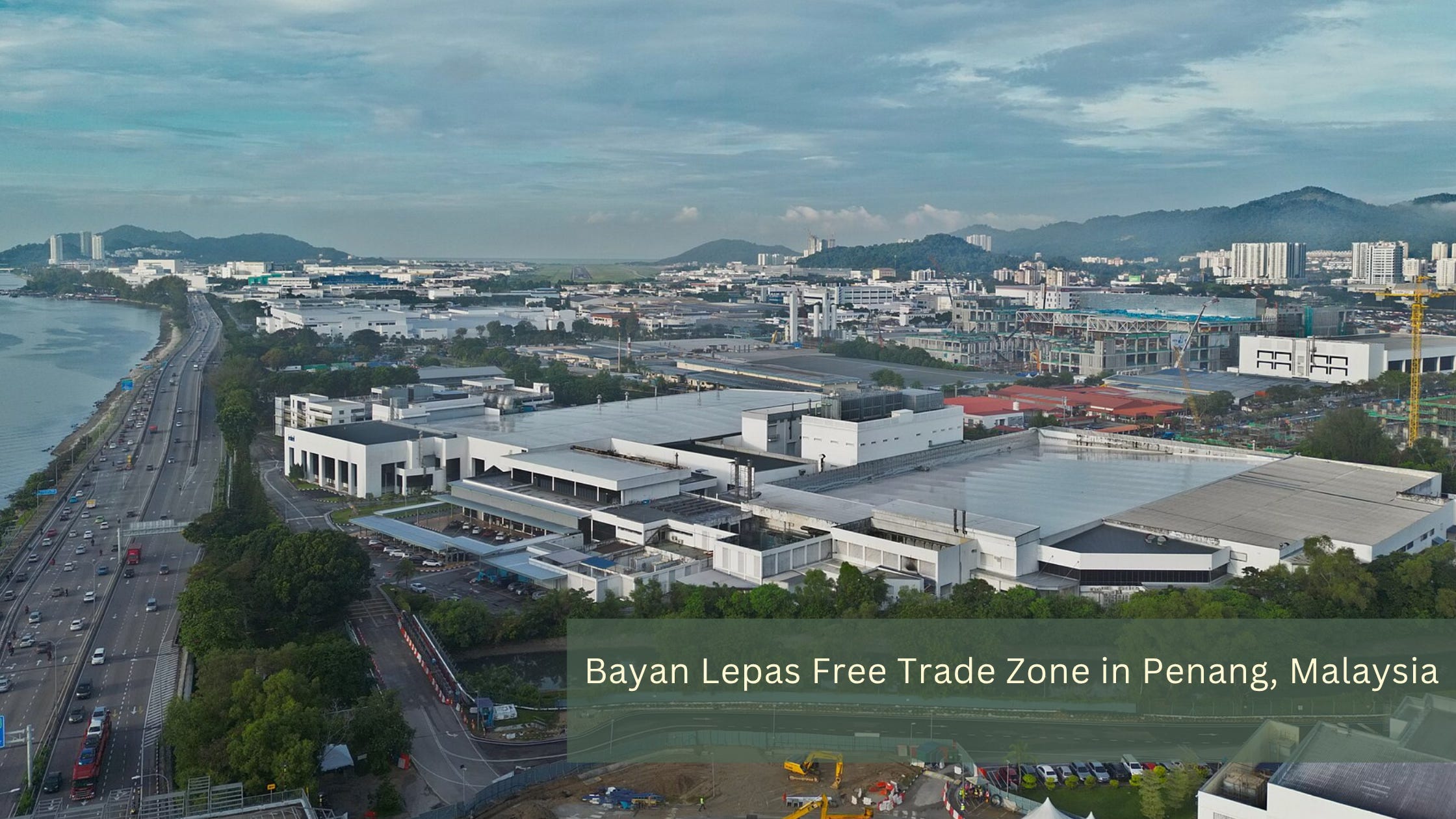
The governing circuit ran on two tracks. In the export sector, firms that met export-performance thresholds gained access to a specific package: Pioneer Status tax holidays, duty-free import of inputs and equipment through the Free Trade Zones, exemption from the NEP’s Bumiputera equity requirements, and the industrial estate infrastructure built by the Penang Development Corporation at Bayan Lepas. MIDA coordinated investment approvals and acted as the interface between incoming manufacturers and the relevant agencies. The state built the conditions and stepped back.4 Performance discipline was left to international customers, who enforced quality and delivery standards without political mediation.
In the domestic economy, firms got access if they were correctly owned. Licences, directed credit, and procurement contracts went to companies that met Bumiputera ownership ratios — the domestic parallel to Pioneer Status and FTZ access, but conditioned on ethnic compliance rather than export performance. The predictable response was the Ali-Baba arrangement: a Bumiputera partner holds the equity stake required for compliance while a Chinese partner runs the business. The system demanded ownership stakes; it got ownership stakes. Operational competence was never the condition.
Four elements, one equilibrium
Malaysia’s export-led transition succeeded because four elements operated in combination:
Fiscal-instrumentalist costly commitments at the export perimeter;
Two productive institutions protected by the same fiscal necessity;
Performance discipline delegated to international markets; and
Domestic distributional circuit that made the export circuit politically sustainable by absorbing the redistributive demands that would otherwise have pressed inward.
The distributional domestic economy and the developmental export governing circuit were not in tension. They were in equilibrium: the domestic circuit directed redistributive demands toward ownership stakes and licences, away from the export enclaves and from BNM and PETRONAS, while the export circuit generated the revenue that made the redistribution possible.
In 1985–86, commodity prices collapsed, Perwaja (steel) haemorrhaged losses, and Proton (cars) had yet to make a single export sale. The governing coalition’s response was to deepen the export orientation rather than defend domestic industry. The Promotion of Investments Act 1986 lowered equity thresholds for export-oriented manufacturers and relaxed the ICA’s ethnic-equity conditions.5 Domestic manufacturers absorbed the cost; the export circuit deepened; total factor productivity followed.6 Fiscal-instrumentalist in motive, real in effect.
Proton and Perwaja look like the exception. Both were large state investments in heavy industry — costly commitments with no immediate fiscal return, the shape of genuine developmental conviction. When the recession forced a choice, the coalition deepened the export orientation at their expense. Intrinsic developmental intent would have defended them. Fiscal logic did not.
Through the early 1990s, GDP growth averaged 8–9% annually.7 Meanwhile, the same logic that had made the export circuit productive was running in reverse in the domestic economy: privatisation transferred infrastructure concessions to politically connected conglomerates without performance conditions, and by 1997 the Renong Group had built its entire business model on political access rather than productive competence.8
Every licence and concession awarded without performance conditions created a beneficiary with the political access and financial incentive to resist any future restructuring. Each protected failure reduced the credibility of the next reform attempt before it had even been announced. The coalition’s record of non-enforcement became the baseline that organised resistance could count on.
The firms that the domestic economy would need to transform were getting good at managing political relationships, not at running productive operations. The domestic governing circuit rewarded the first and never required the second. The minimum viable configuration was working exactly as designed. And working exactly as designed, it was assembling the architecture of its own ceiling.
The decisive test

The 1997 crisis was the decisive test. When Finance Minister Anwar Ibrahim proposed adjustments that would have imposed real losses on the politically connected, the coalition’s response made its intent unambiguous: capital controls, selective bailouts, and the Finance Minister’s dismissal.9
The governing orientation was distributive, not developmental. The costly commitment the crisis demanded, i.e. genuine sacrifice of distributional protection in exchange for productive discipline in the domestic economy, was not made. The governing circuit then revealed its precise structure. In the banking sector, where the coalition’s fiscal survival required productive conditionality, the restructuring was real. For the corporate conglomerates whose principals needed protection, no such requirement applied. Restructuring left firms and owners intact.
The crisis did not open a general window for structural reform; it disclosed which window fiscal necessity had already unlocked. The resulting pattern of where conditions were real and where they were withheld is itself the governing orientation’s signature. The governing orientation had not been transformed by crisis. It had been revealed.
What 1998 left behind
1997–98 produced two structural changes that did not reverse. The crisis deepened fiscal dependence on PETRONAS — embedding the state’s redistributive commitments more deeply in oil revenues, a finite resource. The crisis response also deepened the patronage circuit: the coalition emerged from 1998 more committed to protection than when it entered.
The two structural changes left a governing coalition that would need to impose productive costs on its own constituents by political will alone — the fiscal necessity that had once made that discipline automatic was gone. It has not been replaced.
Reform to the boundary
The two decades after the crisis produced genuine costly commitments, but did so within a governing circuit that stopped short of its own principals. Banking sector restructuring was real: non-performing loans were purchased at a discount, recapitalisation on professional terms, losses were absorbed by shareholders and operational management. The GLC Transformation Programme applied the same logic to the country’s largest state-linked companies: professional managers, published targets, and real accountability for missing them.10
Both reforms extended the governing circuit’s productive reach, but costs fell on managers; political principals were not required to absorb them. With PETRONAS revenues still strong, the fiscal compulsion that had once made conditionality at the export perimeter non-negotiable did not extend to the domestic economy. Without that compulsion, there was no structural mechanism to drive the circuit further.
The New Economic Model tested whether the coalition would go further by choice. The 2010 NEM named the ethnic-preference architecture as a structural barrier to productive transformation of the domestic economy and proposed merit-based allocation as the remedy, a direct challenge to the distributional circuit that had sustained the coalition since the NEP.
The structural proposals were withdrawn three months later under pressure from Perkasa and UMNO grassroots.11 The withdrawal located the governing orientation’s ceiling with unusual precision: declared developmental intent and willingness to absorb real costs diverged at exactly the point where productive reform required political principals to pay.
Diagnosis without authority
Five governing coalitions, the same boundary. Reform reached managers, but it did not reach the principals above them. The governing circuit’s productive reach consistently stopped at the point where coalition placement authority began — not because successive governments lacked the diagnosis, but because the circuit itself could not carry costly commitment past that point. The NEM demonstrated that declared developmental intent can exist without the costly commitment to act on it. The constraint is not analytical. The coalition cannot enforce what it will not pay for.
PEMANDU is the clearest institutional expression of what governing at this ceiling looks like. The Performance Management and Delivery Unit, established in 2009 and operating through the NEM years and beyond, built a performance infrastructure of genuine analytical quality: lab methodology, detailed KPIs, and published scorecards across the government’s transformation programmes. Declared developmental intent was present; the governing circuit had acquired sophisticated measurement apparatus. The costly commitment was not. Targets were set, tracked, and publicly reported; consequences for missing them were not imposed.
When the Najib government fell in 2018, PEMANDU was dissolved. The performance infrastructure it had built did not survive the change of government.
The budget made the governing orientation plain. By 2018, development expenditure had fallen from 27.8% to 17% of total government spending, the lowest share since independence. Direct cash transfers to voters more than doubled over the same period.12 Declared developmental ambition was loudest precisely when productive allocation was lowest.
What the configuration determined
Malaysia’s early trajectory illustrates that governing orientation need not be developmental in any deep sense to generate a generation-long growth event. It is sufficient for:
Its declared intent to be coherent at the export perimeter;
Its governing circuit to be self-enforcing through fiscal-revenue instrumentalism in the institutions whose output the redistribution programme cannot do without; and
Its costly commitments to be genuine, but few — the political costs willingly absorbed in exchange for the revenue that funds everything else.
The distributional domestic economy was not a compromise of that configuration. It was the governing circuit’s second branch. It directed redistributive demands toward ownership stakes, licences, and concessions, away from the export perimeter, making costly commitments there politically sustainable. Building the export economy required exactly this — and the same political configuration that made it possible is precisely what makes building the domestic economy impossible.
Malaysia cleared the floor in the 1970s, and has been at the ceiling ever since. The configuration that built the export economy cannot build the domestic transformation: the costly commitments the domestic transformation demands fall on the firms, concessions, and political beneficiaries that the governing circuit created and was designed to protect.
In 2023, Malaysia’s gross national income per capita stood at USD 11,970, against a World Bank high-income threshold of USD 13,935, sixty years after the ascent began.13 The gap looks small; the step it represents is not.
The Asian Financial Crisis was the catalyst; the case that Malaysia’s ceiling is structural rests on the pattern that followed, not on the shock itself. The deceleration persisted for decades across five governing coalitions — different parties, different leaders, different declared priorities. Each reached the same ceiling at the same structural boundary. The boundary is where the governing circuit would have had to carry costly commitments past the coalition’s own principals. Reform attempts do not consistently fail at the same location unless the location is structural. What requires a structural explanation is what was done with the endowment, not what determined it.
The governing-orientation framework explains what the isomorphic mimicry literature names: not a capability gap but a political choice. A governing circuit can carry declared intent into world-class performance architecture without the costly commitments that intent requires, and still be governing distributionally.
Implications
South Korea and Taiwan completed the domestic transformation by extending genuine productive conditions to the domestic actors that their export-economy circuits had deliberately left undisturbed. (Both are examined in separate posts in this series.)
Official analysis of what Malaysia needs has been clearly documented: the New Economic Model, the Productivity-Linked Wage Commission recommendations, and the National Investment Aspirations framework. The obstacle is not analytical. The governing coalition whose consent is required is composed substantially of the people on whom the conditions would fall.
The Growth Commission identified Malaysia as a success.14 On the evidence available in 2008, it was right. Thirty years of growth at 7% and twenty-five years at 4% tell us that the same governing choices can be both adequate for building an export economy and structurally insufficient for domestic transformation. That is not a failure of ambition. It is a consequence of architecture.
The Commission assessed development intent and output growth — both were present. A diagnostic framework calibrated to declared intent will always misread a case like Malaysia’s. The signals that matter are in the budget execution, the appointment record, and the response when the political costs of development become visible.
Governing orientation is fully discoverable only in moments of adversity. Behaviour under favourable conditions is consistent with either genuine developmental orientation or a long, benign interval. Only the moment when holding the governing orientation imposes real political cost reveals what it really was.
Further Reading
Gomez, E.T., & Jomo, K.S., Malaysia’s Political Economy: Politics, Patronage and Profits (1999) — the definitive account of how NEP-era affirmative action intertwined with political patronage and corporate rent allocation
Lee, H.-A., The Colour of Inequality: Ethnicity, Class, Income and Wealth in Malaysia (2021) — on the long-run gap between redistributive intent and productive capability-building under the NEP
Jomo, K.S. (Ed.), Malaysian Eclipse: Economic Crisis and Recovery (2001) — on the 1997–98 crisis, the capital controls response, and the structural vulnerabilities the crisis exposed
Wain, B., Malaysian Maverick: Mahathir Mohamad in Turbulent Times (2009) — journalistic account of the Mahathir era, including the 1997 crisis response and the institutional consequences of political consolidation
Commission on Growth and Development, The Growth Report: Strategies for Sustained Growth and Inclusive Development (2008) — the Spence Commission assessment identifying Malaysia among thirteen economies that sustained high growth, and the analytical framework against which this post argues
Notes
World Bank, World Development Indicators
Rasiah, R. (1988). The semiconductor industry in Penang: Implications for the new international division of labour theories. Journal of Contemporary Asia, 18(1)
Jomo, K.S. (2004). Malaysia’s pathway through financial crisis. Global Economic Governance Programme Working Paper 2004/08, University of Oxford
Rasiah, R. (1988). The semiconductor industry in Penang. Journal of Contemporary Asia, 18(1)
Athukorala, P.-C. (2014). Industrialisation through state-MNC partnership: Lessons from Malaysia’s national car project. ANU Crawford School Working Paper 2014/06
Collins, S.M., & Bosworth, B.P. (1996). Economic growth in East Asia: Accumulation versus assimilation. Brookings Papers on Economic Activity, 2, 135–191
World Bank, World Development Indicators
Gomez, E.T., & Jomo, K.S. (1999). Malaysia’s political economy: Politics, patronage and profits (2nd ed.). Cambridge: Cambridge University Press; Jomo, K.S. (2004). Malaysia’s pathway through financial crisis. GEG Working Paper 2004/08, University of Oxford
Jomo, K.S. (Ed.) (2001). Malaysian eclipse: Economic crisis and recovery. London: Zed Books
Khazanah Nasional. GLC Transformation Programme: Graduation Report (7 August 2015)
National Economic Advisory Council (2010). New Economic Model for Malaysia, Part 1. Putrajaya: NEAC
Ong, K.M., & Joshi, A. (2018). Analysing federal development expenditure in Malaysia. Penang: Penang Institute
World Bank (2025). World Development Indicators
Commission on Growth and Development (2008). The growth report: Strategies for sustained growth and inclusive development. Washington, DC: World Bank