
Reform Windows Are Made, Not Found
Most who wait for a crisis wait in vain; most who make one lose it anyway.

The short version:
Reformers are taught to wait for a crisis to open a window.
Most crises open nothing, and plenty of reform happens with no crisis at all.
The window is not the event. It is the moment someone treats as an opening.
That moment can be generated: stake a government on a referendum, invite a creditor to impose the cuts it cannot, or move before a collapsed state sets.
But manufactured windows are bounded and often fail. Making one is a wager, not a method.
The second of the “How a Rule Changes” posts. The companion post asked whether a wall a reformer treats as fixed is real; this one asks where the moment to lean on it comes from, and what a self-made window still cannot give
In 1967, Botswana was among the poorest countries on earth. There was no crisis, no emergency forcing anyone’s hand. The country was simply poor.
That is the year its government quietly settled who would own the diamonds.
Geologists had found a diamond pipe at Orapa, in the heartland of the Bamangwato, the tribe of the president, Seretse Khama. Under the old order, mineral rights belonged to the tribes. Across 1967, the tribes signed those rights over to the national state, one by one.
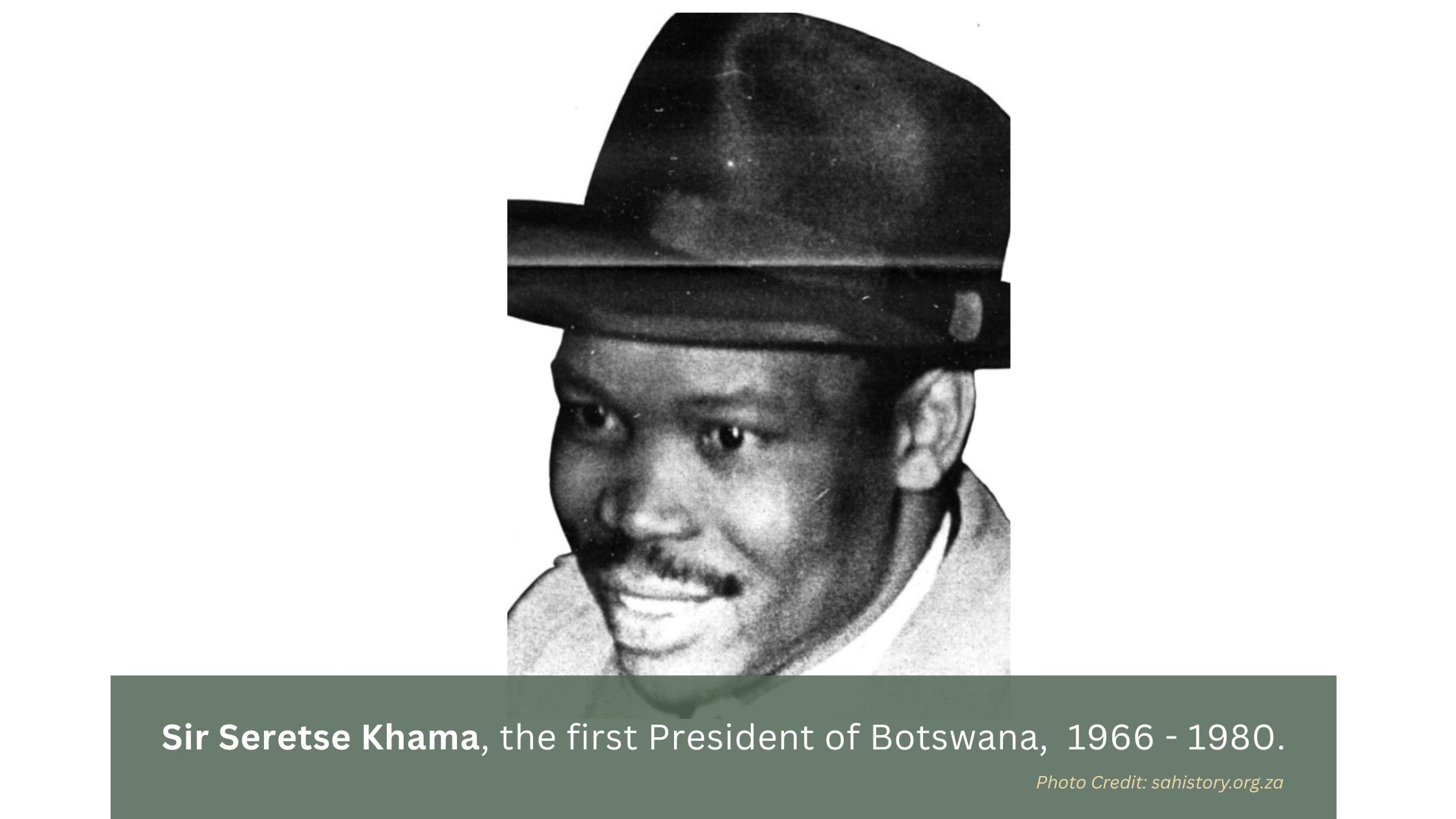
Khama’s own tribe signed first, in April; the rest followed in July, on identical terms, the rights passing to the state “without compensation.”1
No door swung open here. There was nothing to climb through. Khama moved the boundary while the prize was still a rumour, and by the time the diamonds were real the question of who owned them had long been closed, the fight that might have split the country quietly avoided. He made the opening himself.
The opening we are taught to wait for
We do not usually picture reform that way. We picture a window of opportunity, opening from the outside. An old order fails. A crisis suspends the rules. A reformer climbs through before the gap shuts.
There is good reason for the picture. The economist Leszek Balcerowicz called these moments extraordinary politics, the brief spell after a collapse when shared crisis and public trust let a prepared reformer push through what normal politics would block.2 Ireland in 1958 is the type. Forty-five thousand people were leaving every year, the population had fallen to 2.8 million, and the sense had set in that the whole model had failed. A country failing on its own terms is what cracks open a settlement, the standing bargain over who gets what.3
Sometimes the crisis is sharper. By mid-1991 India had reserves down to a few weeks of imports and was flying gold to London and Zurich to stay solvent; out of that emergency came the reforms that remade the economy.4
So the story holds, as far as it goes. Crises do open windows.
But the crisis is not the window
It does not go far, and it fails in two places at once.
The first is familiar. “Never waste a crisis,” the political adage runs; the trouble is that most crises are wasted anyway. The loan arrives, the emergency passes, and the settlement that produced it is left standing. Nigeria turned a decade of oil windfalls into a debt crisis and diversified into nothing; Venezuela spent a bigger one a generation later and collapsed when the price fell. The rescue refinances the very arrangement that needed rescuing, which is most of the story of crises that lead nowhere.5
The second is less familiar and more damaging. Reform happens with no crisis at all. Australia floated its dollar in 1983 and cut its tariff wall through the decade, none of it forced by an emergency. Colombia, the one major Latin American economy to sidestep the debt crisis of the 1980s, threw open its trade and financial markets under César Gaviria in 1990, with no collapse to compel it.
And economists who have gone back over the record find the supposed link between crisis and reform surprisingly weak. When reform fails to follow a crisis, the theory simply says the crisis was not bad enough, which makes it almost impossible to disprove.6 The hypothesis is more widely held than the evidence for it warrants.
Put the two together and the picture inverts. If most crises open nothing, and reform can come without one, the crisis was never the window. Ireland used 1958; a dozen countries had a year just as bad and used none of it. Khama had no crisis and opened a window anyway.
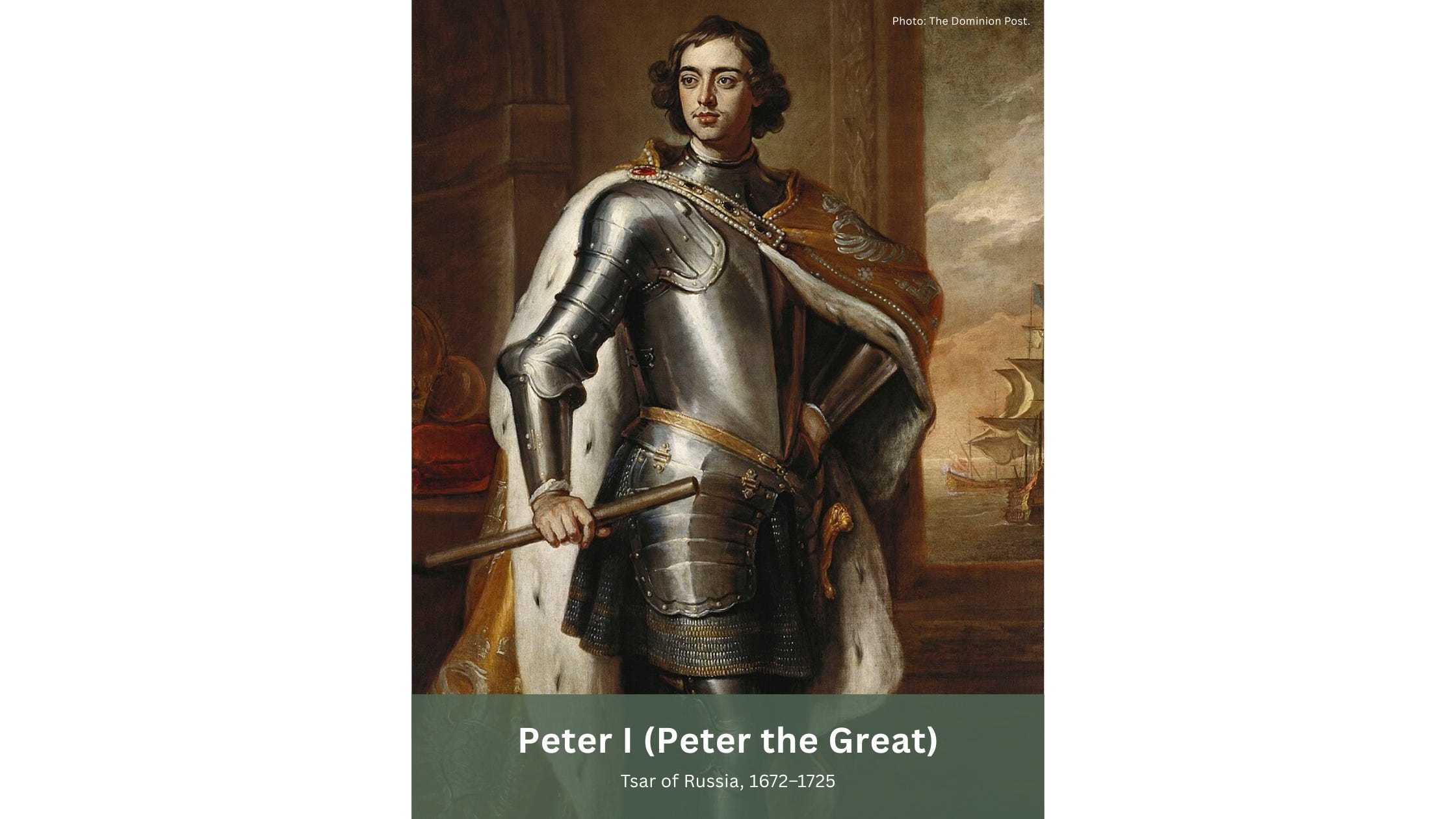
Peter the Great did not wait for one either. He made his window by coming home. A year abroad had shown him what a modern state could be, and he returned to Moscow in 1698 treating Russia’s backwardness, the permanent condition everyone else endured, as an opening rather than a fact of life. He began remaking the country by decree at once.
But decree reached only so far. What carried the rest of Russia with him was the war that followed. When the Swedes destroyed his army at Narva in 1700, backwardness stopped being a tolerable habit and became a death warrant, and reform turned from the tsar’s whim into the country’s survival.
The window is not the event but what someone makes of it. No crisis or collapse is a window until a reformer treats it as one and moves through. That is why a window can be made where nothing has opened at all. That it needs someone to act is the easy half; the harder, rarer half is making the opening last.
Making the moment
Once you see that, you see that the moment can be made.
Albert Hirschman named the craft half a century ago. He called it reform-mongering: the unglamorous art of working a resistant system, timing a push, building odd-bedfellow alliances, turning disorder into pressure.7 Hirschman’s reformer mostly took the openings that came. The harder move is to manufacture one.
The plainest way is to go and get a mandate. In early 1992, F. W. de Klerk was negotiating the end of apartheid and losing the support of his own side; his party had just lost a by-election to the right, and his white electorate was turning against the talks.
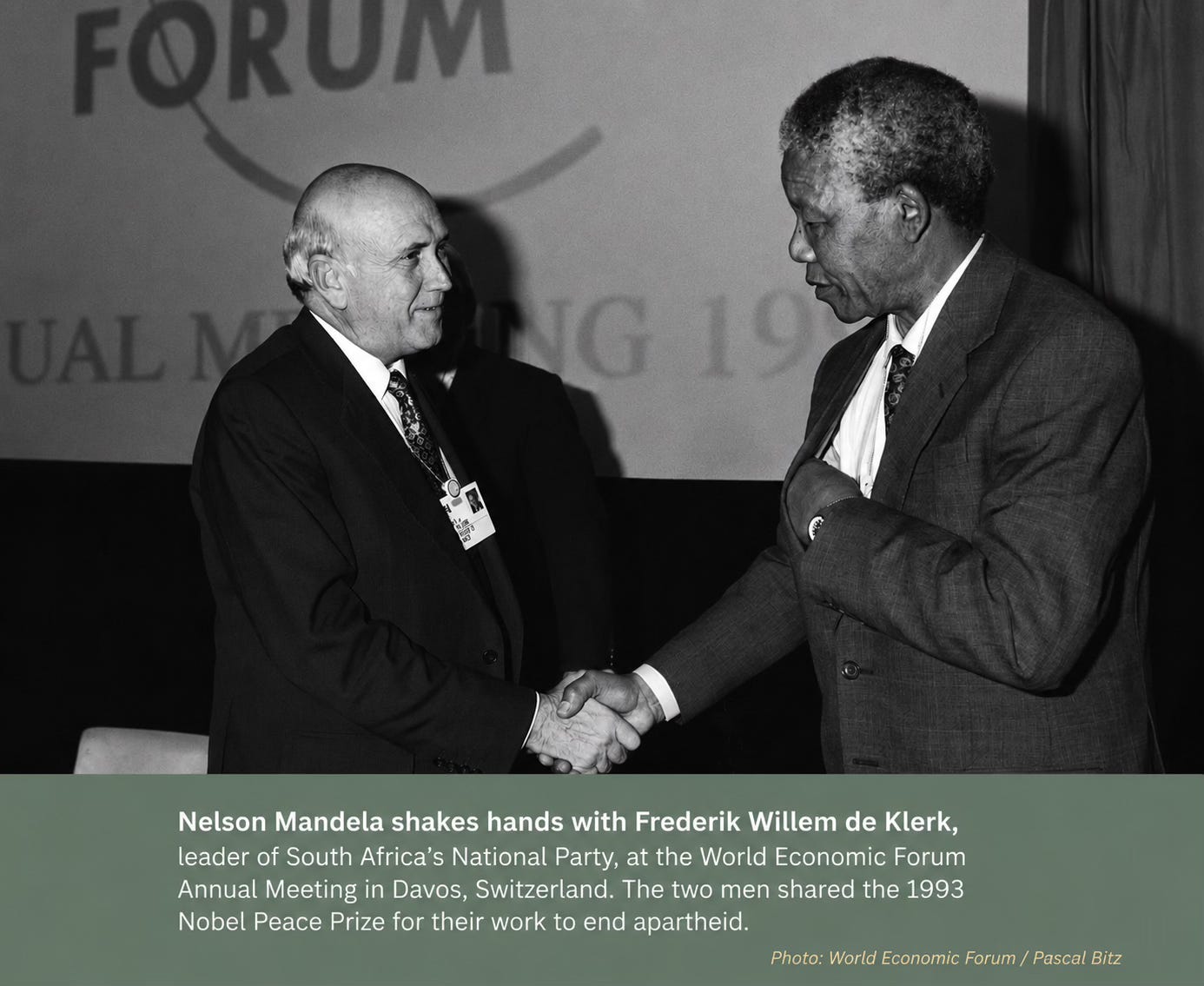
So he called a whites-only referendum on a single question: should the reform process continue? He staked his government on the answer, and he could have lost.
He won, 68.7 per cent on an 85 per cent turnout, and used the scale of it as licence to do what his side had feared. He manufactured the conditions for a mandate. (Though the larger opening behind him was lit elsewhere. The Berlin Wall had just fallen, and Soviet backing for his opponents had collapsed, and he did not make that shock.)
There is a bolder version, and from outside it looks like no move at all. A government can import the pressure. When a government cannot push a painful reform through at home, it can invite someone outside to force it, a lender whose conditions it privately wants, so the loss arrives wearing a label that reads “we had no choice.”
In December 1990, the new president of Uruguay, Luis Alberto Lacalle, wanted to cut spending and privatise one of the world’s oldest welfare states, but his own coalition would not let him. So he signed a programme with the International Monetary Fund.8
He did not need the money. The balance of payments was in surplus, reserves covered nearly eight months of imports, and the government drew less than a tenth of the loan. It did not want the loan. It wanted the conditions, so that a vote against the programme became a vote against the Fund.
But made windows fail
So Lacalle made his window. Then he lost it. Within two years, a referendum repealed the privatisation law by nearly three-quarters of the vote. He had manufactured the moment, and the public slammed it shut.
Greece shows the same pattern, more starkly. By 2015 the country was surviving on bailout loans from the other eurozone governments and the European Central Bank, and the price of each loan was deeper austerity. Alexis Tsipras did not want to sign. So in July he put the creditors’ terms to a snap referendum and urged Greeks to reject them, betting that a clear No would strengthen his hand when he went back to negotiate. Greeks gave him his No, 61 per cent of it.

It bought him nothing. The creditors held a harder lever than any mandate. They had already let the banks close and frozen the emergency funds that kept the cash machines working, and within a week Tsipras signed a bailout harsher than the one the vote had rejected.9
These are the made windows we can see. The ones we cannot see are the larger number of leaders who manufactured a moment and were simply crushed or reversed, and left no trace. For every Khama there are many of them. That is the discipline the whole idea needs. Manufacturing a window is a wager, not a method, and few of the windows so made ever last. You can open one and still lose it.
The widest window
The widest opening of all comes when a state collapses, and nothing has set in its place. Collapse shows two things at once. The move inside the window is what matters, and what you fail to lock becomes the next wall.
When an old order falls, its assets do not vanish. Someone is holding them: the directors in their factories, the managers in the ministries, the people who ran the state’s property the day before the state stopped existing. The first question the new state faces is how much of the country its writ can override, and how much it must leave in the hands that already hold it.
Estonia and its neighbours faced that question in the same few years and answered it differently. In 1991, the new government in Estonia restored property to the families who had owned it before 1940.

Mart Laar’s coalition then sold the large enterprises to outside investors rather than their directors, and let the loss-making Soviet plants close. Each move was the state insisting that it, not the man in possession, decided who owned the country. The dispossessed fought back, through the Russian-speaking towns of the north-east and through Moscow. The state held.10
The new states in Russia and Ukraine responded differently. They confirmed the men in possession. Soviet assets passed to insiders, in Russia through the rigged loans-for-shares auctions of 1995, and the possessors became the country’s real power. When the Ukrainian government tried in 2005 to claw back a single privatised steel mill and resell it, it recovered nearly six times the insiders’ price. But by then the possessors were strong enough to bury the wider effort, and the prime minister who led it was gone within months.
The window was the same. What each state did inside it was not. And the part Russia did not do is the part that lasts. The oligarchy it let form in the open moment hardened into a wall of its own, and the strongman who eventually broke it did so to take its place, not to free what it had captured. A window not used closes into a wall.
What the moment cannot give you
A window of opportunity is not a date on the calendar. It is a moment that someone decides to treat as one. It can be handed to you by a crisis, though most who receive it waste it. It can be inherited at a founding, if you build before the opposition forms. Or it can be made by escalating a mandate, summoning an outside enforcer, or catching a state before it sets.
Where the opening comes from matters far less than whether anyone moves through it. You cannot conjure one from nothing, and the making fails as often as it works.
And even the supply is not the reformer’s to write. India’s reformers in 1991 did not summon their crisis; it was handed to them by a war in the Gulf, which spiked the price of the oil they had to import and cut off the remittances their workers sent home.
What the crisis could not hand them was the plan, which they had prepared in advance. A blueprint for liberalisation, the M document drafted by Montek Singh Ahluwalia, had been circulating in the government since 1990, so when the window opened they could move at once.
Whether a creditor’s programme is there to be courted, whether a collapse arrives to be used, lies beyond any single country’s control. It turns on the price of commodities, the price of money, the end of someone else’s empire. But not every opening waits on those forces. Khama waited for none of them; he made his opening with no crisis to hand him one. The reformer governs what is made of the moment, and sometimes, as in 1967, whether there is a moment at all.
What the reformer can still do
What separates a reformer who moves a settlement from one who only describes it is a short and unforgiving discipline. Most of it runs counter to the reflex to wait.
They do not wait for a crisis. Most crises change nothing, and the one severe enough to force change is usually too destructive to use well; reform reaches countries in calm water more often than the crisis story admits.
They read the moment, not the calendar. The cheapest move is to see an opening where everyone else sees a settled fact, which is the timing twin of the question the companion post asked about walls, not whether the limit is real but whether the moment is already open.
They strike while it is cheap. The cost of a fight climbs with the stakes, so the move comes against a protected interest before the prize has a price and its defenders have organised. That, not luck, was Khama’s edge in 1967.
And they move fast, because the opening shuts. Balcerowicz gave the post-collapse window a year, maybe two, before ordinary politics returns. Whatever is done has to be done while it is open.
When they manufacture a window, they treat it as a wager and nothing more. The escalated mandate and the summoned enforcer are real moves, but they failed Tsipras, and they failed Lacalle, and no reform should rest on the manufactured window holding.
The last move is the hardest and lies beyond this post because it is barely about the window at all. It is to make the reform hold before the window closes. The failures have something in common. None of them failed for want of an opening. Lacalle found one, and his law was repealed; Tsipras found one and lost it in a week; Russia had the widest opening of the century and let it set into an oligarchy. The window was never the hard part. Holding what you win in it is.
What one leader forces through in a single open moment is not yet what a country believes, and whether it can be made to hold is the next question, and the harder one. The companion to this post began with walls that look fixed and are not. A wall, it turns out, is often only a window that someone failed to keep open.
Further Reading
Albert Hirschman, Journeys Toward Progress (1963) — reform-mongering: the craft of timing reform and working it through a resistant system.
James Vreeland, The IMF and Economic Development (2003) — why governments seek IMF programmes for leverage and cover, not only under compulsion.
Stefan Dercon, Gambling on Development (2022) — development as an elite bargain on growth, struck under uncertainty.
Notes
The tribal cessions are scheduled to Botswana’s Mineral Rights in Tribal Territories Act (Cap. 66:02): the Bamangwato signed on 4 April 1967, the other tribes between 14 and 18 July, each transferring rights to the state “without compensation,” about two years before the diamonds could be valued. See Acemoglu, Johnson and Robinson, “An African Success Story: Botswana” (2003)
Leszek Balcerowicz, “Understanding Postcommunist Transitions,” Journal of Democracy 5(4) (1994), on the brief post-collapse “extraordinary politics” window.
Ireland’s 1958 turn and its figures (≈45,000 emigrants a year; population 2.8 million) are set out in Built Against the Grain.
Montek Singh Ahluwalia (2020), Backstage: The Story Behind India’s High Growth Years
Why Africa Keeps Getting the Wrong Kind of Crisis — the survivable crisis that is paid off and changes nothing.
Albert Hirschman, Journeys Toward Progress (1963)
The 2015 Greek bailout referendum, 5 July 2015: 61.3% voted No; within a week the Tsipras government accepted a harsher bailout (the Third Memorandum, 13 July), after a three-week bank closure and an ECB liquidity freeze.