
Before Strategy Comes Sacrifice: The Real Driver of Development
What Korea, Taiwan, and Singapore did before any of the institutions that explain them existed

Korea’s Economic Planning Board, Taiwan’s land reform apparatus, Singapore’s Economic Development Board: each arrived after something else that shaped what it would enforce. This post examines what that something was, and whether the founding-choice record can be seen in real time, before outcomes are known.
Within days of seizing power in May 1961, Park Chung-hee’s government arrested 51 of South Korea’s leading businessmen on illicit profiteering charges. Park’s government placed Samsung’s Lee Byung-chul, travelling in Japan, under house arrest on his return.1
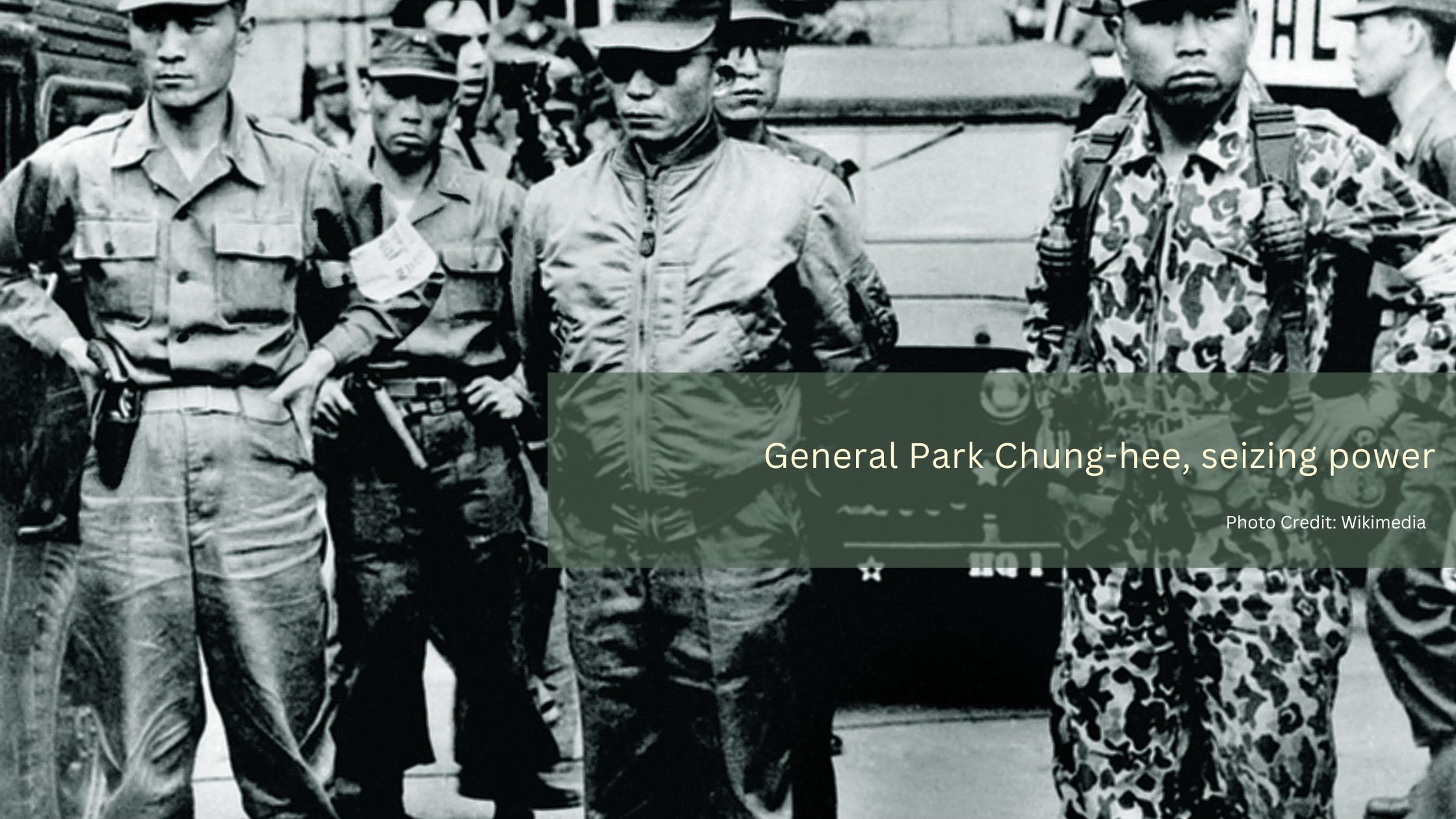
No industrial policy existed. No planning agency, export council, or investment board had been established. The institutional machinery that would direct Korea’s transformation came later, in some cases months later, in others years.
Most accounts of Korea’s transformation begin with that machinery. This post begins in May, before any of it existed. Planning agencies, export councils, and investment boards came after something that shaped what they would enforce. Restoring the prior sequence changes what requires explanation.
The Commission on Growth and Development identified 13 economies in 2008 that sustained above 7% growth for more than 25 consecutive years.2 This post and the next examine the four countries whose growth has continued beyond that window with structural advancement that distinguishes continuation from mere persistence. The first three, Korea, Taiwan, and Singapore, are examined here.
They are the cases the standard development account most relies on and explains least precisely. Peter Evans, who spent three decades building the developmental state framework, noted in 2011 that Korea and Taiwan had, “for reasons still not fully understood,” shifted toward capability-expanding governance.3
Prior posts introduced the analytical structure of apex commitment: a governing coalition’s declared developmental purpose and its demonstrated willingness to absorb costs. They are observable in the founding-choice record, dateable to specific events, and prior to the institutions the standard account identifies as explanatory.
The costly-choices component is not an unusual political act. In any contested political space, a coalition committed to productive ends will eventually face a moment when that purpose requires imposing costs on those it would otherwise need as partners. These moments cannot be deferred indefinitely. The founding-choice record shows whether a coalition absorbed those costs before any payoff existed to justify them.
Korea: What Park’s government paid before any institution existed
The arrests are the anomaly. Korea’s fuller founding record shows what else they were part of.
Park had grounded the regime’s legitimacy in a single performance claim. Poverty was the teacher; the government was organised to answer it. His 1963 memoir made the requirement precise: Korea needed ‘a piece of brick rather than a lump of sugar,’ productive industrial capacity over consumption or extraction.4 A government that stakes its legitimacy on that claim before any institution exists to honour it has made the claim costly to abandon.
On 30 June, the detained businessmen were released on a written undertaking to donate all their property when required for national construction.5 Lee Byung-chul, absent during the arrests, negotiated a separate arrangement on return: Samsung would relinquish control of its banks and follow economic directives from the government.6 Samsung’s surrender of its banks handed the state the financial leverage that would later enable the EPB’s budget authority to operate. Korea’s Economic Planning Board, established in July 1961 with budget authority over all other ministries, was the institutional response.7 It followed the signal.
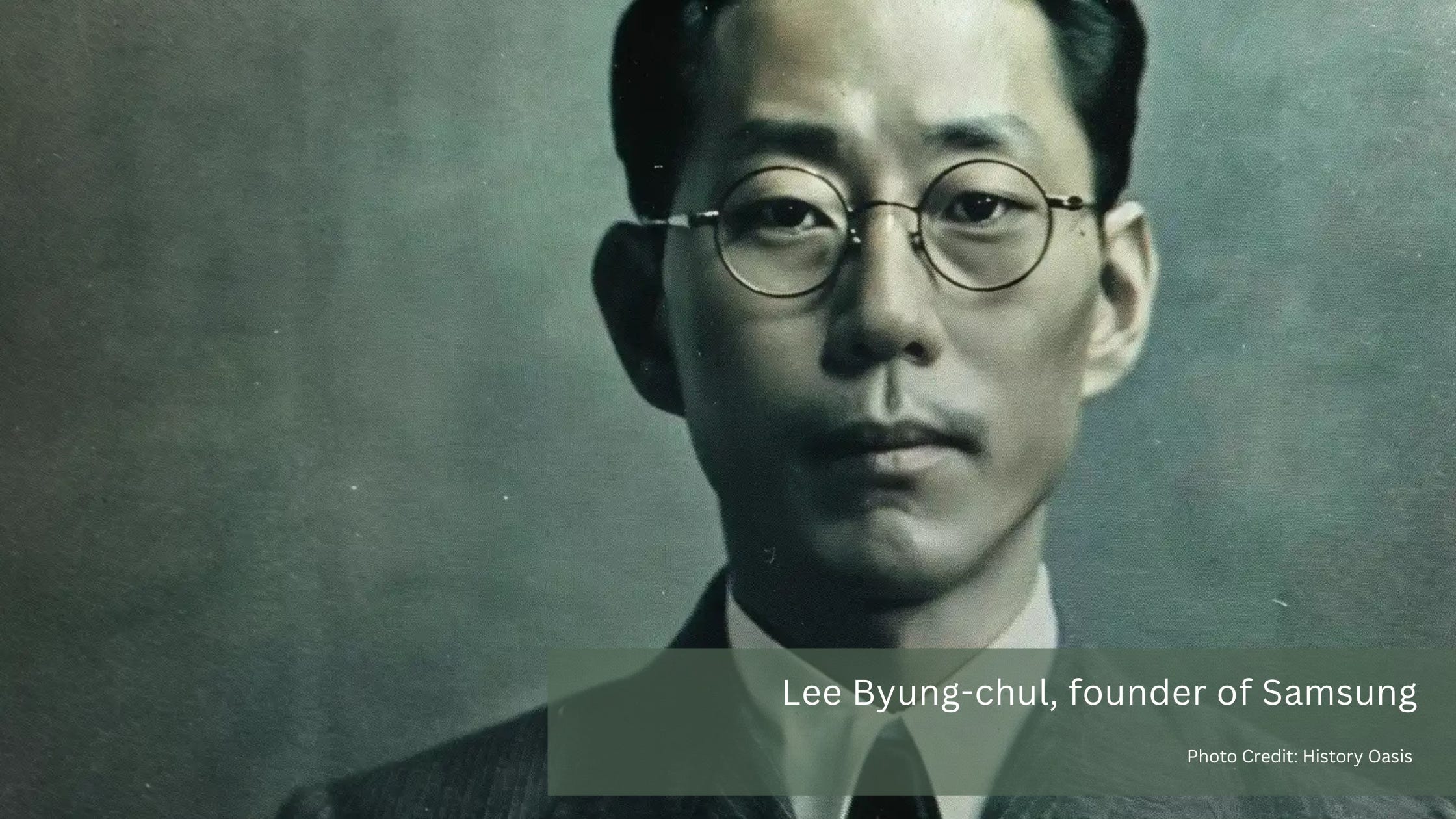
The business class, which the government would otherwise have needed as commercial partners, was bound to specific industrial behaviour by these two instruments. They were bound before the EPB, before any programme existed to make that behaviour productive. Mere compliance is what any government consolidating power requires. These two instruments went further: they specified what productive conduct looked like for each actor and committed them to it.
Costs fell on the governing coalition’s own potential allies before any outcome existed to validate them. This is what the prior posts called an apex commitment: declared developmental purpose and demonstrated willingness to pay for it, both dateable, both prior to the institutions the standard account begins with.
Those costs also worked prospectively. Having imposed real losses on its own potential allies, the coalition had established a record visible to everyone who would later staff, comply with, or resist what it built. Subsequent demands registered not as novel impositions but as continuations of a governing logic that had already been proved under real pressure. The founding-period costs lowered the political cost of what came next.
Taiwan: What the Kuomintang paid before any growth record existed
Korea’s founding sequence showed both a declared purpose and a demonstrated willingness to absorb costs within a single founding period. Taiwan illustrates the same apex commitment operating twice, across founding moments separated by twenty-five years. The governing logic did not dissolve between tests; it reconstituted on entirely different material.
The Kuomintang arrived in Taiwan in 1949 carrying a specific diagnosis of its own mainland failure. Chen Cheng, who led the land reform, later set down that diagnosis in writing: failure had stemmed from “the selfishness of a small minority of people, to their shortsightedness and lack of courage.” He described land redistribution as “a motive force for furtherance of economic development and industrialization”, a retrospective account of what the reform was for, written eight years after the founding choices it describes, but precise about their governing logic.8 The intent preceded any economic growth that might have justified it.
Between 1949 and 1953, the government put that diagnosis into practice. The KMT redistributed land from the class that had underpinned its mainland political economy, imposing real losses before any alternative power base had consolidated. Thirty per cent of the compensation came not in cash but in shares of state-owned enterprises, likely undervalued at the time. Those shares broke the agrarian power structure regardless of what displaced landlords later did with them. The choice preceded any Taiwan growth record: costs absorbed on the governing coalition’s own potential allies before any outcome existed to validate the risk.
Kim and Wang (2025), drawing on archival township data, find the land reform’s direct contribution to growth to be real but modest: roughly 6 percentage points of the 101 percent total GDP per-worker growth between 1956 and 1966. What drove the takeoff was agricultural investment, i.e., fertiliser subsidies, high-yield varieties, and American aid. However, land reform did something else: it signalled, at real cost, that the governing logic would select productive capacity over coalition maintenance.9
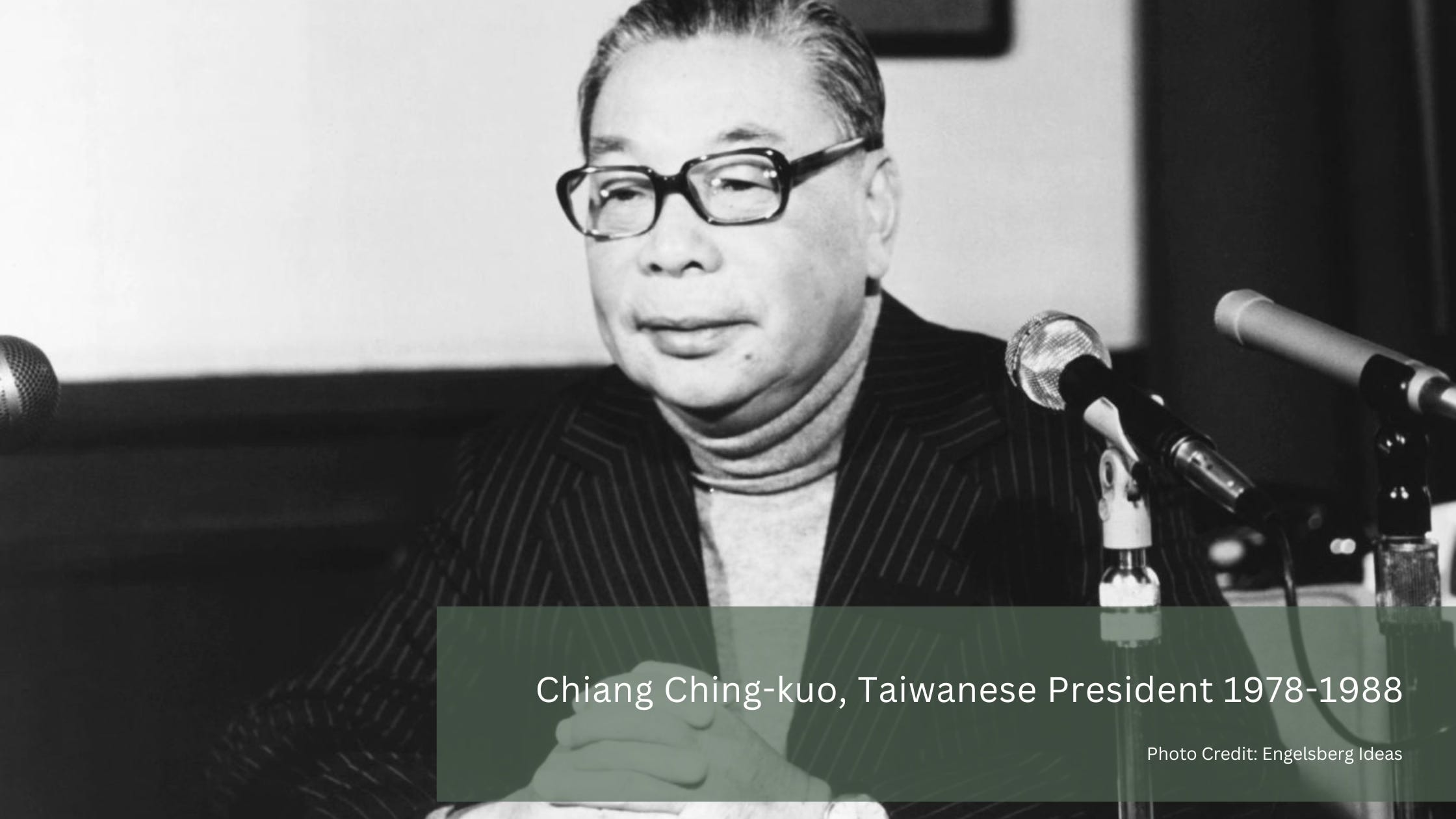
Twenty years later, the same governing purpose operated on entirely different material. In January 1970, Chiang Ching-kuo recorded in his diary that the best policy for Taiwan was economic development, and that he wanted to work for the well-being of the people.10 At a breakfast meeting in February 1974 at the Xiaoxinxin Soy Milk Shop in Taipei, seven officials committed Taiwan to developing integrated circuit capability at an initial cost of US$10 million.11 Taiwan’s economic growth had stalled; inflation ran at 47%. No fabrication facility existed.12
This time the resistance was epistemic: Wu Ta-you, head of the National Science Council, argued for basic science over applied manufacturing. Sun Yun-suan overrode him, backed by Chiang Ching-kuo.13 The technology licensed from RCA was deliberately older (seven-micron CMOS, already behind the leading edge) chosen because Taiwan’s engineers could build it. A different kind of costly choice: the risk absorbed was technical, not political. Within six months, Taiwan’s engineers exceeded RCA’s own yield rates. The demonstration factory came in 1977. TSMC followed in 1987.
In 1949 and again in 1974, the structure was the same: declared purpose, and costs absorbed before any payoff confirmed the bet.
Singapore: The case that survives the Cold War explanation
Korea and Taiwan were authoritarian states under acute Cold War pressure. A sceptical reader could explain them as strategic dependencies: developmental by geopolitical necessity, not necessarily by governing choice. The example of Singapore illustrates that governing choice.
Singapore’s governing commitment predated its institutions. At a May Day rally in 1960, fourteen months before the Economic Development Board came into force, Lee Kuan Yew told the party’s socialist activists that Singapore found itself ‘in the curious position of having to encourage investors to come to Singapore to build factories to create jobs for our growing population.’14
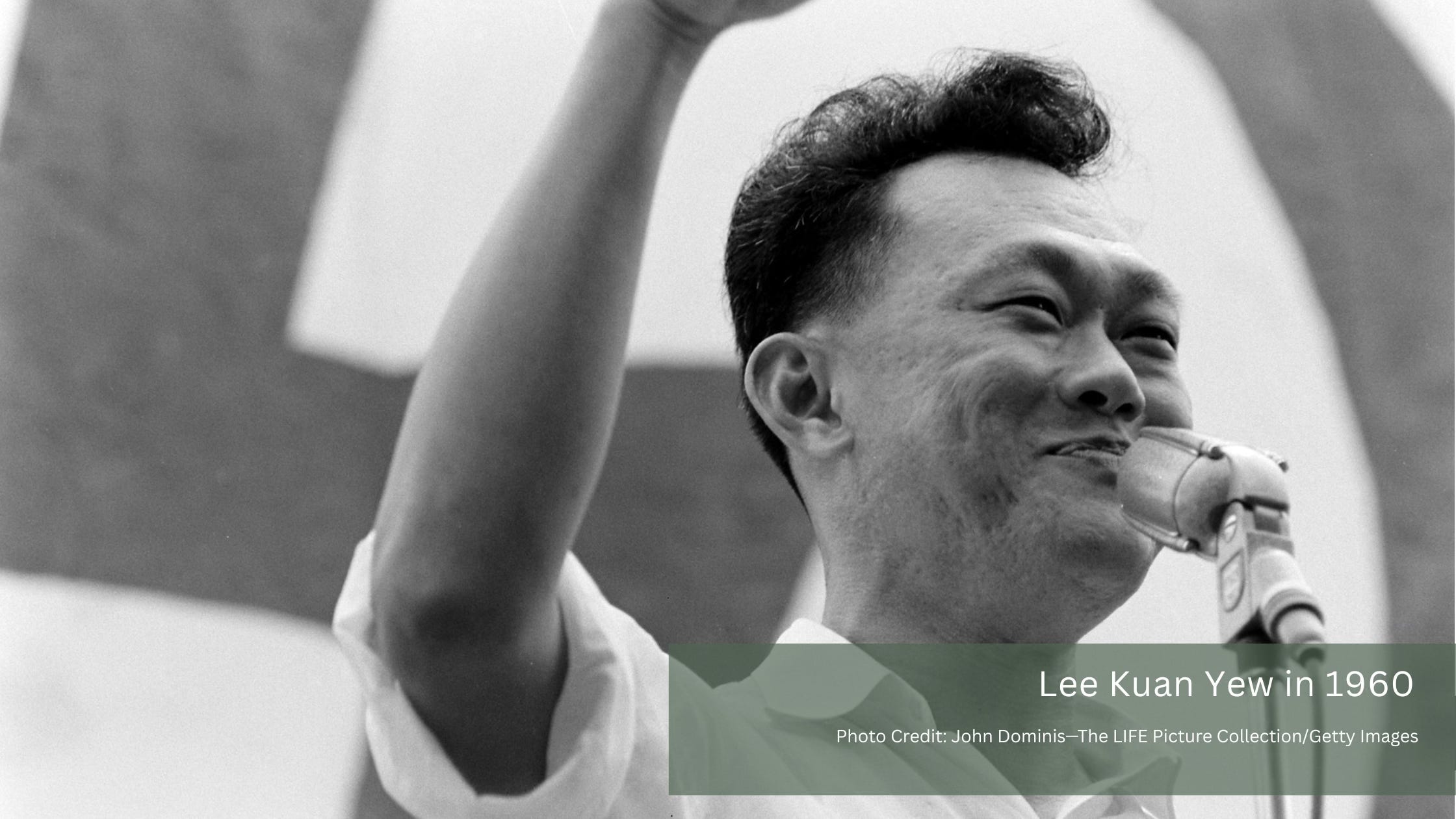
Choosing to frame the developmental commitment as a structural necessity rather than an elective programme was itself a form of commitment. By September 1961, two years before the merger and four years before independence, the purpose had a name: ‘industrial capital and industrial expansion’ was the prize Singapore would compete for.15
Albert Winsemius, advising on Singapore’s first development plan, named two preconditions for attracting foreign capital: removing the Communists from the political scene and keeping the Raffles statue. Singapore would build on its institutional inheritance, not break from it.16 The first precondition, removing the Communists, was not passive.
The PAP had been founded in 1954 on a coalition that included the Chinese-educated trade-union left; Lim Chin Siong and Fong Swee Suan, among the party’s original convenors, had been recruited specifically to give the new party a “reasonably broad working-class base.”17 In July 1961, when Lee called a confidence vote in the Legislative Assembly, thirteen PAP assemblymen abstained; Lee expelled them. Barisan Sosialis was founded three days later. Thirty-five of fifty-one PAP branch committees and nineteen of twenty-three paid organising secretaries crossed over with them.18
In February 1963, Operation Coldstore detained 113 people, including twenty-four Barisan members and forty trade union leaders, before any Singapore developmental record existed. In the September 1963 election, Barisan won thirteen seats and roughly a third of the valid votes, against a party that had detained twenty-four of its leaders before polling day. Barisan Sosialis represented a genuine socialist vision: a state-led, internally oriented industrial model that had substantial working-class support and organisational depth. Lee’s government cleared political space for foreign capital and export-oriented growth by removing a founding faction whose economic programme was incompatible with both. The costs fell on the governing coalition’s own founding cadre before any payoff existed to justify them.
Singapore had been separated from Malaysia two months before, without warning. The merger that Lee had argued was Singapore’s route to industrialisation on better terms than Hong Kong or Japan had managed was over.
In October 1965, speaking to organised labour after separation, Lee said: “I do not believe that either Hong Kong or Japan would have broken through into the industrial age if their workers did not pay for it at the beginning. And that was the reason why we went into Malaysia. We did not want to pay the same painful price. But there is no choice now. You have got to pay for this.”19
The 1985 recession offered a different test. The governing coalition secured organised labour’s consent to a fifteen-percentage-point cut in employer pension contributions when demand stimulus would have been the easier path. Lee described the sacrifice as a bitter pill that the people were willing to take.20 On each occasion, the costs fell on the governing coalition’s own constituency before the outcome that would justify them.
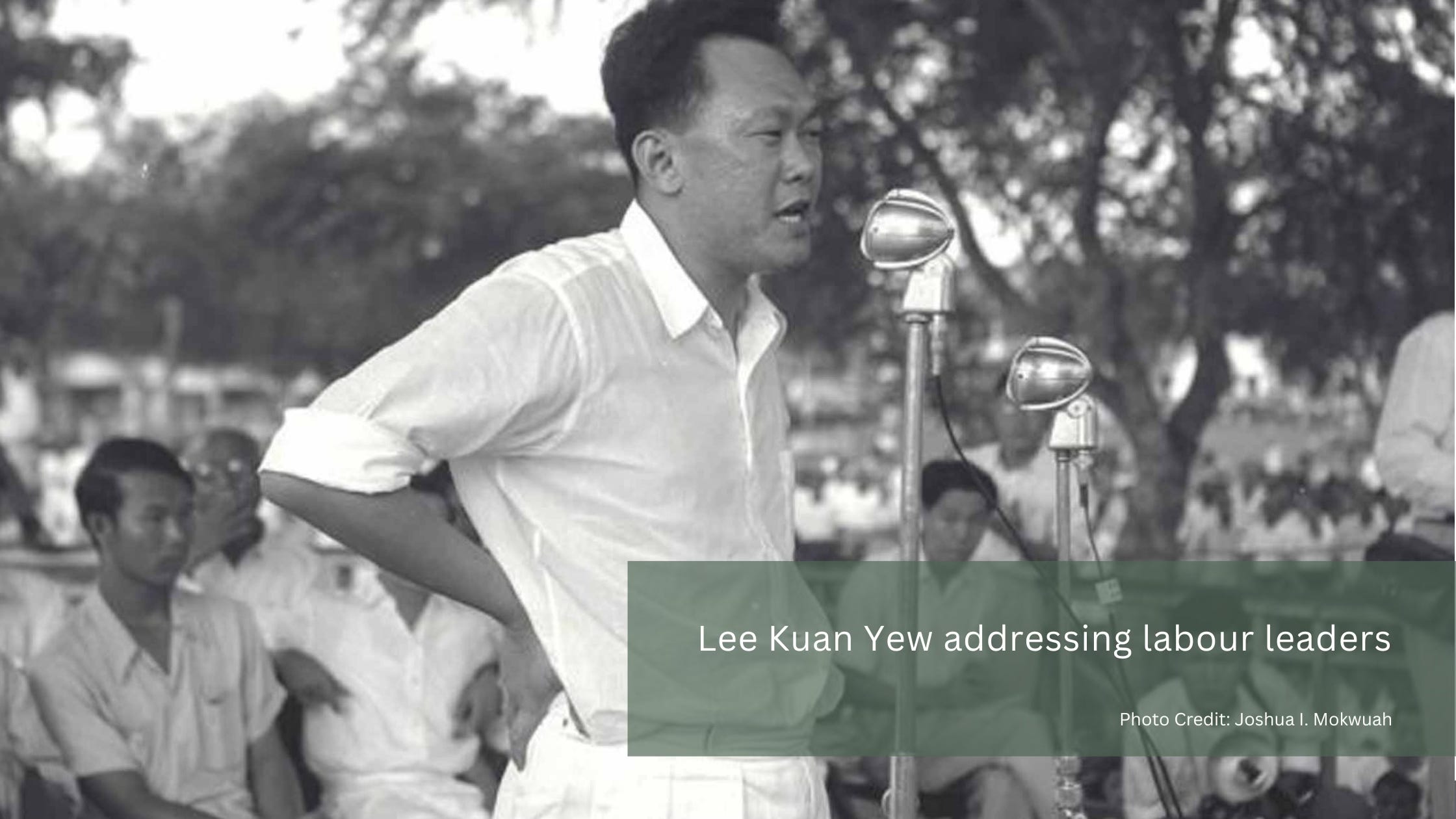
The 1985 test was tractable in part because of 1963. A governing coalition that has already demonstrated its governing logic under real political pressure — at cost, before any payoff — faces less internal resistance when that same logic demands a second costly choice. The founding-period signal did not merely record the governing purpose; it lowered the political cost of acting on it again.
Whether the growth outcomes justified those costs is an important welfare question. This post focuses on isolating the growth mechanism, a prior analytical step, not a substitute for the distributional and political questions the growth record raises. Korea and Taiwan developed accountability structures during their periods of growth; Singapore did not. This difference matters, for sustainability and for what the transformation costs, but it does not bear on what explains the growth record itself.
Singapore had no external patron. No strategic crisis preceded the founding commitment. What it shared with Korea and Taiwan was the same founding logic: declared purpose and demonstrated willingness to pay before the conditions that might have required both had arrived.
The pattern and the mechanism
Three countries, two kinds of political systems, with and without Cold War pressure. Across all three, both components of the apex commitment can be dated to the period before the institutional forms the standard development account identifies as explanatory.
What these three cases establish is not only the pattern but the mechanism. Declared developmental purpose, makes the governing logic costly to abandon. And demonstrated willingness to impose costs on the coalition’s own potential allies, proves that logic under real pressure. A coalition that has absorbed the first test lowers the cost of subsequent tests. The founding-period choices are evidence of determination and instruments of it: they make each subsequent costly decision more tractable than it would otherwise be.
A sceptic can still explain these three cases as products of strategic dependency rather than governing choice. Korea and Taiwan were Cold War dependencies: American strategic interests backed both regimes, and their developmental commitments were externally reinforced. Singapore had no patron, but faced structural compulsion of a different kind — a city-state severed from its hinterland with no alternative to industrialisation. Across all three, development could still be seen as imposed by circumstance rather than chosen by governing logic.
One case shows the same founding commitment made entirely from within, without external pressure to require it. China’s founding developmental commitment was made in 1978, while the governing coalition was actively adversarial toward the United States and diplomatic relations did not yet exist. Strategic dependency cannot explain a commitment made before any patron was available.
The case of China will be picked up in the next post.
Further Reading
Lee Kuan Yew, From Third World to First: The Singapore Story 1965–2000 (2000) — Lee’s own account of the founding commitments and governing logic behind Singapore’s transformation.
Commission on Growth and Development, The Growth Report (2008) — the systematic evidence base for sustained high-growth economies; identifies the commitment variable that the post’s framework explains.
Robert Wade, Governing the Market (1990) — the authoritative comparative account of how Taiwan and Korea directed rather than followed market signals.
Stefan Dercon, Gambling on Development (2022) — the closest existing framework to this post’s argument: governing elites’ prior commitment to development as the binding variable in transformation.
Brian Levy, Working with the Grain (2014) — configuration typology for governing arrangements; places Korea, Taiwan, and Singapore in the dominant/impersonal cell and predicts their developmental performance.
Notes
American Affairs Journal, “Korean Industrial Policy: From the Arrest of the Millionaires to Hallyu” (February 2020) https://americanaffairsjournal.org/2020/02/korean-industrial-policy-from-the-arrest-of-the-millionaires-to-hallyu/
Commission on Growth and Development, The Growth Report (Washington DC: World Bank, 2008)
Evans, Peter (2011), “The Capability Enhancing Developmental State: Concepts and National Trajectories,” CEDE Discussion Paper No. 63, Universidade Federal Fluminense.
Park Chung-hee, The Country, The Revolution and I (Seoul, 1963; English: Hollym Corporation Publishers, 1970), p. 156
Kim, H.-A. (2004). Korea’s Development Under Park Chung Hee: Rapid Industrialization, 1961–79 (Routledge Curzon), pp. 82–83
Kim, H.-A. (2004). Korea’s Development Under Park Chung Hee: Rapid Industrialization, 1961–79 (Routledge Curzon), pp. 82–83
American Affairs Journal, “Korean Industrial Policy: From the Arrest of the Millionaires to Hallyu” (February 2020) https://americanaffairsjournal.org/2020/02/korean-industrial-policy-from-the-arrest-of-the-millionaires-to-hallyu/
Chen Cheng, Preface to Land Reform in Taiwan (Taipei: China Publishing Company, 1961) — https://landisfree.co.uk/sa-86-land-reform-in-taiwan-by-chen-cheng-preface-1961/
Kim, Oliver and Jen-Kuan Wang (2025), “Roots of the Taiwanese Miracle? Reassessing Land Reform, 1950–1961” — https://oliverwkim.com/papers/KimWang_Taiwan.pdf
Yang Sheng-ju, “Hoover presents preview of Chiang Ching-kuo diaries,” Taipei Times, 21 December 2019 https://www.taipeitimes.com/News/taiwan/archives/2019/12/21/2003727926
Multiple secondary accounts of Taiwan semiconductor history; Chang Ju-hsin, Silicon Taiwan: The Legend of Taiwan’s Semiconductor Industry (Tianxia Magazine, 2006), cited in Taipei Times, 26 October 2025: ITRI institutional history at https://50th.itri.org.tw/en/history/semiconductors/1/
ITRI institutional history (https://50th.itri.org.tw/en/history/semiconductors/1/
“Taiwan in Time: The breakfast that sparked Taiwan’s semiconductor revolution,” Taipei Times, 26 October 2025. https://www.taipeitimes.com/News/feat/archives/2025/10/26/2003846108
Lee Kuan Yew, May Day Rally, 1 May 1960, NAS https://www.nas.gov.sg/archivesonline/data/pdfdoc/lky19600501.pdf
Lee Kuan Yew, “Merger and the Stakes Involved,” Talk 1 of The Battle for Merger, broadcast Radio Singapore, 13 September 1961, 7.30 pm; published Singapore: Government Printing Office, Ministry of Culture, 1961, pp. 4–5. Reprinted Singapore: Straits Times Press / National Archives of Singapore, 2014. https://www.nlb.gov.sg/main/article-detail?cmsuuid=f661e5e1-d5fa-4588-9360-e35fa457e98d
Lee Kuan Yew (2000), From Third World to First (HarperCollins) and (https://www.nlb.gov.sg/main/article-detail?cmsuuid=e3a51a30-f9fd-47e7-af89-1a11bce13e50)
Lee Kuan Yew, The Singapore Story: Memoirs of Lee Kuan Yew (Singapore: Times Editions / SPH, 1998), pp. 178–9:
Lee Kuan Yew, The Singapore Story: Memoirs of Lee Kuan Yew (Singapore: Times Editions / SPH, 1998), pp. 368–9:
Lee Kuan Yew, speech at Trade Union House opening, October 15, 1965, National Archives of Singapore, https://www.nas.gov.sg/archivesonline/data/pdfdoc/lky19651015.pdf
sg101.gov.sg, “1985 Recession” case study — available at sg101.gov.sg/economy/case-studies/1985/