
The Wall Nobody Has Tested
A reformer can push against protected interests for one reason: to find out whether the limit was ever real. Many who try are crushed. The successful reset the political settlement.

The précis:
Everyone agrees on the reform that would lift growth, and everyone agrees the politics forbids it.
But “politically impossible” usually means a wall no one has tested, only a guess about who would resist.
The explorers we remember are mostly the ones who guessed right; the many who were wrong vanished without a name.

This post belongs to a broader inquiry into why economic transformation is so rare: why a few governments break the bargains that constrain their economies, while most never try. Those bargains, the political settlements that decide who wins and who loses, are often treated as fixed. It asks what it takes to move them, beginning with the first question: which of those limits are real, and which only appear to be.
In November 1978, in a village called Xiaogang in eastern China, eighteen farmers signed a contract that could have had them shot.
It did something the state had banned for twenty years. It broke the village’s collective farm back into family plots, each household keeping whatever it grew above the government quota. This was private farming in a country that had abolished private farming. The farmers understood the danger, and they wrote it into the contract: if any of them were jailed or killed for what they were about to do, the others would raise his children until they came of age.
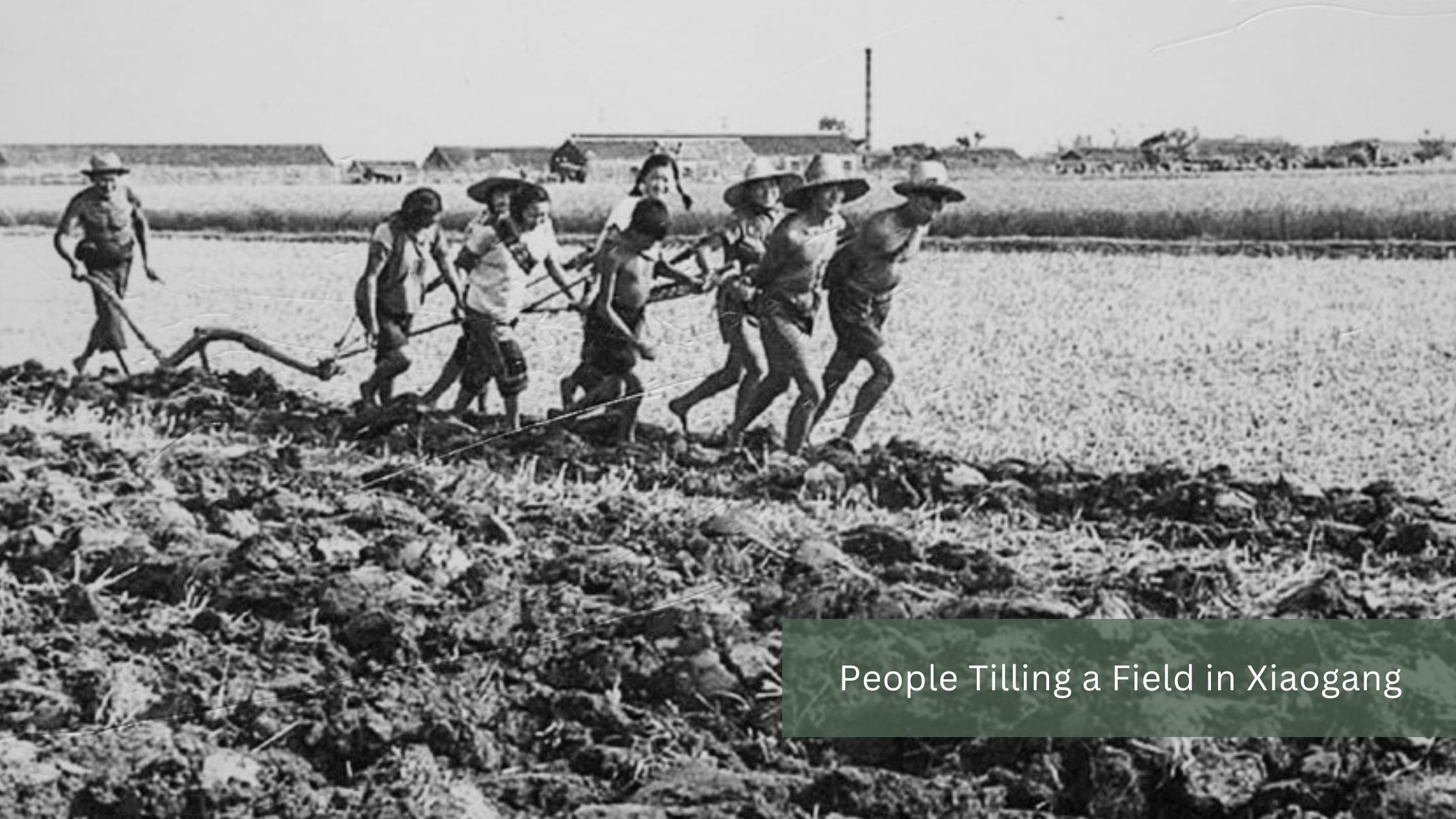
The fear in that clause is the place to start. It is not fear of a bad harvest. These were good farmers; they knew the family plots would out-produce the commune, because they had done so before the communes came. What they could not predict was what the Party would do once it found out.
The harvest came in larger than any in years, and the blow the farmers had braced for never landed. The local officials who were meant to punish them looked the other way. The provincial leadership quietly let the experiment stand. By 1982 the central government had endorsed household farming for the whole country, and within a year nearly every farming family in China was doing what those eighteen had been ready to die for.
The wall they expected to hit was not there.
The farmers made the first move, but it survived only because everyone above them who could have crushed it chose not to, each of them no longer sure the old rule could be enforced. Presidents and cabinets make the same gamble, with far more riding on it. Every so often a reform that everyone calls politically impossible simply happens. The puzzle is why.
Why the map says impossible
The usual explanation for why a move like that should fail is simple enough. A country’s politics rests on a settlement: a standing bargain over which groups are protected and which are not. A reform that threatens the protected is the one everyone calls politically impossible, and the impossibility is treated as part of the terrain, a mountain range the road has to bend around.
Even so, deferring to those limits is usually sound. The economist Mushtaq Khan put the careful version of the advice plainly: build your reforms to fit the power you actually have, not the power a textbook prefers. Work with the grain. Most of the time he is right; the powerful really do strangle what is built against them.
The farmers in Xiaogang went straight at the grain. And the grain gave way.
Up close, a settlement looks like part of the country itself, and its limits look like permanent facts. Whether they truly are is the question.
The wall nobody has tested
Some are, some aren't. And the ones that matter are the easiest to miss.
Most limits are real, and everyone can see it. No government needs to test whether a ruling party will vote itself out of existence, or whether a landed elite will hand over its estates without a fight. The answer is plain in advance, so no one wastes themselves finding out.
Other limits only look that solid. No one knows how hard the resistance would really be, because no one has tried.
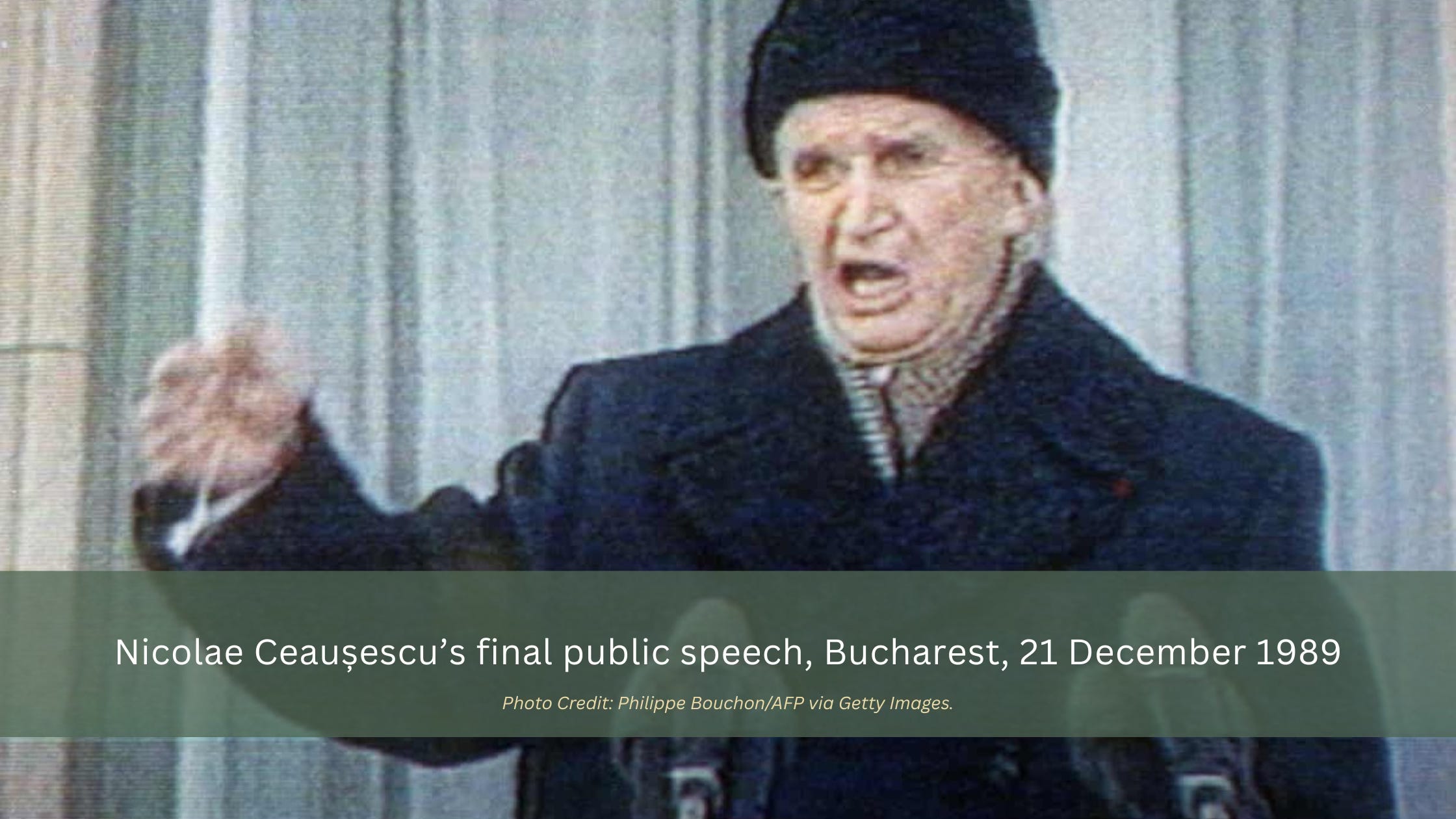
And the not-knowing runs both ways. The groups contending for power, as Mushtaq Khan puts it, are “unsure of their real holding power and that is why contests and conflicts happen.”1 In December 1989 Ceaușescu called a rally to show he still commanded Romania; the crowd jeered, and the authority he had wielded for a generation was gone within the week. A wall can look solid to the very people standing behind it.
Until someone leans on it, such a limit is only a guess about what would happen if they did, and the guess hardens the longer it goes untested. A rule nobody has broken in living memory has a reputation, not a record.
So not everything called politically impossible really is. Some of it is a guess mistaken for a measurement. Telling the difference asks for judgement before nerve, and the only way to be sure is to test it.
The leader who goes to find out
The same not-knowing that lets a wall stand is what lets it move.
Consider the eighteen farmers. The balance of power in that village can tell us their reform was possible. It cannot tell us why they were the ones to test it, or why then.2
There are two familiar ways a government comes to move against the powerful. Sometimes it misjudges the balance and is punished for the mistake; sometimes the balance has quietly shifted first, and the move only registers a change already underway. Call them the misjudged push and the late arrival. Xiaogang is neither. The farmers did not misread the danger; they wrote the risk of execution into their contract. And the commune was intact, the balance unshifted until they moved.
So there is a third way. A government can move against the powerful for a single reason, to find out whether the limit is real. Governments have done this again and again, though the move itself is rarely named for what it is.
This is a different kind of actor. Most leaders treat a hard limit as a fact and accept it; this one treats it as an open question and pushes to find out.3 Call it the explorer.
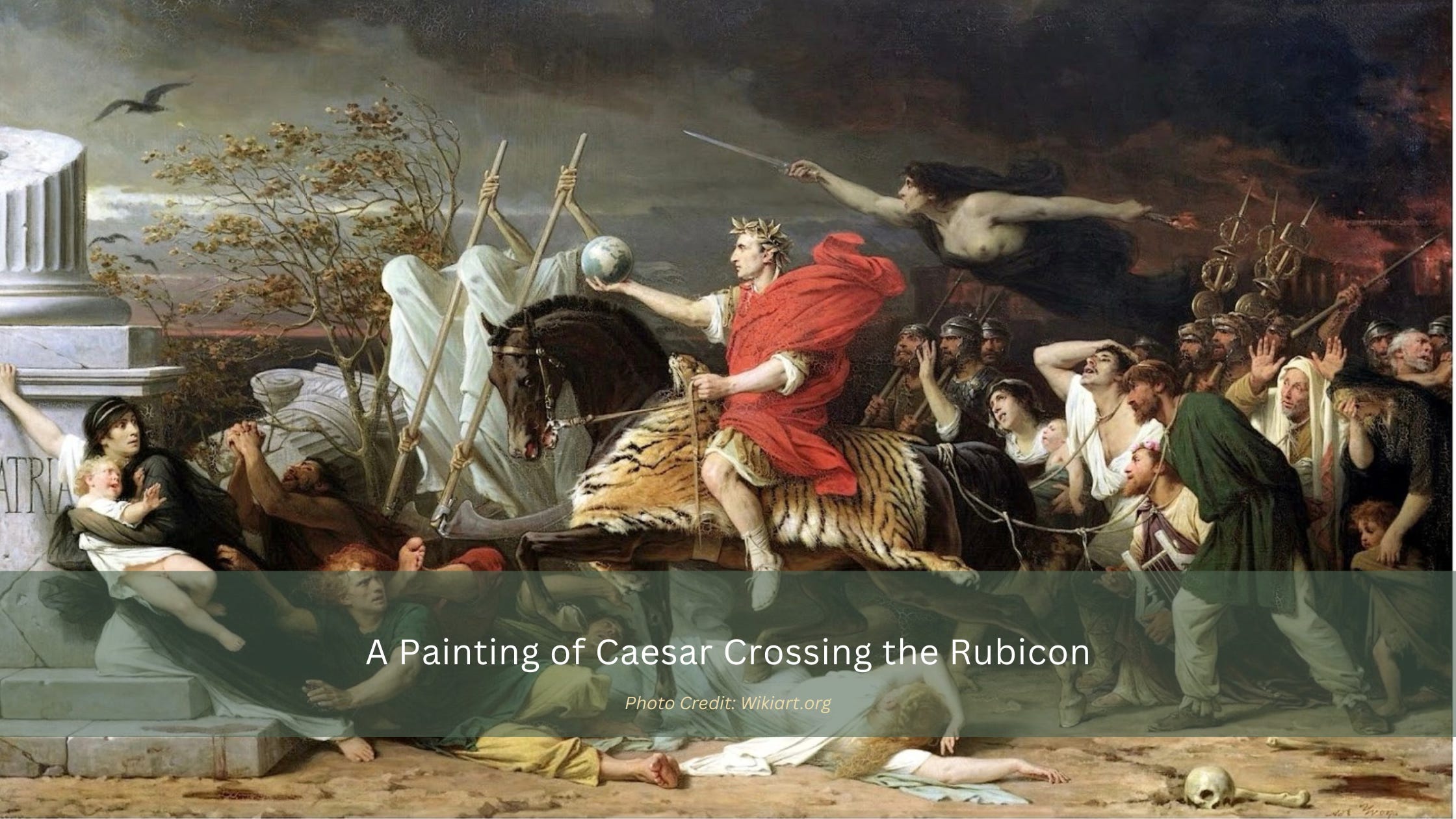
The figure is older than any reform ministry. When Caesar brought his legion across the Rubicon, the law prohibiting it was plain, and the penalty was death; what no one knew was whether the Republic could still enforce that law against a general willing to find out. It could not. Pompey and the Senate fled the city, and the wall that had held Rome’s commanders in check for centuries turned out to have been an assumption no one had tested.
Most explorers fail
The explorers we can name are mostly the ones who were right. De Klerk tested whether his own side would hold the line for apartheid; Gandhi gambled that the Raj could not enforce its laws against a whole nation’s defiance.
The ones who leaned on a wall that held, and were broken on it, mostly vanish from the record. The famous few we remember are the ones who lost loudly: Mossadegh, nationalising Iran’s oil against the British and the oil majors in 1951, gone in a coup by 1953; Allende, restructuring Chile against the propertied and the army, gone the same way in 1973. They stand in for a far larger number who tried smaller things and disappeared without a name.
Nor is the failure confined to coups and the developing world. Edward Heath fought the February 1974 election on a single question, whether Britain was governed by its elected government or by the coal unions; the unions’ power held, and he lost the vote and his office with it. In a settled democracy, the price of a failed test is a career rather than a life, but the wall is found just as real.
So any list of explorers flatters the type, and most who lean on a real limit are crushed by it.
It would be tidy to cast these explorers as cool experimenters, calmly probing the edge of the possible. Mostly they are not. What sets the explorer apart is a stubborn refusal to take a limit on trust, and a willingness to test it when everyone else accepts it.
The signs of an explorer
The explorer finds where a settlement’s edges really are. It takes a limit that was just a guess and turns it into a measurement.
You can tell an explorer’s move while it is being made, before anyone knows whether the wall will hold. Two things show it.
The price is named in advance: the Xiaogang farmers wrote theirs into the clause about who would raise their children, and Heath staked his government on a single question. And the danger falls on the mover’s own side. That is what separates an explorer from an opportunist: the opportunist picks off a weakness everyone can already see, while the explorer moves where his own side believes the wall is real, as de Klerk did against the apartheid his white base wanted to keep.
There is a complication when the wall sits inside a government’s own coalition, where the cost of breaching it can be spread. With inflation running near 500 per cent in 1985, the limit everyone in Israel assumed untouchable was the Histadrut, the trade-union federation that was Labour’s own base. A national-unity government under Labour’s Shimon Peres tested it anyway, agreeing an emergency package that froze and cut real wages, and the wall gave.
But it gave partly because the cost was spread: the plan’s lead author was the coalition’s Likud finance minister, not Labour. A protected interest your own supporters defend is easier to break when a coalition partner shares the blame.4
Going in, the losers looked no different from the winners. Mossadegh and Allende staked everything on walls they could not know would hold, and the walls held all the same. What shows is the move, not how it ends.
What does not show is the purpose. What grows in the space the move opens is decided elsewhere, by the aim behind it. The same move can serve different ends. When Putin broke the oligarchs who had made and funded him, he tested a settlement as surely as Deng Xiaoping did in opening China. Both leaned on a limit no one was sure would hold, and both found it gave. One freed an economy; the other tightened his hold on a state.
The move is seldom just the protagonist’s. Great powers had a hand in more than one of these moves; the two who fell loudly fell to foreign hands as much as to domestic ones. The tailwind is real. But a push from outside still has to be taken up by someone inside who treats the limit as open and pays to find out where it lies; the patron supplies the wind, not the decision to sail into it.
And it belongs to no particular kind of person. Eighteen farmers can make it, and so can a president. But the result reaches far beyond whoever makes it: when a settlement’s lines move, everyone inside them lives with the outcome, and most of those people had no part in the contest at all.
The board is never set
A settlement can be read like a chess board. The pieces are the country’s organised interests, and the way they stand is the distribution of power a reformer inherits. A strong player glances at the board and says who is winning; the structural account does the same with a settlement, and calls the reform lost before it is tried.
But a forecast is not a result. A position that looks lost can hide a move no one has tried.
In 1984, the structural account would have called New Zealand’s economy beyond reform. It was among the most protected in the rich world, its farm subsidies and tariff walls treated as permanent features of the country.
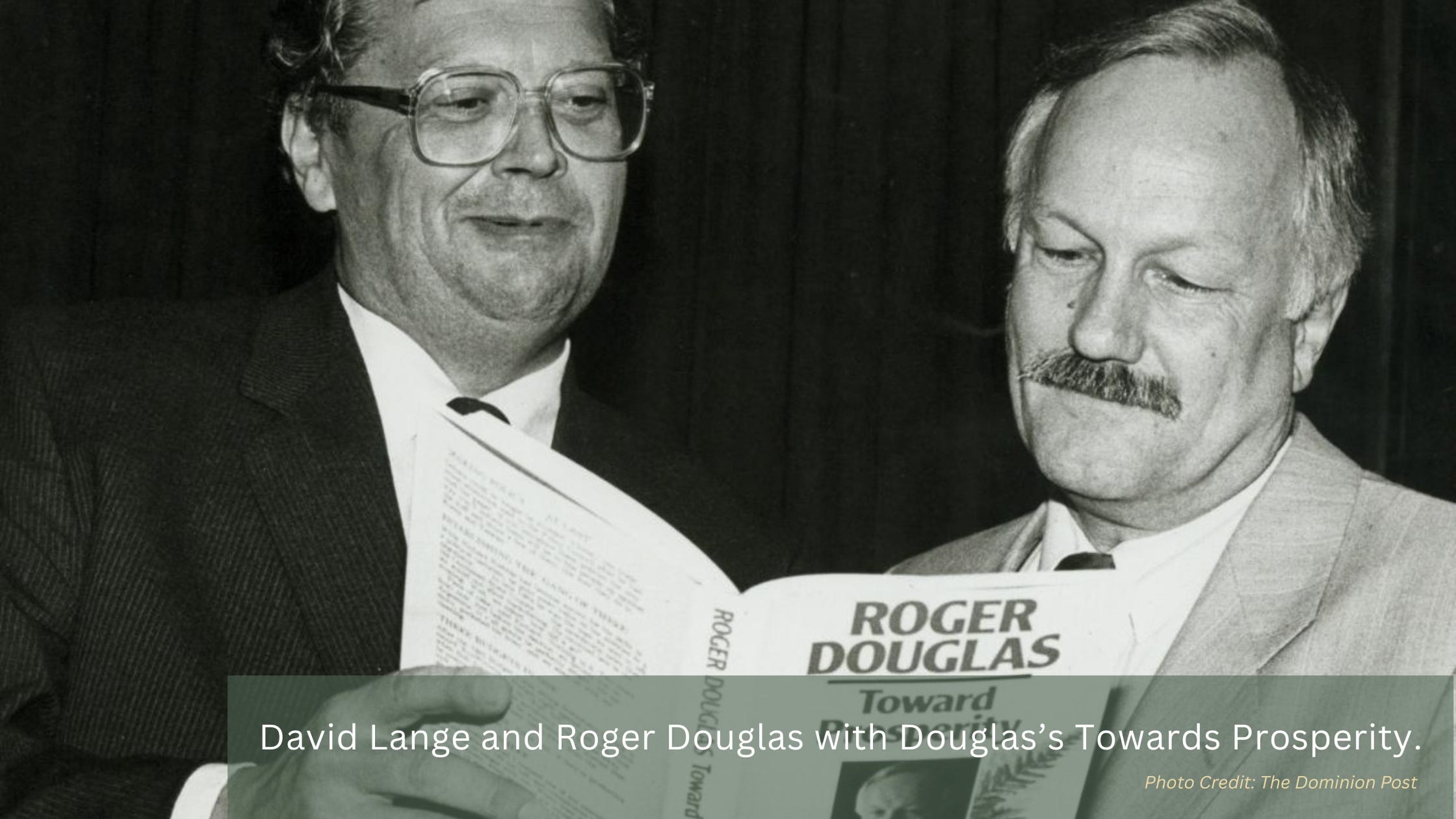
Then a Labour finance minister, Roger Douglas, swept them away in a few years, and the interests that were supposed to stop him never did.5
This is the part the structural account leaves blank. It carefully explains what a given distribution of power makes possible. On who actually acts within that space it goes quiet, falling back on a vague phrase: political will.
The explorer is what that phrase points to: not a force from outside the struggle for power, but that struggle at the moment its outcome is still open. Which of a settlement’s possible outcomes arrives is not settled by the balance of power alone; it turns on whether someone moves to find out.
And a test does more than measure a limit. A test that holds moves it. The structural account reads a settlement; the move changes it. So among the outcomes the balance leaves open, agency is not a leftover the theory can set aside. It is the part that chooses.
None of this promises the move will work. Most do not; the explorers who fail far outnumber the ones who succeed. An open outcome does not imply a winnable one. What is always open is the chance to find out, to learn which limits are real and which are only assumed, at a price the mover accepts.
So the board is never simply set. A settlement that looks finished is usually one no one has tested lately, and the scholarship that maps the balance of power has underrated what a move against it can do.
The wider conditions do much of the loosening: a fiscal crisis strands an old model, an empire retreats, a technology rots the ground beneath a settled interest. But conditions only move the odds; they never reveal which walls would actually give. The wall looks fixed; whether it really is, only the test can say.
Playing the position
So far, the explorer can look like someone who walks up to a wall and shoves, and the ones we have watched mostly got crushed doing exactly that. But the head-on charge is the crude form of the move, not its definition. The skilled explorer does not charge; he tests obliquely, in moves too small to provoke the answer he fears. It is the same move, played well, and it is how most walls that fall are brought down. There are many ways to do it, and two are especially clear.
The first is to build a position, the way a strong chess player does. He rarely wins by snatching pieces; he makes his position unassailable move by move, until the loser sees the game is lost and concedes. A reformer does the same, improving his standing quietly so that by the time any real exchange comes it is already half-decided.
Rome learned this twice over. Caesar crossed his Rubicon and won the gamble, only to be stabbed for it within five years. His heir, Augustus, moved in small steps instead, each one too modest to provoke a challenge. He beat his rivals one at a time, handed the Republic back to the Senate while quietly keeping the armies, and took up its powers one by one, until the Republic was gone and no single act had marked its end.
The other is to change the board. When the main one is locked, build another beside it. Deng Xiaoping did not open China by confronting its central planners. He built Shenzhen, a zone where different rules ran, small enough to be tolerated and real enough that the people who prospered inside it became a lobby for more.
Bismarck used the same move against the socialists his ban had failed to crush. He built the world’s first modern welfare state beside them, insuring German workers against sickness and old age, to draw their loyalty toward the state that paid them rather than the movement that promised them. An interest you cannot beat head-on can sometimes be outflanked by a new one raised on open ground.
Where the walls come from
Every wall was once a question someone tested. A political settlement is not a permanent feature of a country; it was made. Each limit a reformer inherits as fixed is the place where an earlier contest was settled and left to harden. The board the structural account reads as given was built, move by move, by people who tested limits before them. Structure is not the opposite of agency; it is prior agency that has set.
Korea and the Philippines show it. The two began the post-war years alike, both poor, agrarian, and run by landowners, and then took different roads. The most commonly named difference is land. At the end of the 1940s, Korea broke the power of its landed elite through sweeping reforms, a generation before its industrial rise; the Philippines never did, and its great families stayed intact. That this set the two on different paths is well understood.6
What is easy to miss is that Korea’s reform was not handed down by history. It was an explorer’s move: a government testing whether it could break owners who could have stopped it. The Philippines never made that move, and reform after reform died in a congress controlled by its families.
The open ground Korea’s later reformers inherited, and the wall the Philippines kept striking, were both, in part, the residue of a single choice made decades before: to push against a settlement that protected landlords, or to leave it be.
So the wall one government treats as permanent is often just the last explorer’s victory, set in concrete, and it sets harder the longer no one leans on it, the way a reputation calcifies into a fact when it goes untested. What was made by moves can be remade by them. A wall is only a window that has closed. That is the deepest sense in which the board is never set.
What it costs to mean it
The move is a wager, and running it is never free. It is also what makes a larger wager possible. Development, as Stefan Dercon describes it, takes an elite staking its country’s future on growth,7 and that bet needs a settlement that someone has already moved.
Protected interests do not give way because they have been doubted. They give way, if they give way at all, because a price has been paid that they cannot match or undo.
The farmers of Xiaogang wrote their willingness to pay into the contract, in the clause about who would raise their children. Most explorers never have to honour a clause like that. Some do.
A price like that, named in advance and falling on the mover’s own side, is not one a leader who only wanted to keep power would pay. It is the surest sign the move is a test and not a calculation. What that price buys, and whether the gain holds once it is paid, is the harder question, and the one this series takes up later.
So the reformer’s first correction is to the map. Most of a settlement’s limits are real, and whoever forgets it is soon punished. But some are only assumptions, holding because the cost of finding out has kept anyone from trying. The discipline is to read “politically impossible” as a claim about what no one has yet tested, not a fact about the country.
That asks a particular cast of mind of anyone who means to move a settlement, not just describe one. The question that decides things was never whether a reform would work, but whether those who could stop it really could: a matter of power, not policy. A wall with a real record of stopping people is one thing; a wall with only a reputation is another, and only a test tells them apart. A long record is a guide, not a proof.
The walls worth the price are the ones a reformer’s own side believes are real, where the fear runs closest to home. None of it carries flattering odds. It is a way of acting, not a way of winning.
Testing the wall is only part of why transformation is rare. The move still needs a moment to make, which the companion post, The Window You Open Yourself, takes up, and a team to hold the new order once the wall is down, the ground of Why Africa Keeps Getting the Wrong Kind of Crisis. But the wall has to be found first.
Accept the whole settlement, and you keep the economy it was built to protect. But you have to accept only the real walls.
Further Reading
Albert O. Hirschman, A Bias for Hope (1971) — “possibilism”: the reformer who treats a development obstacle as a belief to be tested, not a fixed fact.
Stefan Dercon, Gambling on Development (2022) — growth as a collective elite gamble made under genuine uncertainty.
Joe Studwell, How Asia Works (2013) — land reform and the politics behind the East Asian growth cases.
Daron Acemoglu and James Robinson, The Narrow Corridor (2019) — the contested space between state and society where institutions are made and remade.
Yuen Yuen Ang, How China Escaped the Poverty Trap (2016) — the experimentalist reading of China’s reform that this post tests against.
Notes
Khan (2018). Mushtaq H. Khan, “Political settlements and the analysis of institutions,” African Affairs 117(469): 636–655.
Albert Hirschman, A Bias for Hope (1971); Dani Rodrik (”When Ideas Trump Interests,” Journal of Economic Perspectives, 2014)
Michael Bruno, Crisis, Stabilization, and Economic Reform (1993).
Walker, S. (Ed.). (1989). Rogernomics: Reshaping New Zealand’s economy. GP Books.
Joe Studwell, How Asia Works (2013).
Stefan Dercon, Gambling on Development (2022)