
Why Governing Orientation Comes First
The operative fitness function that determines what every institution actually does is set before any design decision is made. Reform has consistently missed it.

Previous posts in this series established governing orientation as the variable that most consistently explains what governance systems produce. Governing orientation names what a political system actually optimises for, discoverable from revealed behaviour under genuine cost. This post makes the case for its causal priority: why it sits upstream of institutions and policies.

For thirty years, developing countries met the conditions prescribed by reform programmes. They adopted required institutional forms, built the agencies donors asked for, and hit conditionality targets. Programmes, by their own measures, succeeded. Structural transformation didn’t follow.
The argument for why has two components. The logical component is positional: governing orientation sits upstream of institutional design; every decision about how to build, staff, or direct an institution is downstream of the prior question of what it is optimising for.
The empirical component follows from variation: governing orientation shifts even when institutional architecture is held constant, which means institutional reform operates downstream of it.
Paid subscriptions support the continuation and expansion of this research. Consider becoming a paid subscriber.
Same Apparatus, Opposite Outcomes
In 1960, South Korea and the Philippines had comparable income levels, both poor, aid-dependent, embedded in the same Cold War alliance and drawing substantial American patronage. Both underwent near-simultaneous authoritarian consolidation: Gen Park Chung-hee’s Yushin Constitution in October 1972; Marcos’s martial law in September, with a new constitution enacted the following January. Each had central banks, planning ministries, and export promotion agencies; both directed credit through nationalised banks, adopted five-year plans, and built export-processing zones.
South Korea today has a GDP per capita roughly nine times that of the Philippines in nominal terms.1 Same apparatus, same settlement type, same geopolitical alignment. If institutional form determines what governance systems produce, both should have produced comparable outcomes. That institutional equivalence is the point.

Park built performance conditioning directly into the credit mechanism: state support was statutory and pre-committed, but conditional on meeting targets, with equity stakes and licences transferable when firms failed to perform. Monthly Export Promotion Meetings, chaired by Park personally from 1965, reviewed performance against targets at ministerial level.2 When Shinjin Motors went bankrupt after failing to match Hyundai’s Pony, the government, acting through the Korea Development Bank, transferred Shinjin’s equity stake to Daewoo; the conditioning had teeth.
Marcos distributed the same instruments as patronage to politically connected families; his apex commitment was to coalition loyalty, not productive output. Cronies who held sugar and coconut monopolies were bailed out when they ran into difficulty, not replaced.3 Marcos launched eleven major industrial projects in 1979, assigning them to regime allies; when all had collapsed by 1983, they were bailed out at the cost of billions of pesos, not reassigned to competitors.4
Where Park’s governing circuit ran from support to performance to consequence, Marcos’s ran from political loyalty to allocation to insulation from consequence. The same tools produced learning under pressure in Korean firms and rent extraction in Philippine ones. The differentiating variable was not the apparatus but the governing orientation directing it.
Two inherited advantages distinguished Korea from the Philippines. Land reform in 1949–50 removed a landed veto on industrial discipline.5 Korea also inherited a Japanese colonial bureaucratic template, an existing capacity for state-directed coordination that the Philippines lacked.6 Both were necessary conditions: without land reform and the bureaucratic inheritance, Park’s productive orientation could not have compounded into the transformation it did at the scale it did.
An Extension, Not a Correction
Each of those inherited advantages is precisely what the structural accounts of development are built to explain. They are the foundation on which the governing orientation account operates.
Acemoglu, Johnson, and Robinson establish that colonial origins shape institutional inheritance in ways that persist over centuries: extractive institutions, once established, reproduce the coalitions that sustain them.7 North, Wallis, and Weingast establish that political orders are internally consistent systems; the distributional logic runs through everything and cannot be stripped away to reveal a developmental core.8 Khan’s political settlements framework shows that the distribution of power between governing coalitions and excluded groups shapes what any developmental programme can sustain.9
Each framework is built to answer a specific question at a specific level of analysis: why some countries begin with extractive institutional inheritance, why some settlements reproduce distributional logic, why some power distributions foreclose developmental programmes. They explain cross-settlement variation in structural starting conditions well. The governing orientation account extends the structural literature to the level of analysis that those frameworks were not designed to reach. It does not correct them.
What they were not built to explain, and do not claim to explain, is within-settlement variation: why, within the same constrained choice set, different choices are made. At this level, the structural accounts can offer only a chronicle; an explanation that shadows every variation is not a theory.
Park’s geopolitical windfall, the 1965 Japan settlement and Vietnam War procurement, was larger than Marcos’s; Marcos had the same kind of resources and chose differently. The inherited advantages set the ceiling of what productive orientation could achieve; they did not produce the orientation.10
Parsimony requires the thematic factor that consistently produced those different choices: something stable enough to recur across cases, classifiable from behaviour that precedes outcome compounding, and therefore actionable as a basis for prognosis. Governing orientation is that thematic factor. The settlement determines the range of what is institutionally feasible; orientation determines where within that range the coalition actually operates.
The controlled experiment
The Korea/Philippines comparison establishes the pattern but cannot control for structural differences: the two countries differed in more than orientation alone. To establish that orientation is the independent variable rather than a correlate of those differences, what is needed is a case in which structural factors are held constant. Nigeria’s Central Bank comes closest. It holds the institution, the constitutional mandate, and the country constant; what varied across two consecutive tenures was the orientation brought to an identical post.
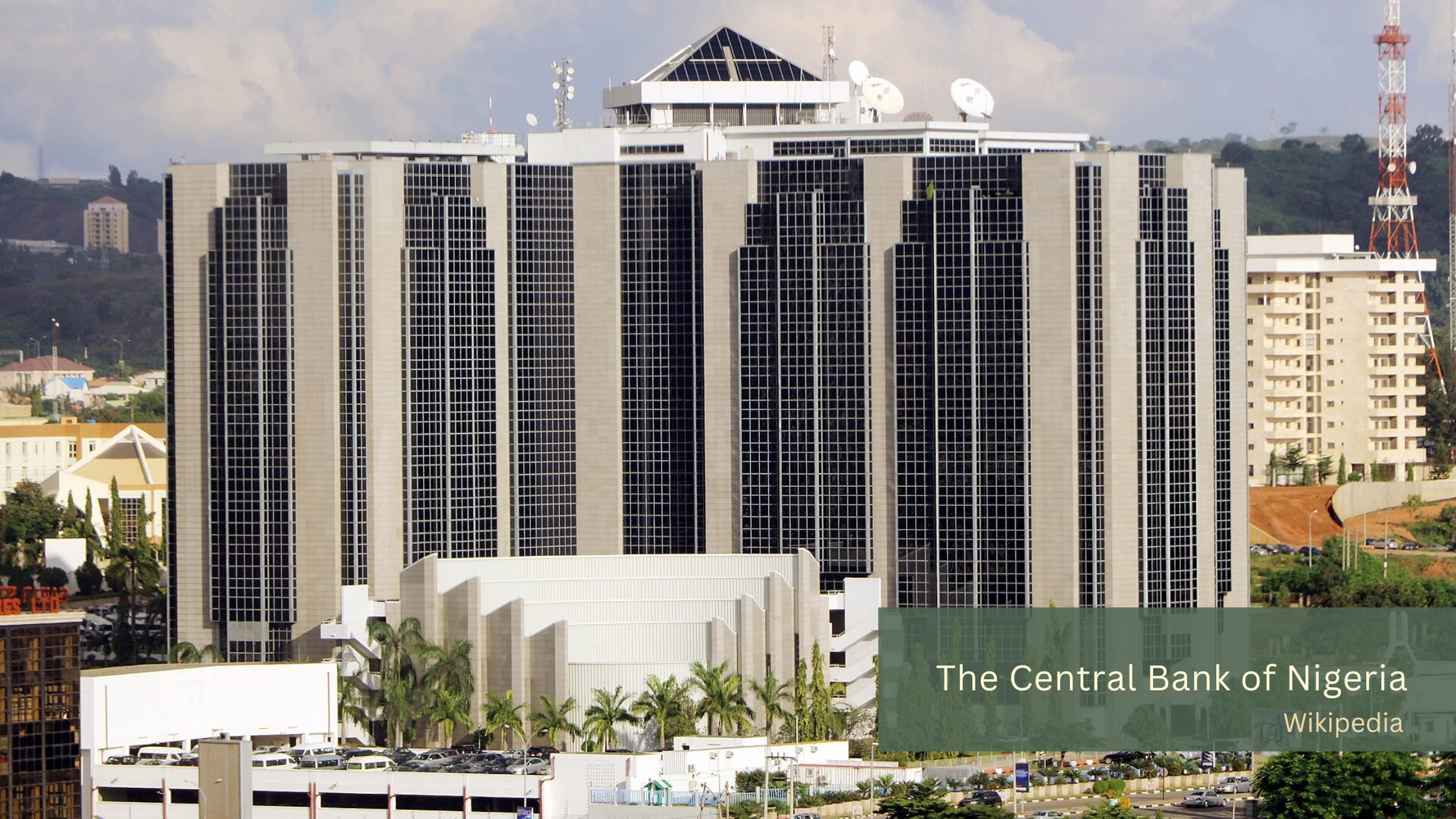
Sanusi Lamido Sanusi served as CBN Governor from 2009 to 2014. He implemented an inflation-targeting programme and enforced the Bank’s formal mandate. When oil revenue diversions entered the public record in 2014, he challenged them openly; his removal by presidential action that February was the price of doing so.11
Then Godwin Emefiele ran the same institution from 2014 to 2023. His CBN expanded its mandate beyond its statutory monetary authority, directed foreign exchange allocations to politically connected sectors, and subordinated the Bank’s formal purpose to coalition maintenance. He was eventually arrested.12
Same institution. Same constitutional inheritance. Legal mandate governing the Central Bank did not change between the two tenures; the formal statutory basis for monetary policy remained unchanged. What changed was the governing orientation brought to the institution: the intent behind its operation, the willingness to absorb personal cost in defence of its formal purpose, and the direction of the governing circuit: toward productive function under Sanusi, toward distributional allocation under Emefiele. Two tenures, the same institution, opposite governance outcomes.
One qualification is warranted. The political environments facing the two governors were not identical: oil price differentials between their tenures created different fiscal pressure contexts. That CBN comparison holds the constitutional frame constant; it does not hold political pressure fully constant.
The pattern appears in other central banks. In Brazil, the Banco Central do Brasil operated under the same price-stability mandate throughout, but the governing orientation brought to it changed. Under Tombini (2011–2016), the Rousseff government replaced the board and redirected the bank toward political priorities: the Selic rate was cut in violation of the Taylor rule, culminating in 10.7% inflation in 2015. Under Campos Neto (2019–2024), the orientation returned to mandate enforcement: rates were raised from 2% to 13.75% and held against sustained presidential pressure, bringing inflation back within target.13
The CBN holds the constitutional frame constant within a single country; the BCB shows that the same dynamic holds for different geographies, political systems, and currency regimes. Within a given institutional architecture, governing orientation varies, and that variation drives outcomes.
Neither Resource Nor Geography
The CBN and BCB comparisons operate at the institutional level: orientation isolated by holding institution, mandate, and country constant. The comparisons that follow return to the national level and vary significantly in structural contexts: different resource endowments, geographies, and colonial inheritances. The question is whether orientation still predicts outcomes when structural factors are not controlled.
Indonesia and Nigeria both built petroleum-dependent governance systems during near-simultaneous oil booms: comparable national oil companies, commodity boards, and planning ministries directing the same windfall. The orientation each brought to that apparatus differed.
Indonesia routed oil receipts through the BIMAS agricultural extension programme and fertiliser subsidies, protected by deliberate rupiah devaluations that imposed higher import costs on urban consumers in order to maintain tradables competitiveness; rice self-sufficiency was achieved by 1984 and manufacturing surpassed oil as the primary foreign exchange earner by 1990.
Nigeria routed the same windfall through commodity marketing boards that set producer prices well below international levels, channelling the surplus to connected interests rather than productive capacity; an overvalued naira served urban consumers and importers within the coalition at the cost of export competitiveness. When the boom ended, neither agricultural capacity nor industrial alternatives remained.14
The orientation difference was visible at each routing decision point. Indonesia’s fitness function asked what the economy would look like after the boom; Nigeria’s asked who would receive what during it. One built competitive capacity; the other built a coalition.
Costa Rica and Nicaragua shared a colonial inheritance, similar mid-century income levels (both poor, within a quarter of each other in 1950) and comparable state apparatus: both had agricultural export economies with equivalent planning and revenue institutions.
Costa Rica directed that apparatus toward education, healthcare, and institutional consolidation, abolishing its military in 1948 and accepting the security exposure that entailed; the resources redirected to public investment produced literacy and health outcomes that outpaced the country’s income level within a generation.
Nicaragua directed comparable resources toward military capacity and the patronage networks that sustained elite control, crowding out investment in human capital and productive sectors that might otherwise have compounded. Their post-1950 divergence tracks that difference in governing orientation rather than in institutional form, both of which they had in comparable measure.15
None of these comparisons is clean; each pair differs in more than governing orientation. Countries with divergent trajectories will always differ in the details. What the comparisons collectively provide is not a controlled experiment but something more useful: a thematic pattern that recurs across very different structural settings, across petroleum economies and agricultural ones, across East Asia, West Africa, and Central America, across different colonial inheritances and geopolitical positions.
That pattern is governing orientation. Credit mechanisms, commodity boards, revenue institutions, and central bank mandates: the same instruments produced transformation when directed toward productive ends and stagnation when directed toward distributional ones. Settlement and structural inheritance set the range within which each governance system operated; governing orientation is the upstream factor that discriminated within it.
Paid subscriptions support the continuation and expansion of this research. Consider becoming a paid subscriber.
Prior by Position
What the cases make visible is the position that the factor occupies in the decision sequence. Before a governing coalition designs institutions, staffs them, or decides which of their rules to enforce, it has already answered a prior question: what is the coalition trying to achieve? That prior answer, the operative fitness function, governs every downstream decision. Governing orientation names it. It sits upstream, not by assertion but by position: the fitness function must exist before the decisions it governs can be made.
Settlement and structural inheritance shape the range within which the fitness function can operate (a claim about the width of the constrained choice set, not about whether orientation varies within it). That variation reaches institutional output through three channels (appointment, direction, and enforcement), each visible in both central bank comparisons.
Across both comparisons, the same three-way difference is visible: who held the governorship, what the mandate was applied toward, and which formal independence provisions were enforced and which were set aside. What differed in each case was the operative fitness function brought to an identical institutional post.
Governing orientation functions as a selection criterion throughout the institutional system. Institutions and behaviours that serve the operative fitness function are reinforced and resourced; those that do not are defunded, atrophy, or are captured over time. It is the answer to what counts as success: the criterion that precedes and shapes every institutional adaptation.
In both institutions, what shifted was governing orientation, and when it shifted, everything downstream changed with it. In Nigeria, Sanusi’s orientation toward the CBN’s formal mandate gave way, upon his removal, to Emefiele’s orientation toward coalition maintenance; the institution’s behaviour followed the fitness function rather than the statutory text. In Brazil, the shift ran the other way: Tombini’s accommodation of political priorities gave way to Campos Neto’s mandate enforcement, sustained against presidential pressure because the underlying orientation had changed. The resourcing decisions, the policy choices, the enforcement patterns: all were downstream of that variable.
When the architecture carries it
Everything so far involves individual leaders or governing coalitions making different choices within a given architecture. Korea versus the Philippines: same tools, different decisions. Sanusi versus Emefiele: same institution, different intent.

The pattern suggests that changing the leadership changes the orientation. That is often true, but the mechanism matters: governing orientation is a strategic commitment, not a personal idiosyncrasy, and the coalition interests it encodes make it difficult for the same individual to reverse course. The cases do not show orientation shifting within tenures; they show it shifting at the point of personnel change.
Settlement and structural inheritance constrain the range within which any incoming orientation can operate. Those constraints are typically informal but carry real force: the distribution of interests embedded in prior settlements, the tacit conditions on which elite cooperation rests, the institutional dependencies created by previous governing choices. They narrow the practical range within which new leadership can operate, however differently disposed that leadership may be. In some cases, however, those constraints are not merely informal; they are encoded in the constitutional architecture itself.
Orientation can be embedded in three ways, and the distinction matters for what any reform can reach. As a coalition choice, as with Korea and the Philippines, it is as durable as the coalition itself: it changes when the coalition does. As a leadership disposition within an unchanged architecture, as with Sanusi and Emefiele, it is as durable as the individual: it leaves when the leader leaves. As a constitutional default, it is more durable than either: it outlasts changes of both leader and coalition.
Where the constitutional architecture encodes the distributional logic, individual leaders can push against the default. But when they leave, the architecture reasserts itself. What leadership can change is the deviation from the distributional baseline within a given tenure; it cannot change the equilibrium that the architecture encodes.
The implication for intervention is precise. Shifting governing orientation requires matching the level at which it is embedded: coalition change, where it is a coalition choice; leadership replacement, where it is a leadership disposition; constitutional reform, where it is encoded in the architecture. Institutional and policy reform operate at none of those levels. That is why they reliably missfire.
Nigeria’s constitutional provisions illustrate this. The FAAC formula routes federal revenue to every tier of government as an entitlement (federal, state, and local), making distributional allocation the fundamental logic of public finance.16 Federal Character requires that all federal appointments reflect ethnic and geographic diversity, thereby embedding distributional purpose in executive staffing at every level.17 Together, they create a distributional default: the baseline operating mode that every institution within the architecture follows in the absence of active counteraction.
That default can be overridden (as Sanusi did), but it cannot be eliminated by leadership alone; the architecture reasserts it once that leadership is removed. That is what the transition to Emefiele shows. The distributional default the constitutional architecture encodes reasserted precisely when the leader enforcing productive function was removed. The constitutional architecture, in this mode, functions as the selection environment; it determines which institutions and behaviours are resourced and reproduced, independent of the orientation any individual leader brings to it.
Reform programmes that targeted monetary frameworks, investment mandates, and export incentive structures were working on downstream institutions. The governing orientation that directed those institutions sat upstream of them; when that orientation is constitutionally encoded, it sits even further upstream. That is the binding constraint. Reform programmes consistently aimed at one level below it.
What the adjustment programmes reached
The argument has a direct empirical implication: if governing orientation is the factor that structural reform never reached, countries should be able to comply with every targeted condition while producing little or no structural transformation. For thirty years, that is what happened.
Governance systems have a nested structure: governing orientation at the foundation, institutional design in the middle, specific policy parameters at the surface. The Washington Consensus targeted policy-level reforms almost exclusively; its later institutional turn went one layer deeper. Neither reached governing orientation.
That was not simply an oversight. Reform practitioners understood that political will shaped outcomes; the gap was practical, not analytical. Governing orientation cannot be conditioned for, benchmarked against targets, or transferred through technical assistance. At the programme level, it was the variable that could be acknowledged but not programmed for.
Institutional form and governing orientation are separable. A governance system with distributional orientation can satisfy every downstream condition: establish the required agency, liberalise the required sector, and hit the fiscal or monetary target. The planning commission is built; the performance management unit is staffed; and each benchmark is met. The operative fitness function routes them all to distributional ends.
Compliance was fully achievable on each reform’s own terms. Developing countries received an average of seven adjustment loans each across the 1980s and 1990s, disbursed on the condition that they adopted institutional and policy reforms, met targets, and reported progress against them.18 Country after country complied with conditionality and produced no lasting change.
Hausmann, Rodrik, and Velasco formalised the diagnosis: reform aimed at a non-binding constraint produces compliance without change.19 Easterly’s The Elusive Quest for Growth mapped the outcome in granular detail.20 North, Wallis, and Weingast put the structural limit precisely: the institutional exterior of a distributional order cannot be stripped to reveal a developmental core.21 Each maps the failure from a different angle; none names the mechanism that those programmes consistently missed.
The Unnamed Mechanism
Governing orientation specifies what those frameworks leave unnamed. It is not a supplement to them but the mechanism beneath them. Its distinctive contribution is more specific: it explains why targeted compliance consistently failed to produce a structural shift in governance systems where orientation pointed elsewhere. The other accounts identify the failure and its structural conditions; the governing orientation account identifies the specific mechanism. The operative fitness function, which routed each institution to a distributional purpose, was never touched.
Governing orientation is the variable those programmes had no programmatic instrument for: the operative fitness function that determines what every institution actually does, prior to every design decision and every staffing choice the coalition makes. The compliance paradox that the post opened with (conditions met, transformation absent) has a structural explanation. The operative fitness function, the criterion that determines which mandates are acted on and which rules are enforced, was never reached.
Governing orientation names that variable. Dercon’s development bargain concept approaches the same insight: whether the political elite has committed to growth over extraction is what separates developmental from non-developmental governance.22 The governing orientation account specifies the mechanism more tangibly: the operative fitness function that determines what the system selects for, routes every institution to its purpose, and governs what gets reinforced before any explicit bargain is struck or any institution is designed.
Thirty years of reform produced compliance without transformation because it reached the second and third levels of a nested structure and left the first, the selection criterion, untouched.
Paid subscriptions support the continuation and expansion of this research. Consider becoming a paid subscriber.
Notes
World Bank, World Development Indicators (data.worldbank.org).
Alice Amsden, Asia’s Next Giant: South Korea and Late Industrialization (Oxford University Press, 1989), ch. 7
Paul D. Hutchcroft, Booty Capitalism: The Politics of Banking in the Philippines (Cornell University Press, 1998)
Teresa S. Encarnacion Tadem, ‘How Marcos Undermined Philippine Agriculture and Marginalized Further the Peasantry,’ Philippine Journal for Public Policy: Interdisciplinary Development Perspectives (2022), pp. 68–86. DOI: 10.54096/GOXE9779.
Jong-sung You, “Land Reform, Inequality, and Corruption: A Comparative Historical Study of Korea, Taiwan, and the Philippines,” Korean Journal of International Studies 12 (2014), pp. 191–224.
Atul Kohli, State-Directed Development: Political Power and Industrialization in the Global Periphery (Cambridge University Press, 2004), Ch. 1
Daron Acemoglu, Simon Johnson, and James A. Robinson, “The Colonial Origins of Comparative Development: An Empirical Investigation,” American Economic Review 91(5) (2001), pp. 1369–1401.
Douglass C. North, John Joseph Wallis, and Barry R. Weingast, Violence and Social Orders: A Conceptual Framework for Interpreting Recorded Human History (Cambridge University Press, 2009).
Mushtaq H. Khan, “Political Settlements and the Analysis of Institutions,” African Affairs 117(469) (2018), pp. 636–655.
Jung-En Woo, Race to the Swift: State and Finance in Korean Industrialization (Columbia University Press, 1991).
Central Bank of Nigeria, “Past Governors,” cbn.gov.ng. Bloomberg, “Nigerian President Suspends Sanusi After Missing Oil Claims,” 20 February 2014.
Al Jazeera, “How Emefiele, Nigeria’s powerful central bank chief, lost his seat,” 14 June 2023.
Banco Central do Brasil, Selic rate history, bcb.gov.br. Financial Times, “Brazil’s Lula accuses central bank chief of ‘irresponsibility,’” 27 June 2023.
Brian Pinto, “Nigeria during and after the oil boom: A policy comparison with Indonesia,” World Bank Economic Review 1(3) (1987), pp. 419–445.
James Mahoney, Colonialism and Postcolonial Development: Spanish America in Comparative Perspective (Cambridge University Press, 2010).
Revenue Mobilisation Allocation and Fiscal Commission, federal allocation formula, rmafc.gov.ng.
Constitution of the Federal Republic of Nigeria (1999), section 14(3).
William Easterly, “What Did Structural Adjustment Adjust? The Association of Policies and Growth with Repeated IMF and World Bank Adjustment Loans,” Journal of Development Economics 76(1) (2005), pp. 1–22.
Ricardo Hausmann, Dani Rodrik, and Andrés Velasco, “Growth Diagnostics,” in Narcís Serra and Joseph E. Stiglitz (eds.), The Washington Consensus Reconsidered: Towards a New Global Governance (Oxford University Press, 2008), pp. 324–355.
William Easterly, The Elusive Quest for Growth: Economists’ Adventures and Misadventures in the Tropics (MIT Press, 2001).
North, Wallis, and Weingast, Violence and Social Orders.
Stefan Dercon, Gambling on Development: Why Some Countries Win and Others Lose (Hurst & Company, 2022).
An important political point is that growth rates are far too volatile and growth accelerations to discrete for "institutions"--which almost by definition are slowly changing--to really be the answer to "how do I get into a favorable growth episode." But "governing orientation" can change and people can see that change and respond before it is necessarily "visible."