
Indonesia: The Ratchet That Built the Crash
Every crisis the economy absorbed raised the threshold for the next correction. By 1997, that threshold had climbed past the point where any government could survive acting on it.

Indonesia was brilliantly managed. It was never managed toward what transformation requires.
Every crisis the state absorbed was one it could no longer force it to change.
The cost of a manageable correction, one bad enough to matter, small enough to survive, rose with every competent rescue.
By 1997, the window had closed. The crash that arrived was beyond the size that a government could act through.
The regime fell. The governing orientation did not.
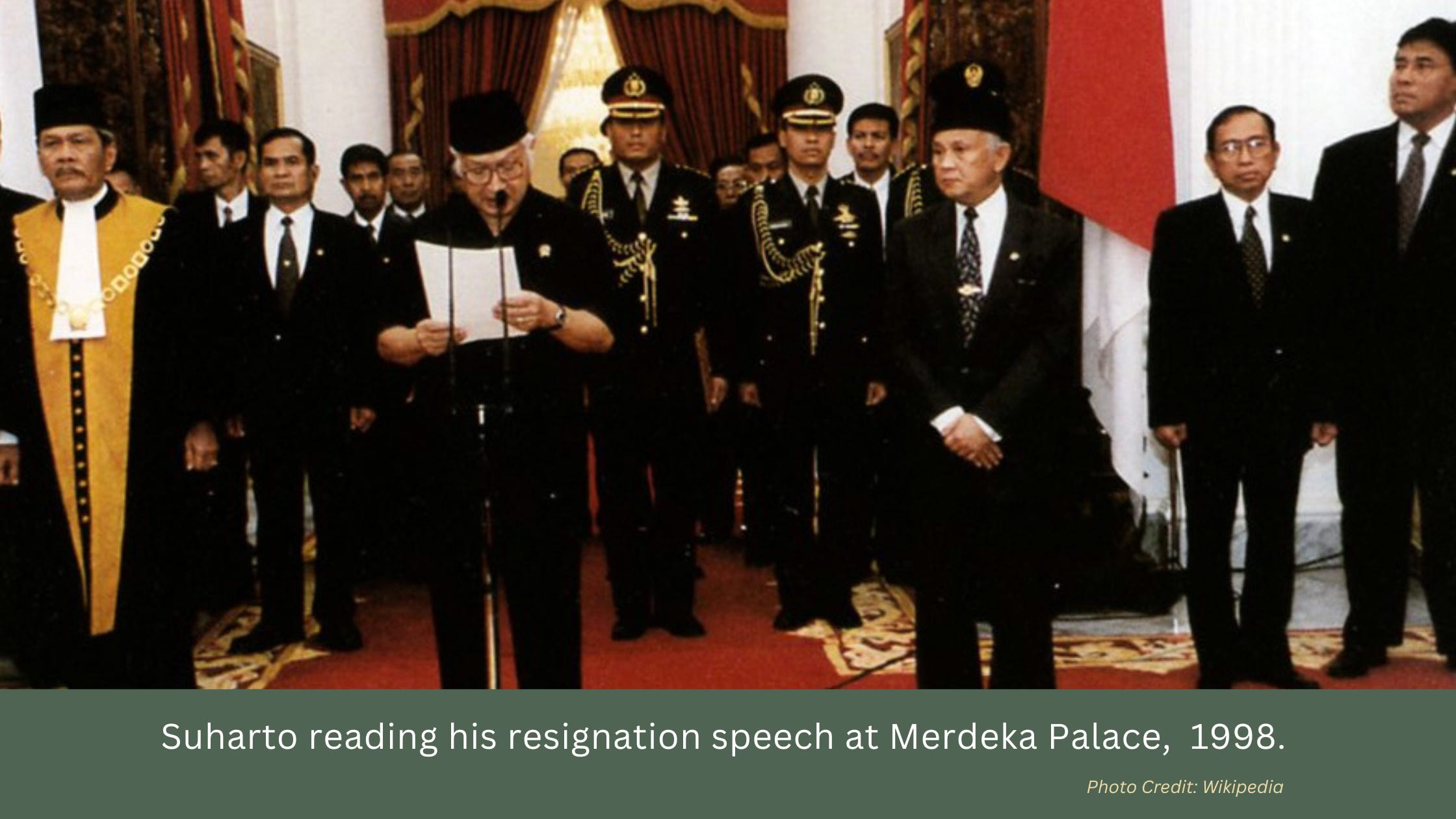
The previous post on Indonesia showed that its governing orientation, what the state was built to reward and what it refused to rescue, remained the same under distinctive development approaches. Picking up on Pietro Masina’s Indonesian trilogy, this post addresses what that governing orientation left undeveloped and why it survived the 1997 crash that destroyed the regime that built it.
In 1975, Indonesia’s governing circuit reached down and, within months, culled its largest state company to protect the budget. That was decisive and correct. Each crisis that followed was met the same way: the books steadied, the budget held. Absorbed jolts did not vanish. They migrated into the banks and waited.
In 1997, the same state, facing a regional crisis, could not bring itself to discipline the conglomerates whose unbacked-dollar borrowing was destroying the currency. Indonesia’s economy shrank by thirteen per cent in a year. Suharto was gone within months. The same kind of state, the same concentration of power, and a different outcome.
A peculiar kind of failure
Indonesia was not a country that lacked the skill to run the firm-level test it never ran. By every visible measure, it was brilliantly run; it managed money better than almost any developing country of its kind.
Competence is not like reserves, more or less of one stock. A competence aimed at one target gets better at hitting it, and is rarely turned on another without external pressure.
That competence was the trap. A state good enough to absorb every crisis it faces removes the pressure that might have forced it to develop differently. Nothing smaller than the catastrophe it has been deferring will correct it.
That cost moved in only one direction, because every competent rescue also enlarged the base any future correction would have to break. The window for a manageable correction, a crisis severe enough to force the hard choice, yet survivable enough to leave a government standing to make it, did not slam shut. That window narrowed, year by year, until it was gone.
The rescue and what it protected
The 1975 Pertamina rescue was decisive and right. Indonesia’s largest state company had borrowed more than it could repay; the government moved fast, broke it up, and protected the budget. The first post covers the story in full.
That was also the first turn of a lock. The rescue protected the budget, the currency, and the country’s ability to pay its bills, but did nothing to address whether any Indonesian firm was good at making things. The economists were good at keeping the books straight, and because that worked, a different question was never forced to the surface: why are our own firms not getting better?
That correction could not be forced. If the books are sound and the country is paying its way, there is no visible failure pointing at the firms. The only thing that makes a government ask the hard question about its own companies is a crisis so bad it cannot be handled any other way, and Indonesia kept finding another way. When oil revenues fell in 1983, it devalued and cut spending; when prices collapsed further in the mid-1980s, it let the currency fall again. Each time, the books steadied, and no connected firm was required to do anything differently. Each competent response raised the cost of the next one.
Indonesia had plenty of crises. None of them forced it to discipline its own firms, because the firms were the coalition.
A government does not build the instrument that would break it.[1]
That settlement was always the constraint. The ratchet is what turned a static arrangement into a compounding trap.
Every year, the arrangement held; the base grew as the Suharto family moved into business and the favours multiplied. The larger the base grew, the more a government would have to act against its own backers to discipline any part of it, and the higher the political cost of doing so.
A government can be pushed past that cost by a crisis severe enough that inaction is plainly more costly than acting. But the size of crisis required to force that choice grew with the base, and the state’s competence kept actual shocks below it.
The better a state is at managing the crises it faces, and the more each rescue expands the protected base, the more likely the reckoning arrives past the point where anything can be done. The contrast with Korea makes the mechanism visible.
Korea in the same decades had no oil revenues and ran persistent deficits financed by foreign borrowing. Exports were not a performance target; they were the mechanism by which the Korean model paid for itself. The fiscal buffer that made Indonesia’s macro-competence possible was the same buffer that made the hard choice permanently avoidable.
Brazil, in the same years, borrowed recklessly and blew up in 1982; ordinary Indonesians were spared that. Fiscal management and economic transformation are different exams — and Indonesia passed the first, permanently, at the cost of the second.
The firms otherwise positioned to demand rules-based treatment were folded into the protected base rather than left outside it. That channel through which the arrangement might have been corrected from within was closed. That closure belongs to the arrangement, not to whoever is running it. The logic of protect the base, absorb the costs does not change when the political superstructure does.
The capability that was never demanded
A trap like this exacts a price that, while it is being paid, is invisible. Not money, which Indonesia had, and not even growth, which it got. The price is foregone export competence: the capability that cannot be built while success looks like this.
The previous post traced the manufacturing boom and its limits. Discipline that arrived, from foreign buyers who would take their orders elsewhere, landed in the open sector and never reached the connected core. It was growth the country hosted, not capability it built.
The clearest case is the one industry where Indonesia did build real depth. Astra, whose rise and post-1997 reinvention Pietro Masina has chronicled, grew from a 1957 trading house into the partner that Toyota, Daihatsu and Honda built their Indonesian manufacturing around. Astra trained real engineers, built genuine suppliers, mastered modern manufacturing. Yet in four decades it never designed a car of its own.
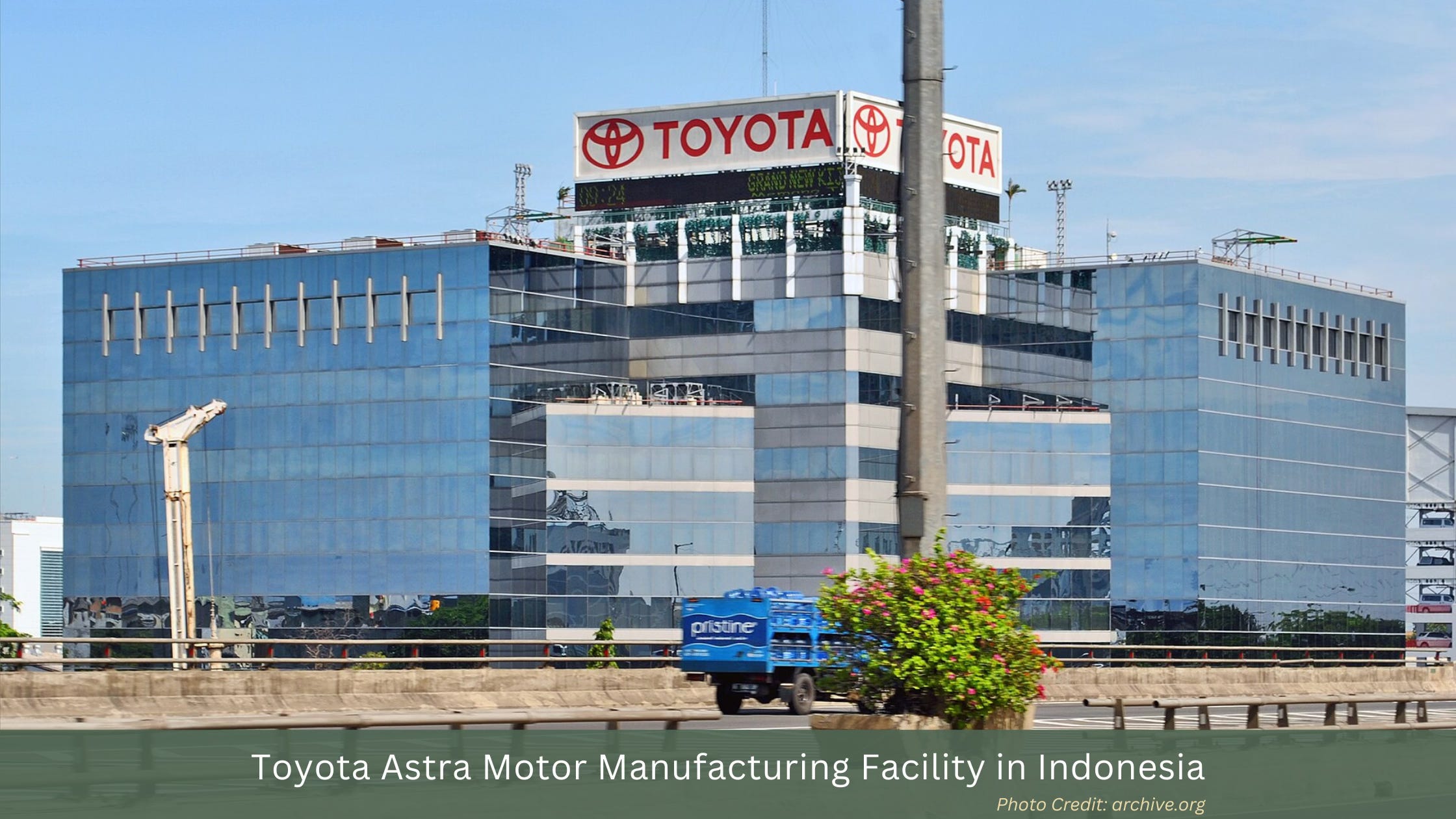
Astra could have made that climb. Korea’s Hyundai designed its own cars from a smaller domestic base. Policy choices, the profitability of the partnership model, the sheer cost of frontier innovation — all played some role in why the climb was not made. The partnership model also reflected Indonesia’s entry position in the regional production hierarchy: an assembler in a supply chain where design authority stayed in Japan.
Entering a global value chain at the assembly end is a starting position, not a ceiling — Korea’s manufacturers moved from licensed assembly to proprietary design. What the arrangement did not supply was the one demand that might have forced the attempt regardless: no one set the harder standard.
That partnership was profitable and safe, and nothing in Indonesia’s arrangement rewarded the risk of trying for more. By 1997, the crisis posed a different question: could Astra survive? Astra could, through restructuring, and by passing to foreign ownership: Jardine Matheson, a Hong Kong trading house whose history traces to British imperial commerce in Asia, became its largest shareholder.
But survival is a solvency question. No one asked the design question during the recovery, and no one has asked it since.
The distinction is between what Indonesia built — manufacturing to international standards, training engineers, developing suppliers — and what it did not: the capacity to design, to own technology, to govern an industry’s direction. Indonesia crossed the first threshold; the arrangement never demanded the second.[2]
What a firm reaches for is set by what it is compelled to attempt, not by what it is capable of building. The compulsion arrives from buyers who will take their orders elsewhere, from a state that will withdraw its support, from competitors who will displace it.
None of those demands reached Astra on the question that mattered: whether it would ever design what it assembled, not because market competition was absent, but because the arrangement’s protection meant Astra’s prosperity did not depend on responding to it. That is not a separate failing on top of the coalition and the oil. That is the same pattern, visible at the level of a single firm; and the constraint was in the arrangement, not in Astra.
The deepest cost of building one kind of competence is that it quietly removes the pressure to build the next, in Indonesia’s case, the competence at making things the world will pay for.
The reckoning the ratchet built
In 1997 the lock finally jammed. Indonesia’s government had let the banking system swell through the boom years, much of it lending to the conglomerates that owned the banks, on the same logic that let everything else off the hook, the rot that the regional contagion would expose rather than create.
Indonesia’s currency collapsed. Indonesia’s economy shrank by around thirteen per cent in a single year, and dozens of banks failed. And Suharto, after thirty-one years in power, was gone within months.[3]
Indonesia’s banking system failed more completely than any of its neighbours’, and the ratchet, the mechanism by which every absorbed crisis raised the minimum shock required to force the next correction, explains the specific reason why. The connected conglomerates had borrowed abroad as freely as they borrowed at home, in dollars, against no requirement that what they built could ever repay it. So when the rupiah fell, the firms that had never had to be good were insolvent all at once.
That is not the whole story of 1997, which also runs through political panic over the succession, a botched international rescue, the exchange-rate regime, and sheer contagion. But the firm-level rot was the less examined part. The ratchet explains why no smaller, survivable shock had forced the choice first, not why the crisis, when it came, was as large as it was.
A government disciplines its own base only when a crisis makes inaction more costly than acting — and only when the crisis is still survivable enough to leave a government standing to act on it. Correction rather than collapse: big enough to force the hard choice, small enough to make it through. The ratchet ensured that was the one size of crisis Indonesia never had to face.
The one shock it could not absorb was past that line by the time it arrived, not because 1997 was unusually large, but because the country’s skill had consumed every correction-sized crisis before it. In 1997, catastrophe reformed nothing. It cleared the board.
The lock outlived the locksmith
The story should end in 1998, with the regime that built the trap swept away. It does not.
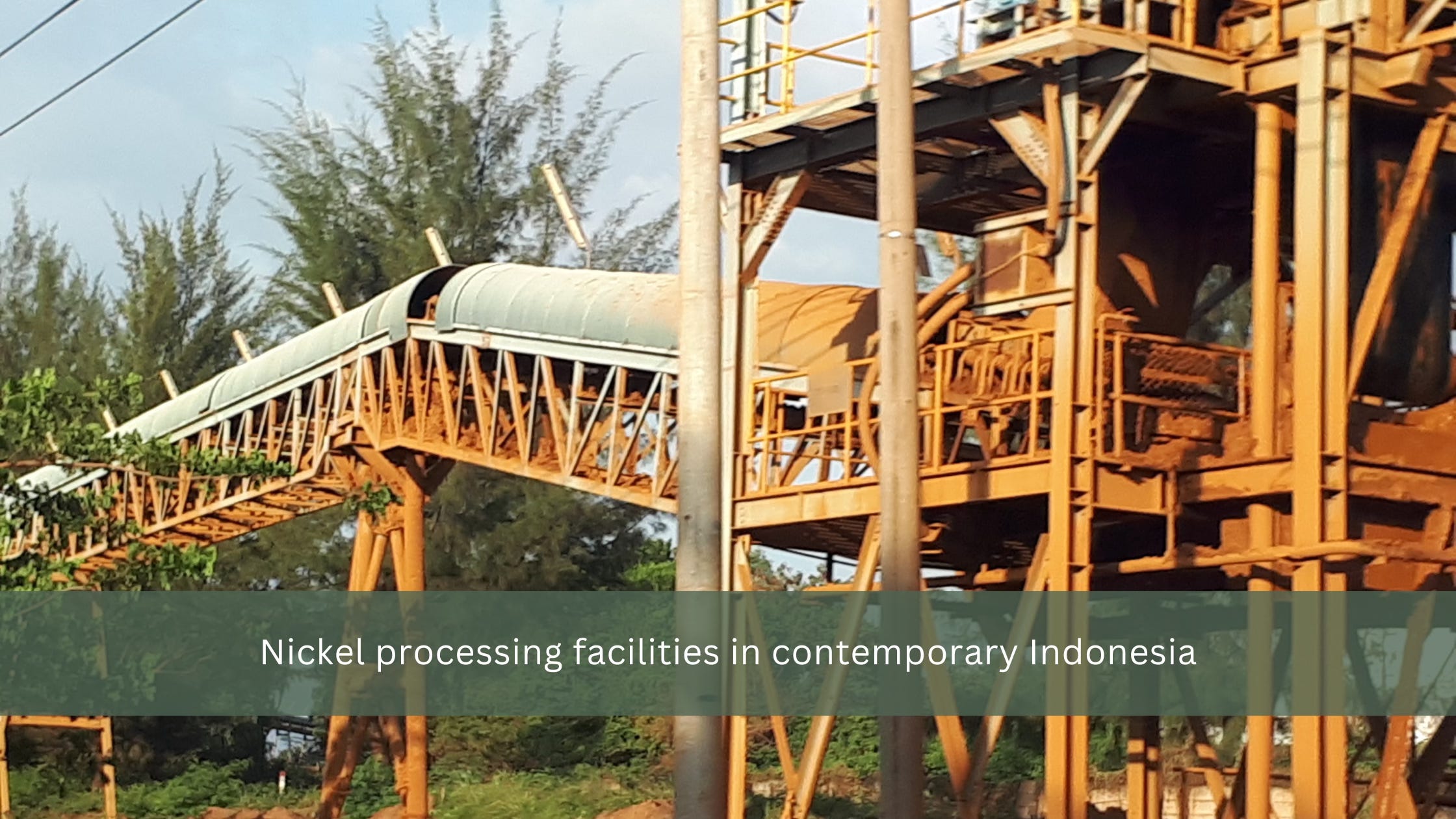
Old machinery came back in new clothes. There is a vast new sovereign wealth fund, Danantara, to pick winners and channel capital, its architecture as familiar as its ambition is loud. There is a drive to process the country’s own nickel ore rather than export it raw, announced as the start of an industrial transformation.
And the politics that ties them: Joko Widodo, who rose from outside the elite and governed by drawing it in rather than making any of it fail. He handed power to Prabowo Subianto, the general he had once run against.
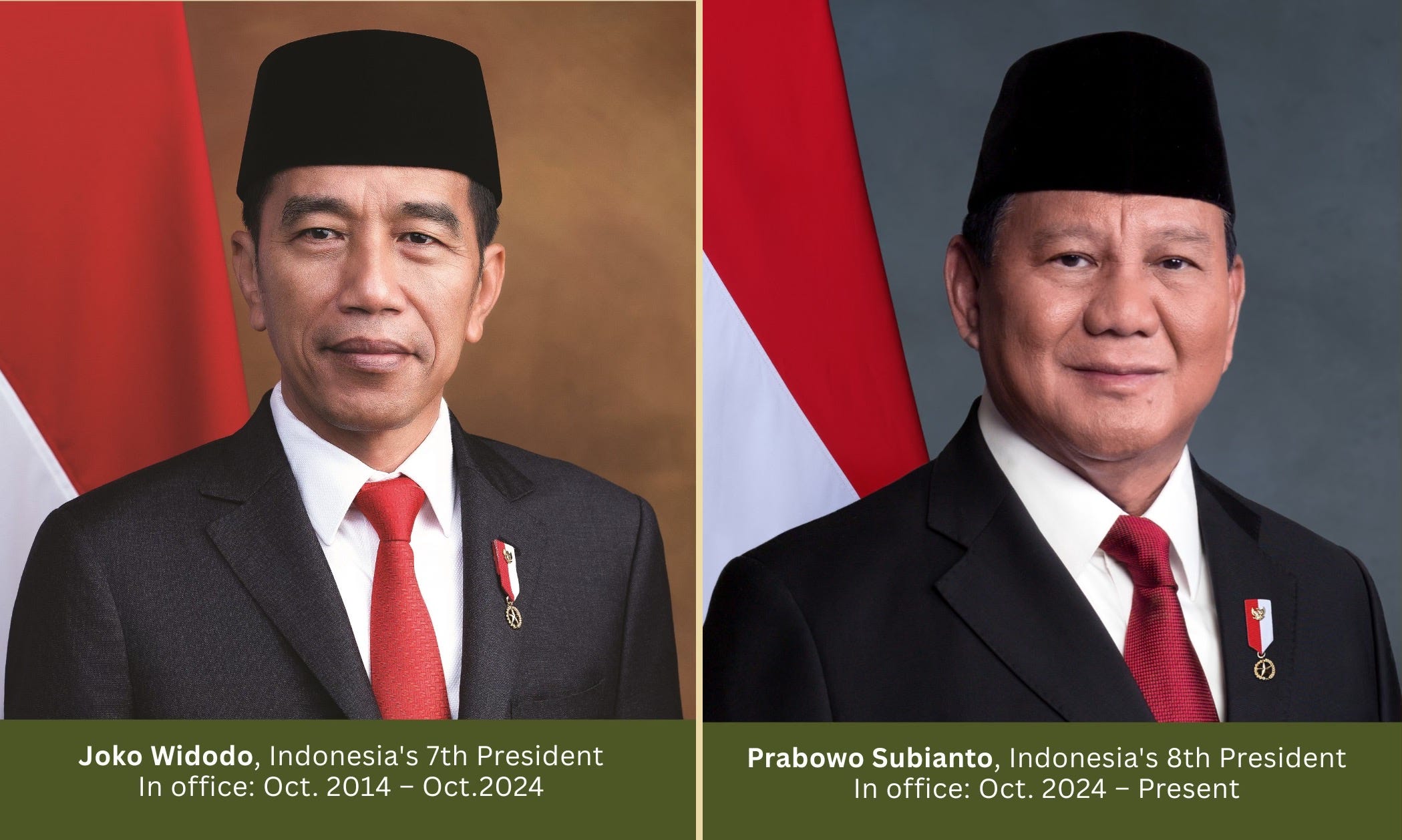
Those the old arrangement had made powerful carried their assets, networks, and positions into the new one. Prabowo had not arrived from outside the settlement; he was Suharto’s former son-in-law and a Special Forces commander through the regime’s final years. He spent a quarter-century reconstituting his political position across the transition. Major conglomerates lost assets during the post-1997 restructuring and rebuilt most of them.
The political superstructure was remade, and something real changed with it: the current coalition builds infrastructure and processes minerals, roads, refineries, downstreaming. That is developmental ambition of a kind the Suharto era did not systematically pursue.[4]
Masina argues that many elite actors now have a genuine material interest in this upgrading; their returns depend on infrastructure and industrial investment, not merely on rent extraction. That shift is real.
Nor is this a question of political form. The countries that made the transformation leap ran under equally authoritarian regimes, as Korea’s case showed, and what set them apart was the firm-level test. Democracy does not supply the test either: any government needs political backing, and in Indonesia that backing rested on the same firms a productivity test would put at risk.
Nickel processing moves the country from digging ore to refining it, what Masina calls green re-commodification: a genuine structural crossroads between technological command and a reorganised commodity role. That history suggests the commodity path. Indonesia remains positioned at the commodity tier of a global value chain whose higher rungs — battery chemistry, cell manufacturing, vehicle design — are controlled elsewhere. One more route to growing rich without learning to climb.
Astra’s response to the electric vehicle transition tells the same story at the firm level: distributing Chinese-made EVs rather than developing proprietary technology; the assembler posture migrated intact to the new industrial order.
Through the 2000s, a long commodity boom carried the recovery back to respectable growth; the economy could rebound without ever being held to that standard.
The distinction is between upgrading that builds scale and upgrading that builds capability: the current coalition is doing the first; nothing in the arrangement has yet made the second unavoidable.
A governing orientation — what a state is built to reward, including at the level of the firm — does not live in the regime. It lives in the settlement. Changing just the regime does not reset it. That enduring settlement did the work. That regime was the surface.
What competence cannot buy
The competence trap is invisible at the level of macro indicators. A country managing its budget, absorbing its crises, and growing looks like a success — and on those measures, it is.
The signal is elsewhere: in whether firms in the protected core are being required to get better, and in whether the arrangement is building the pressure that would force the harder capability or steadily eliminating it. Fiscal prudence and structural transformation are different exams; passing the first tells you almost nothing about whether a country is passing the second.
The standard response to economies in difficulty, stabilise the macro, build institutional capacity, improve governance, addresses the supply side of state capability. What Indonesia illustrates is a demand-side failure: not a state lacking competence, but one applying it in a direction that permanently removed the pressure on its firms. A macro rescue that delivers stability without changing what firms are required to attempt can strengthen a competence trap rather than break it: the fiscal buffer buys more years of deferred reckoning, the correction threshold climbs. Stabilisation can be the ratchet’s best friend.
The warning is not about weak states. It is about strong states aimed at the wrong target — and about how invisible that distinction is in the data that gets watched. A state can be skilful, prudent, praised, and trapped by all three at once. A state can be competent enough to fail.
Further reading
Ross, Michael L., The Oil Curse (2012) — how oil revenue reshapes a state’s incentives, and why managing the windfall well is not the same as escaping it.
Pritchett, Lant, Kunal Sen & Eric Werker (eds.), Deals and Development (2018) — the deals-versus-rules account of how business and political power relate in developing economies; this piece’s quarrel with it is friendly, that it describes the allocation but not why the arrangement resists correction.
Andrews, Matt, Lant Pritchett & Michael Woolcock, Building State Capability (Oxford University Press, 2017; open access) — the supply-side complement to this piece’s argument: what states must learn to do to build the next level of administrative competence. The argument in this post addresses the demand side: what the arrangement stops firms from being required to attempt.
Masina, Pietro, Indonesia essays at pietromasina.substack.com — the closest case studies behind this piece: Astra, the nickel strategy, and the coalition behind Jokowi and Prabowo. Convergent on the pattern, different on the cause.
Studwell, Joe, How Asia Works (2013) — the land, export, and bank-discipline triad, and the bank discipline Indonesia did the opposite of before 1997.
Hill, Hal, The Indonesian Economy since 1966: Southeast Asia’s Emerging Giant (1996) — the standard economic history, including the run-up to the 1997 crisis.
The first piece developed this in full. The key point for what follows is not just that the firms were the coalition, but that this remained true across both development roads, the open-market camp and the industrial-champions camp, and so neither road could have changed the constraint. That is the starting fact. The ratchet is what it became over time. The distinction is between the static coalition configuration and the dynamic that grew out of it: the cost of acting against the base compounded every year it held.↩︎
What is described here operates on private firms and the market discipline that does or doesn’t reach them; the domain is different even if the self-limiting structure rhymes. The twist here is the opposite kind: not faking a competence a state lacks, but real competence at one thing quietly removing the pressure to build another. Different again from Dutch disease. The point is also distinct from what Andrews, Pritchett & Woolcock’s Building State Capability addresses: their account asks what a state must learn to do to build the next level of administrative competence; this piece’s argument is about what the arrangement stops firms from being required to attempt, a demand-side constraint, not a supply-side one. The book is listed in Further reading.↩︎
The “thirty-one years” counts from the 1967 transfer of power; Suharto finally resigned in May 1998.↩︎
When Masina calls the post-1997 coalition “developmental”, he means it in the growth-and-scale sense, roads, downstreaming, not the frontier sense I’m using the word in here. Masina’s assessment of the Jokowi-Prabowo transition is that it represents developmental consolidation rather than oligarchic restoration — a broad elite coalition converging around infrastructure and downstreaming rather than simply reverting to the rent-capture of the New Order. That is a different analytical claim, not a more charitable one. The difference is about what the arrangement demands of its firms: Masina’s coalition is building things; it is still not asking whether its firms are any good.↩︎
An interesting outcome of the 1997 crisis was Indonesia’s 2003 fiscal deficit rule which restricted fiscal deficits at 3%. Although as noted in the article, the macro reforms post 1997 and other crises did not change what the political settlement demanded of firms, they do seem to have introduced new constraints on the political class by baking in fiscal prudence and forcing them to fit their pet projects within a limited envelope. Just today reports having emerged that the Prabowo government is being forced to make further cuts to its flagship school feeding program (after initial cuts earlier this year) due to budget pressures arising from the current global economic conditions. Prabowo himself also had to cut down drastically on Widodo’s pet project of a new capital in order accommodate this program. Without this rule, it’s likely budget deficits would have been blown out to accommodate favored spending.
Also interesting to contrast Indonesia’s approach to its firms to that of South Korea where the firms emerged leaner and meaner from the 1997 crisis.